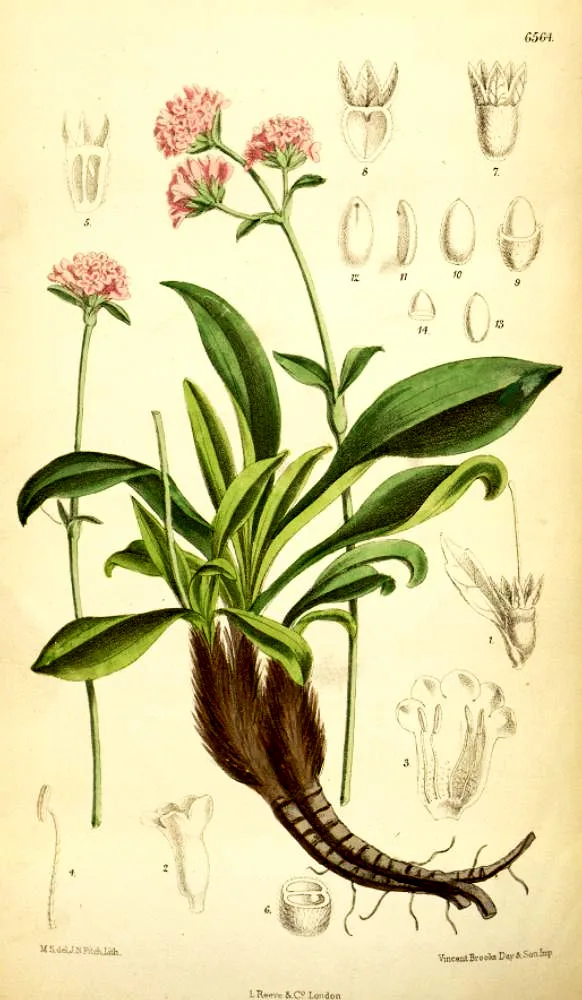
A fragrant plant with pink umbrella-shaped flowers and narrow leaves, used to make a strong-smelling oil.
About Nard
A perennial herb with strong, fragrant roots. It grows naturally at high elevations in the Himalaya mountains and extends into western Asia. People dry the roots and the fuzzy, spike-shaped young stems before the leaves open. These dried parts are used to make perfume.
In India, people still use nard as a perfume for hair. There is good evidence that the spikenard mentioned in the Bible originally came from India (Song of Solomon 1:12; 4:13–14; Mark 14:3; John 12:3).
Key References
While the king was at his table, my perfume spread its fragrance.
While Jesus was in Bethany reclining at the table in the home of Simon the Leper, a woman came with an alabaster jar of expensive perfume, made of pure nard. She broke open the jar and poured it on Jesus’ head.
Then Mary took about a pint of expensive perfume, made of pure nard, and she anointed Jesus’ feet and wiped them with her hair. And the house was filled with the fragrance of the perfume.
All Scripture References (5)
Song of Solomon (3)
While the king was at his table, my perfume spread its fragrance.
Your branches are an orchard of pomegranates with the choicest of fruits, with henna and nard,
with nard and saffron, with calamus and cinnamon, with every kind of frankincense tree, with myrrh and aloes, with all the finest spices.
Mark (1)
While Jesus was in Bethany reclining at the table in the home of Simon the Leper, a woman came with an alabaster jar of expensive perfume, made of pure nard. She broke open the jar and poured it on Jesus’ head.
John (1)
Then Mary took about a pint of expensive perfume, made of pure nard, and she anointed Jesus’ feet and wiped them with her hair. And the house was filled with the fragrance of the perfume.