Animal skin prepared and preserved to be durable and flexible by removing the hair and preventing decay.
About Leather
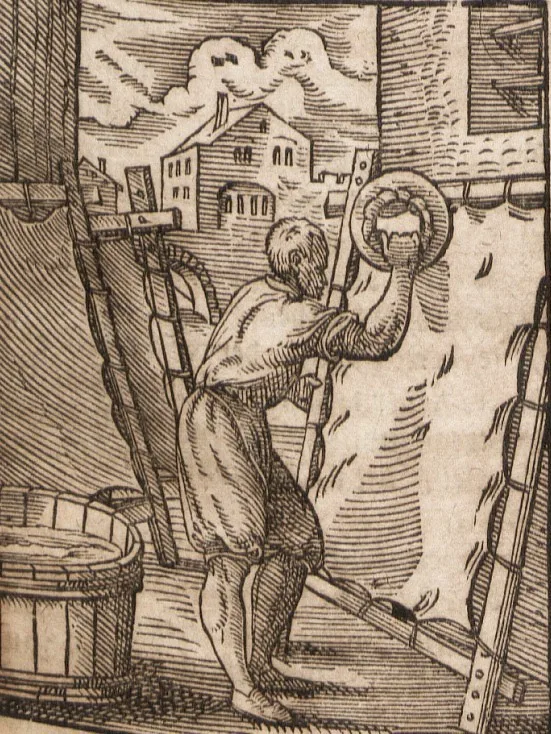
Leather is animal skin that has been treated to make it strong and flexible, widely used in biblical times for clothing, containers, household items, and as a writing material.
Humans used animal hide as clothing in early times (Genesis 3:21). Prophets' clothing was made from animal skins and became a means of identifying them (2 Kings 1:8; Zechariah 13:4). The Greek Old Testament describes Elijah’s mantle as sheepskin (1 Kings 19:13, 19; 2 Kings 2:8, 13–14). Animal skins were also used to make shoes, girdles, and other articles of clothing (Leviticus 13:48; Ezekiel 16:10; Matthew 3:4).
Key References
ram skins dyed red and fine leather; acacia wood;
They are to place over this a covering of fine leather, spread a solid blue cloth over it, and insert its poles.
John wore a garment of camel’s hair, with a leather belt around his waist. His food was locusts and wild honey.
All Scripture References (30)
Exodus (6)
ram skins dyed red and fine leather; acacia wood;
Also make a covering for the tent out of ram skins dyed red, and over that a covering of fine leather.
ram skins dyed red and fine leather; acacia wood;
Everyone who had blue, purple, or scarlet yarn, or fine linen, goat hair, ram skins dyed red, or articles of fine leather, brought them.
Additionally, he made for the tent a covering of ram skins dyed red, and over that a covering of fine leather.
the covering of ram skins dyed red, the covering of fine leather, and the veil of the covering;
Leviticus (11)
When one of them dies and falls on something, that article becomes unclean; any article of wood, clothing, leather, sackcloth, or any implement used for work must be rinsed with water and will remain unclean until evening; then it will be clean.
any weave or knit of linen or wool, or any article of leather—
and if the mark in the fabric, leather, weave, knit, or leather article is green or red, then it is contaminated with mildew and must be shown to the priest.
On the seventh day the priest shall reexamine it, and if the mildew has spread in the fabric, weave, knit, or leather, then regardless of how it is used, it is a harmful mildew; the article is unclean.
He is to burn the fabric, weave, or knit, whether the contaminated item is wool or linen or leather. Since the mildew is harmful, the article must be burned up.
But when the priest reexamines it, if the mildew has not spread in the fabric, weave, knit, or leather article,
If the priest examines it and the mildew has faded after it has been washed, he must cut the contaminated section out of the fabric, leather, weave, or knit.
But if it reappears in the fabric, weave, or knit, or on any leather article, it is spreading. You must burn the contaminated article.
If the mildew disappears from the fabric, weave, or knit, or any leather article after washing, then it is to be washed again, and it will be clean.
This is the law concerning a mildew contamination in wool or linen fabric, weave, or knit, or any leather article, for pronouncing it clean or unclean.”
Any clothing or leather on which there is an emission of semen must be washed with water, and it will remain unclean until evening.
Numbers (7)
They are to place over this a covering of fine leather, spread a solid blue cloth over it, and insert its poles.
And they shall spread a scarlet cloth over them, cover them with fine leather, and insert the poles.
Then they shall wrap it and all its utensils inside a covering of fine leather and put it on the carrying frame.
Over the gold altar they are to spread a blue cloth, cover it with fine leather, and insert the poles.
They are to take all the utensils for serving in the sanctuary, place them in a blue cloth, cover them with fine leather, and put them on the carrying frame.
and place on it all the vessels used to serve there: the firepans, meat forks, shovels, and sprinkling bowls—all the equipment of the altar. They are to spread over it a covering of fine leather and insert the poles.
And purify every garment and leather good, everything made of goat’s hair, and every article of wood.”
2 Kings (1)
“He was a hairy man,” they answered, “with a leather belt around his waist.” “It was Elijah the Tishbite,” said the king.
Matthew (1)
John wore a garment of camel’s hair, with a leather belt around his waist. His food was locusts and wild honey.
Mark (1)
John was clothed in camel’s hair, with a leather belt around his waist. His food was locusts and wild honey.
Acts (3)
And Peter stayed for several days in Joppa with a tanner named Simon.
He is staying with Simon the tanner, whose house is by the sea.”
Therefore send to Joppa for Simon, who is called Peter. He is a guest in the home of Simon the tanner, by the sea.’