Thin, cracker-like bread made without yeast. It was ordered by God to be used in certain Hebrew feasts.
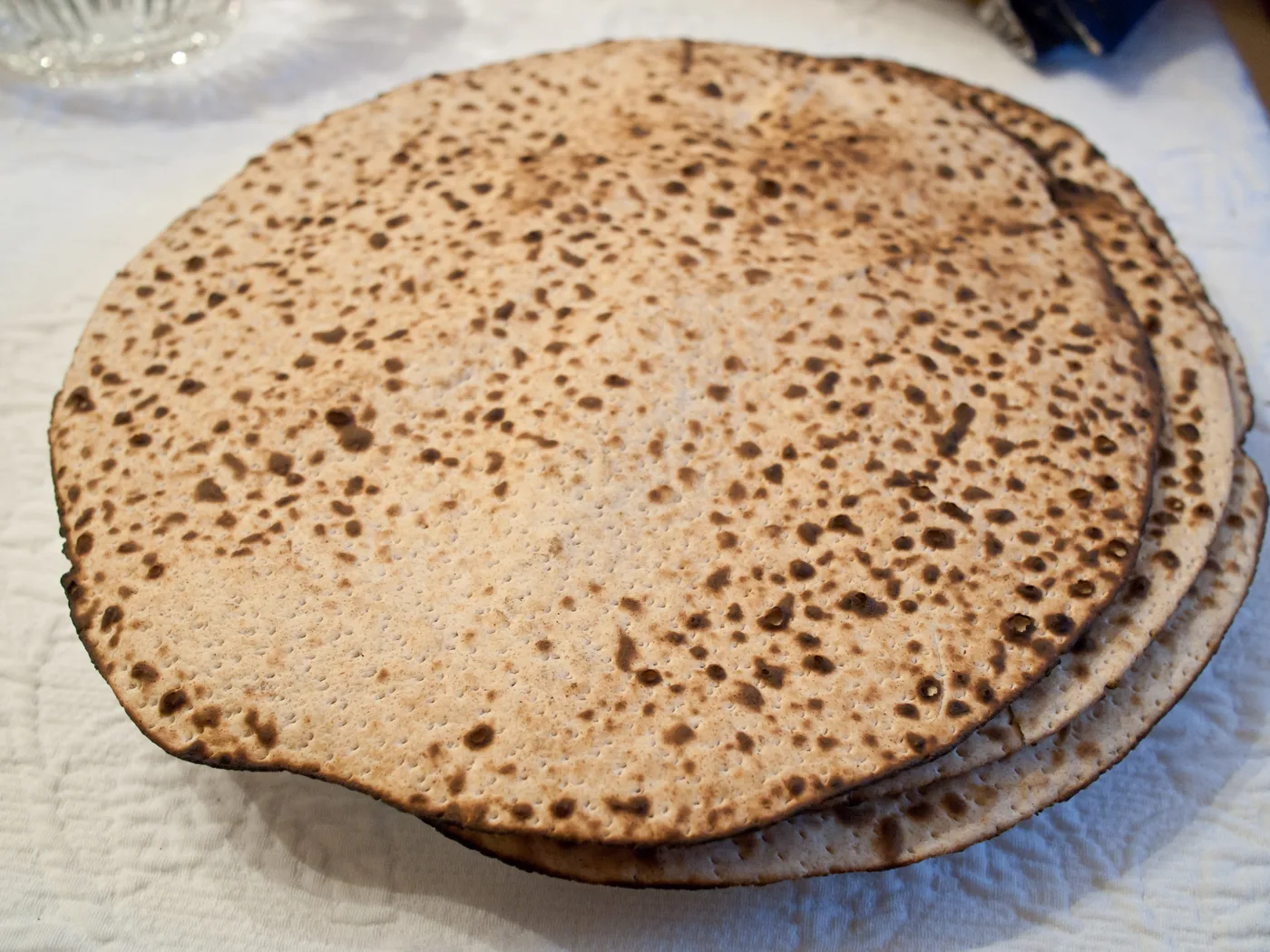
About Unleavened Bread
A bread made without leaven (yeast). In ancient times, bread makers used a piece of dough left from a previous bake. It had fermented and developed a certain acid content. This was the yeast that caused bread to rise.
By God's command, bread for the Jewish Passover must be unleavened. This applies to most other religious observances, too (Exodus 12:15–20; 23:15). The people could use leavened bread for spiritual purposes only in certain cases (Leviticus 7:13; 23:17). This was due to leaven's symbol of evil; fermentation implied decay.
Key References
They are to eat the meat that night, roasted over the fire, along with unleavened bread and bitter herbs.
On the fifteenth day of the same month begins the Feast of Unleavened Bread to the LORD. For seven days you must eat unleavened bread.
On the first day of the Feast of Unleavened Bread, the disciples came to Jesus and asked, “Where do You want us to prepare for You to eat the Passover?”
Therefore let us keep the feast, not with the old bread, leavened with malice and wickedness, but with the unleavened bread of sincerity and of truth.
All Scripture References (42)
Genesis (1)
But Lot insisted so strongly that they followed him into his house. He prepared a feast for them and baked unleavened bread, and they ate.
Exodus (12)
They are to eat the meat that night, roasted over the fire, along with unleavened bread and bitter herbs.
For seven days you must eat unleavened bread. On the first day you are to remove the leaven from your houses. Whoever eats anything leavened from the first day through the seventh must be cut off from Israel.
So you are to keep the Feast of Unleavened Bread, for on this very day I brought your divisions out of the land of Egypt. You must keep this day as a permanent statute for the generations to come.
In the first month you are to eat unleavened bread, from the evening of the fourteenth day until the evening of the twenty-first day.
You are not to eat anything leavened; eat unleavened bread in all your homes.”
Since their dough had no leaven, the people baked what they had brought out of Egypt into unleavened loaves. For when they had been driven out of Egypt, they could not delay and had not prepared any provisions for themselves.
For seven days you are to eat unleavened bread, and on the seventh day there shall be a feast to the LORD.
Unleavened bread shall be eaten during those seven days. Nothing leavened may be found among you, nor shall leaven be found anywhere within your borders.
You are to keep the Feast of Unleavened Bread as I commanded you: At the appointed time in the month of Abib you are to eat unleavened bread for seven days, because that was the month you came out of Egypt. No one may appear before Me empty-handed.
along with unleavened bread, unleavened cakes mixed with oil, and unleavened wafers anointed with oil. Make them out of fine wheat flour,
along with one loaf of bread, one cake of bread made with oil, and one wafer from the basket of unleavened bread that is before the LORD.
You are to keep the Feast of Unleavened Bread. For seven days at the appointed time in the month of Abib, you are to eat unleavened bread as I commanded you. For in the month of Abib you came out of Egypt.
Leviticus (8)
Now if you bring an offering of grain baked in an oven, it must consist of fine flour, either unleavened cakes mixed with oil or unleavened wafers coated with oil.
If your offering is a grain offering prepared on a griddle, it must be unleavened bread made of fine flour mixed with oil.
“Command Aaron and his sons that this is the law of the burnt offering: The burnt offering is to remain on the hearth of the altar all night, until morning, and the fire must be kept burning on the altar.
If he offers it in thanksgiving, then along with the sacrifice of thanksgiving he shall offer unleavened cakes mixed with olive oil, unleavened wafers coated with oil, and well-kneaded cakes of fine flour mixed with oil.
“Take Aaron and his sons, their garments, the anointing oil, the bull of the sin offering, the two rams, and the basket of unleavened bread,
And from the basket of unleavened bread that was before the LORD, he took one cake of unleavened bread, one cake of bread made with oil, and one wafer, and he placed them on the fat portions and on the right thigh.
And Moses said to Aaron and his remaining sons, Eleazar and Ithamar, “Take the grain offering that remains from the food offerings to the LORD and eat it without leaven beside the altar, because it is most holy.
On the fifteenth day of the same month begins the Feast of Unleavened Bread to the LORD. For seven days you must eat unleavened bread.
Numbers (5)
together with their grain offerings and drink offerings—and a basket of unleavened cakes made from fine flour mixed with oil and unleavened wafers coated with oil.
He shall also offer the ram as a peace offering to the LORD, along with the basket of unleavened bread. And the priest is to offer the accompanying grain offering and drink offering.
And the priest is to take the boiled shoulder from the ram, one unleavened cake from the basket, and one unleavened wafer, and put them into the hands of the Nazirite who has just shaved the hair of his consecration.
Such people are to observe it at twilight on the fourteenth day of the second month. They are to eat the lamb, together with unleavened bread and bitter herbs;
On the fifteenth day of this month, there shall be a feast; for seven days unleavened bread is to be eaten.
Deuteronomy (3)
You must not eat leavened bread with it; for seven days you are to eat with it unleavened bread, the bread of affliction, because you left the land of Egypt in haste—so that you may remember for the rest of your life the day you left the land of Egypt.
For six days you must eat unleavened bread, and on the seventh day you shall hold a solemn assembly to the LORD your God, and you must not do any work.
Three times a year all your men are to appear before the LORD your God in the place He will choose: at the Feast of Unleavened Bread, the Feast of Weeks, and the Feast of Tabernacles. No one should appear before the LORD empty-handed.
Joshua (1)
The day after the Passover, on that very day, they ate unleavened bread and roasted grain from the produce of the land.
Judges (3)
So Gideon went in and prepared a young goat and unleavened bread and an ephah of flour. He placed the meat in a basket and the broth in a pot and brought them out to present to Him under the oak.
And the angel of God said to him, “Take the meat and the unleavened bread, lay them on this rock, and pour out the broth.” And Gideon did so.
Then the angel of the LORD extended the tip of the staff that was in his hand and touched the meat and the unleavened bread. And fire flared from the rock and consumed the meat and the unleavened bread. Then the angel of the LORD vanished from his sight.
1 Samuel (1)
The woman had a fattened calf at her house, and she quickly slaughtered it. She also took flour, kneaded it, and baked unleavened bread.
2 Kings (1)
Although the priests of the high places did not come up to the altar of the LORD in Jerusalem, they ate unleavened bread with their fellow priests.
1 Chronicles (1)
as well as for the rows of the showbread, the fine flour for the grain offering, the wafers of unleavened bread, the baking, the mixing, and all measurements of quantity and size.
2 Chronicles (4)
He observed the daily requirement for offerings according to the commandment of Moses for Sabbaths, New Moons, and the three annual appointed feasts—the Feast of Unleavened Bread, the Feast of Weeks, and the Feast of Tabernacles.
In the second month, a very great assembly gathered in Jerusalem to celebrate the Feast of Unleavened Bread.
The Israelites who were present in Jerusalem celebrated the Feast of Unleavened Bread for seven days with great joy, and the Levites and priests praised the LORD day after day, accompanied by loud instruments of praise to the LORD.
The Israelites who were present also observed the Passover at that time, as well as the Feast of Unleavened Bread for seven days.
Ezra (1)
For seven days they kept the Feast of Unleavened Bread with joy, because the LORD had made them joyful and turned the heart of the king of Assyria toward them to strengthen their hands in the work on the house of the God of Israel.
Ezekiel (1)
On the fourteenth day of the first month you are to observe the Passover, a feast of seven days, during which unleavened bread shall be eaten.