Discussion
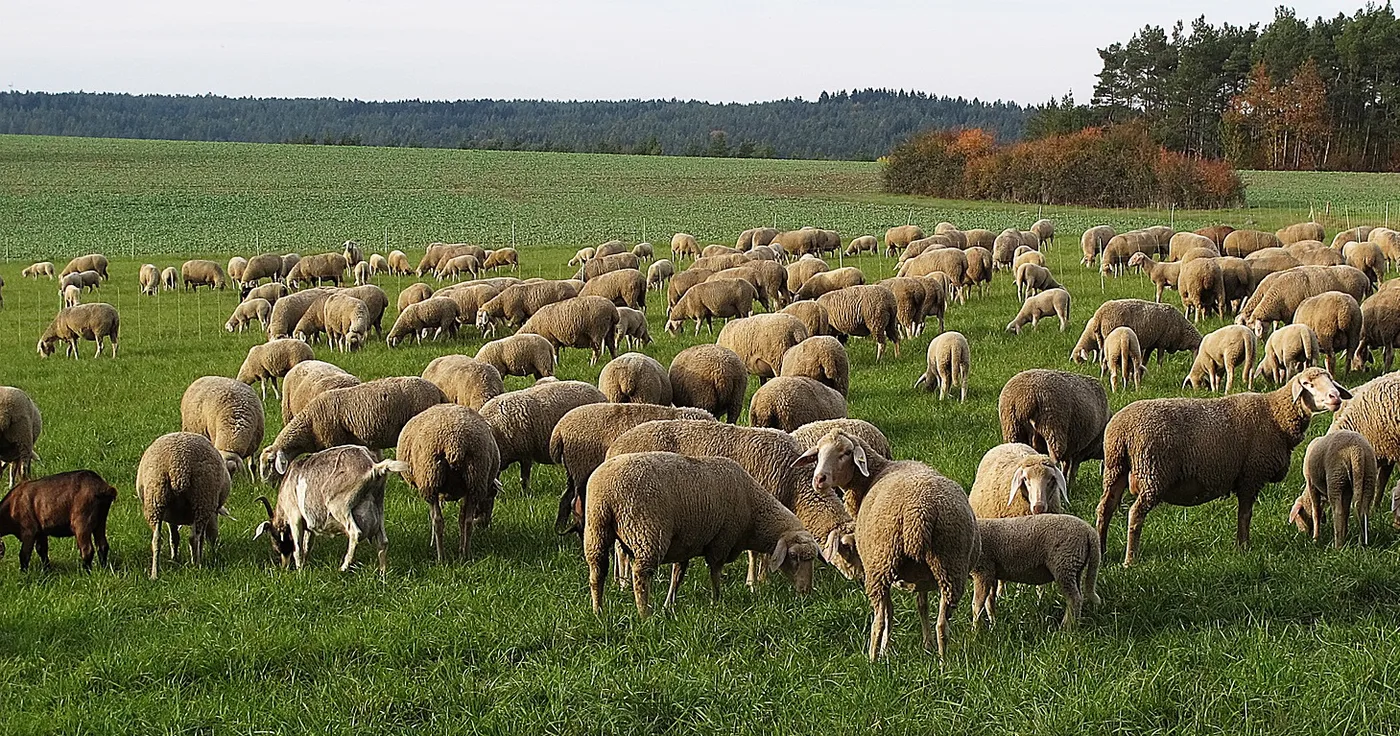
To people in Bible times sheep were the basic domestic animals. A poor person may not have owned any cattle or goats but would generally have had sheep. In Nathan’s parable in 2SA 12:3–2SA 12:6 the poverty of the one person is emphasized by the fact that he had only one lamb.
A wealthy person, on the other hand might own so many animals of different kinds that the herd would be divided up into flocks, each of which had its own herding personnel. In the search for grazing and water, the different flocks, all belonging to one person, would be scattered in different areas. In biblical Hebrew a combination of flocks of domestic animals can be referred to by the inclusive word ‘eder. This word usually includes sheep, but it can also include goats, cattle, donkeys, and possibly even camels. Within a person’s ‘eder sheep would have been the most numerous. If a writer wanted to be more specific, the groups of domestic animals within the ‘eder could be referred to with words meaning flocks, cattle, donkeys, and camels.
This “flock” within an ‘eder was called in Hebrew ts’on. This word always included sheep but could include goats too. Within the ts’on sheep would outnumber goats.
A ts’on consisted of individual animals called seh. While this word usually denotes sheep it can refer to goats too. In some contexts some English versions translate this word as “animal". For instance in EXO 12:5 the Hebrew text is best translated as “It must be an animal (seh) without defect, a one year old male; you may choose it either from your sheep or from your goats."
Translation
The text itself will often indicate the kinds of animal being referred to. In these contexts the translation is not usually difficult. However, when ‘eder is used without indication of what animals are intended, in many languages it is best to translate this word by a phrase meaning “herds of domestic animals” or “herds of animals which people raise".
Similarly with ts’on, the context often indicates whether sheep or goats are being referred to. However, where this word occurs without further clarification, it is best translated as “flocks of sheep and goats".
The translation of seh is not quite so straightforward. In some contexts it is best rendered “one animal", in others “one sheep or goat", and in others “a sheep". In languages in which there are different noun classes or classifiers for large and small animals, the appropriate one for an animal the size of a sheep or goat should be used when translating seh as “animal".