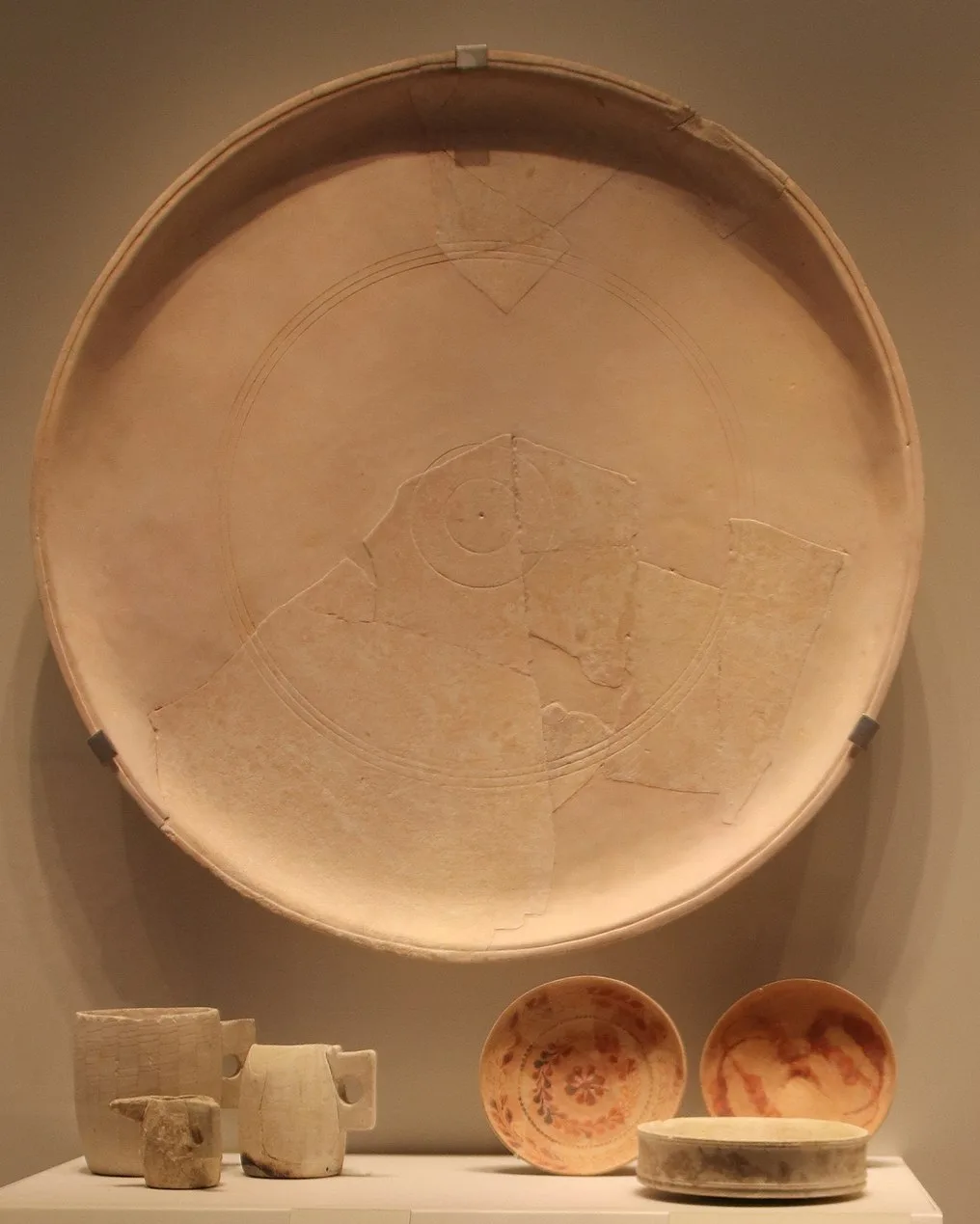
Description and usage
The plate was a flat dish on which food was eaten or served. It was normally made of baked clay, but the dishes of royalty and rich people could be made of precious metals.
Translation
PRO 19:24; PRO 26:15: In these passages the lazy person is described as someone who puts his hand in the dish and will not lift it to his mouth. In many cultures this could be misunderstood to mean that he is too lazy even to pick up a fork but just puts his hand in his food. This, however, is not the point of the proverb. It was normal to eat food with one’s hand. The person is lazy because he will not even lift his hand to his mouth. A translator should try to focus on the real reason for the person’s laziness. Two good models for PRO 19:24 are GNT “Some people are too lazy to put food in their own mouths” and CEV “Some people are too lazy to lift a hand to feed themselves.”
MAT 14:8: The Greek noun pinax may refer to any kind of flat dish; the word originally meant “board” or “plank.” In cultures where plates are not normally used, translators will use “bowl” or whatever is the normal object on which someone would carry food.