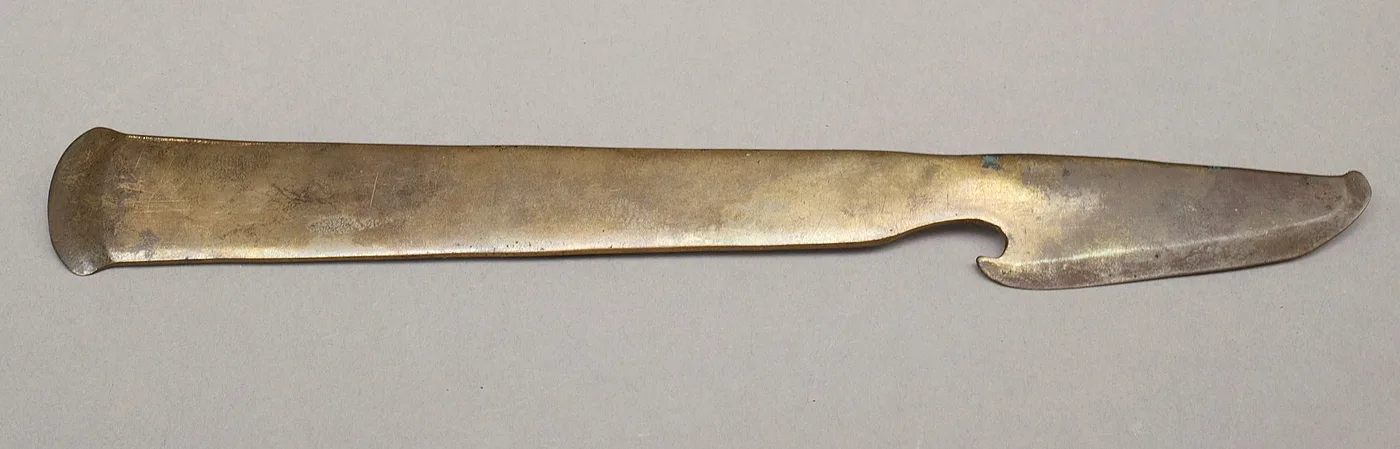
Description and usage
The razor was a very sharp knife used to shave hair from the skin.
Translation
The literal clause “no razor shall come on his head” in NUM 6:5 (compare JDG 13:5; JDG 16:17; 1SA 1:11) may be rendered “he must not cut his hair” or “you must not cut your hair or shave” (GNT).
The implement mentioned in JER 36:23 was a small knife or razor used by a scribe to sharpen his pens (see Pen). The English word “penknife” (RSV) comes from just such an implement, although today it may convey to the hearer a folding pocketknife.
Like many physical objects, the razor is sometimes used figuratively in the Bible. In PSA 52:4 the tongue is compared to a sharpened razor. All the translations consulted retain the metaphor. Similarly, in ISA 7:20 the razor symbolizes an attack by the king of Assyria. Almost all translations manage to retain the image of the razor in this passage. GNT does so only indirectly with “When that time comes, the Lord will hire a barber from across the Euphrates—the emperor of Assyria!—and he will shave off your beards and the hair on your heads and your bodies.”