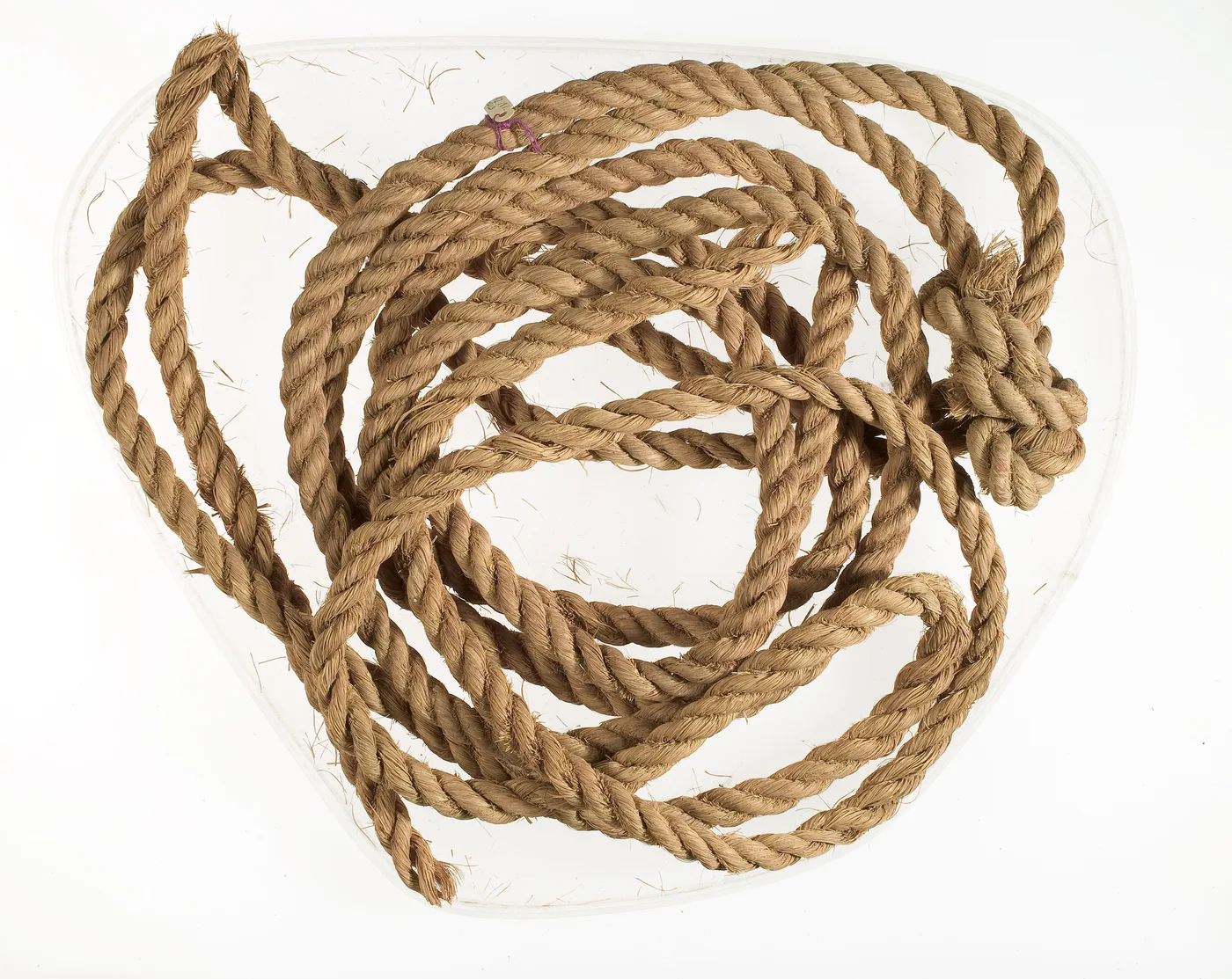
Description
Rope was a fairly thick cord formed by twisting or braiding several strands together. It could be made of a variety of materials, including palm fibers, linen, or reeds.
Usage
Rope had multiple uses. It could be used to bind things together, to connect draft animals to the implements they pulled, to tie people up, and even to measure the length of things.
Translation
In Exodus the Hebrew word ‘avoth refers to short, cordlike connectors between the ephod and the shoulder straps. The text says they were made of pure gold. They have been understood as chains with links or as strips of gold braided into a kind of cord. Translations have rendered it various ways, but none of these renderings leave a really clear picture (and in that sense they reflect the Hebrew text); for example, in EXO 28:14CEV and NIV have “braided chains of pure gold,” GNT says “chains of pure gold twisted like cords,” REB uses “chains of pure gold worked into the form of cords,” and NJPSV translates “chains of pure gold; braid these like corded work.” An alternative translation model offered by A Handbook on Exodus is “gold cords that they have braided [or, twisted] like rope” (page 656).
In JOB 36:8 the phrase “cords of affliction” (RSV, NIV; compare similar expressions in 2SA 22:6; PSA 18:5; PSA 18:5; PSA 116:3; PSA 119:61; PSA 129:4; HOS 11:4) will sound as strange in many languages as it does in English. The translator should look for a rendering that is functionally equivalent; for example, GNT renders JOB 36:8 b as “suffering for what they have done.” NCV maintains the metaphor of ropes while still using idiomatic English: “or if trouble, like ropes, ties them up.”
The Hebrew text of PSA 118:27 is uncertain. Most translations (RSV, GNT, NIV, CEV), as well as A Handbook on Psalms, understand the word ‘avoth to refer to leafy branches, perhaps in reference to a custom at the Feast of Tabernacles. Some translations (REB, NJPSV, NASB, New King James Version [NKJV]) and rabbinic commentators understand the word to refer to thick ropes used to tie the sacrificial victim to the altar.
The ropes mentioned in ACT 27:32 would obviously have been rather thick, while in JHN 2:15 the whip that Jesus made in driving the animals and merchants out of the Temple would probably have consisted of strong cords.
In ACT 27:40 the Greek word zeuktēria refers to ropes used to link two rudders of a boat (see the illustration at Steering oar, rudder). In most languages translators would simply use a term for “rope.”