A grass that grows up to 1 meter tall and produces grain used for making bread, beer, or animal feed.
About Barley
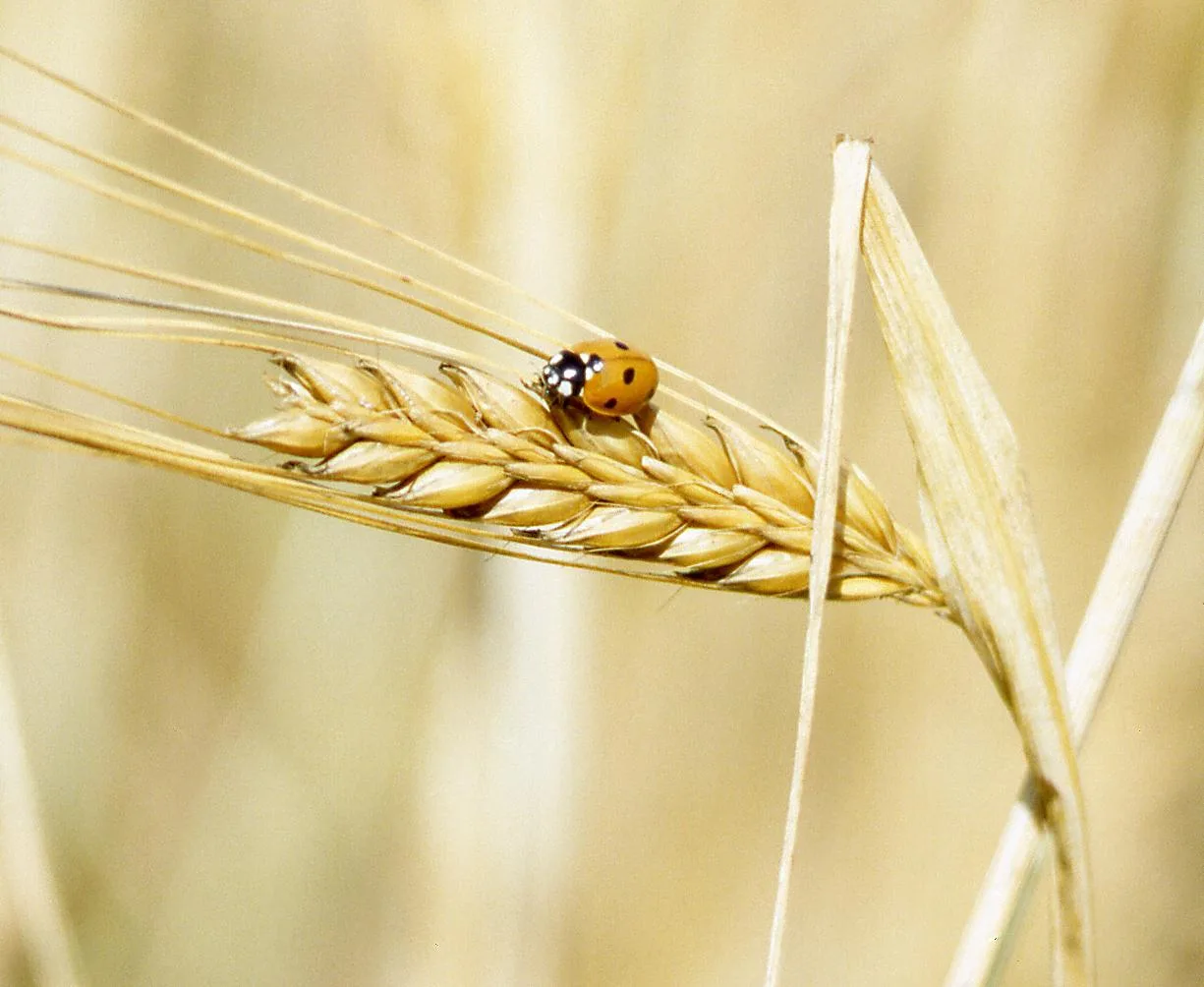
A grain plant that produces edible seeds. It has spikes of flowers with bristly hairs. Common barley (Hordeum distichon), winter barley (Hordeum hexastichon), and spring barley (Hordeum vulgare) have been grown in mild climate regions since ancient times. Barley was an important food in Bible lands and remains a major grain crop today.
Barley and wheat were the two main cereal crops of Egypt and Israel and the surrounding areas. Because barley was less expensive than wheat, people often used it to feed animals. However, people also ate barley, either by itself or mixed with wheat and other seeds (Ezekiel 4:9–12). The Bible mentions barley more than 30 times as a common food. Since barley cost less than wheat, it became a symbol of poverty (Hosea 3:2).
Key References
(Now the flax and barley were destroyed, since the barley was ripe and the flax was in bloom;
If a man consecrates to the LORD a parcel of his land, then your valuation shall be proportional to the seed required for it—fifty shekels of silver for every homer of barley seed.
“Here is a boy with five barley loaves and two small fish. But what difference will these make among so many?”
All Scripture References (111)
Genesis (6)
Then God said, “Let the earth bring forth vegetation: seed-bearing plants and fruit trees, each bearing fruit with seed according to its kind.” And it was so.
The earth produced vegetation: seed-bearing plants according to their kinds and trees bearing fruit with seed according to their kinds. And God saw that it was good.
Then God said, “Behold, I have given you every seed-bearing plant on the face of all the earth, and every tree whose fruit contains seed. They will be yours for food.
Why should we perish before your eyes—we and our land as well? Purchase us and our land in exchange for food. Then we, along with our land, will be slaves to Pharaoh. Give us seed that we may live and not die, and that the land may not become desolate.”
Then Joseph said to the people, “Now that I have acquired you and your land for Pharaoh this day, here is seed for you to sow in the land.
At harvest time, you are to give a fifth of it to Pharaoh, and four-fifths will be yours as seed for the field and food for yourselves and your households and children.”
Exodus (2)
(Now the flax and barley were destroyed, since the barley was ripe and the flax was in bloom;
Now the house of Israel called the bread manna. It was white like coriander seed and tasted like wafers made with honey.
Leviticus (13)
If a carcass falls on any seed for sowing, the seed is clean;
but if water has been put on the seed and a carcass falls on it, it is unclean for you.
When you reap the harvest of your land, you are not to reap to the very edges of your field or gather the gleanings of your harvest.
“Speak to the Israelites and say, ‘When you enter the land that I am giving you and you reap its harvest, you are to bring to the priest a sheaf of the firstfruits of your harvest.
And he shall wave the sheaf before the LORD so that it may be accepted on your behalf; the priest is to wave it on the day after the Sabbath.
On the day you wave the sheaf, you shall offer a year-old lamb without blemish as a burnt offering to the LORD,
From the day after the Sabbath, the day you brought the sheaf of the wave offering, you are to count off seven full weeks.
When you reap the harvest of your land, do not reap all the way to the edges of your field or gather the gleanings of your harvest. Leave them for the poor and the foreign resident. I am the LORD your God.’”
You are not to reap the aftergrowth of your harvest or gather the grapes of your untended vines. The land must have a year of complete rest.
The fiftieth year will be a Jubilee for you; you are not to sow the land or reap its aftergrowth or harvest the untended vines.
then this is what I will do to you: I will bring upon you sudden terror, wasting disease, and fever that will destroy your sight and drain your life. You will sow your seed in vain, because your enemies will eat it.
If a man consecrates to the LORD a parcel of his land, then your valuation shall be proportional to the seed required for it—fifty shekels of silver for every homer of barley seed.
Thus any tithe from the land, whether from the seed of the land or the fruit of the trees, belongs to the LORD; it is holy to the LORD.
Numbers (4)
then he is to bring his wife to the priest. He must also bring for her an offering of a tenth of an ephah of barley flour. He is not to pour oil over it or put frankincense on it, because it is a grain offering for jealousy, an offering of memorial as a reminder of iniquity.
Now the manna resembled coriander seed, and its appearance was like that of gum resin.
Why have you led us up out of Egypt to bring us to this wretched place? It is not a place of grain, figs, vines, or pomegranates—and there is no water to drink!”
Water will flow from his buckets, and his seed will have abundant water. His king will be greater than Agag, and his kingdom will be exalted.
Deuteronomy (6)
a land of wheat, barley, vines, fig trees, and pomegranates; a land of olive oil and honey;
For the land that you are entering to possess is not like the land of Egypt, from which you have come, where you sowed your seed and irrigated on foot, like a vegetable garden.
You must be sure to set aside a tenth of all the produce brought forth each year from your fields.
Do not plant your vineyard with two types of seed; if you do, the entire harvest will be defiled—both the crop you plant and the fruit of your vineyard.
If you are harvesting in your field and forget a sheaf there, do not go back to get it. It is to be left for the foreigner, the fatherless, and the widow, so that the LORD your God may bless you in all the work of your hands.
You will sow much seed in the field but harvest little, because the locusts will consume it.
Judges (1)
And as Gideon arrived, a man was telling his friend about a dream. “Behold, I had a dream,” he said, “and I saw a loaf of barley bread come tumbling into the Midianite camp. It struck the tent so hard that the tent overturned and collapsed.”
Ruth (14)
So Naomi returned from the land of Moab with her daughter-in-law Ruth the Moabitess. And they arrived in Bethlehem at the beginning of the barley harvest.
So Ruth departed and went out into the field and gleaned after the harvesters. And she happened to come to the part of the field belonging to Boaz, who was from the clan of Elimelech.
Just then Boaz arrived from Bethlehem and said to the harvesters, “The LORD be with you.” “The LORD bless you,” they replied.
And Boaz asked the foreman of his harvesters, “Whose young woman is this?”
The foreman answered, “She is the Moabitess who returned with Naomi from the land of Moab.
She has said, ‘Please let me glean and gather among the sheaves after the harvesters.’ So she came out and has continued from morning until now, except that she rested a short time in the shelter.”
Let your eyes be on the field they are harvesting, and follow along after these girls. Indeed, I have ordered the young men not to touch you. And when you are thirsty, go and drink from the jars the young men have filled.”
At mealtime Boaz said to her, “Come over here; have some bread and dip it into the vinegar sauce.” So she sat down beside the harvesters, and he offered her roasted grain, and she ate and was satisfied and had some left over.
When Ruth got up to glean, Boaz ordered his young men, “Even if she gathers among the sheaves, do not insult her.
So Ruth gathered grain in the field until evening. And when she beat out what she had gleaned, it was about an ephah of barley.
So Ruth stayed close to the servant girls of Boaz to glean grain until the barley and wheat harvests were finished. And she lived with her mother-in-law.
Now is not Boaz, with whose servant girls you have been working, a relative of ours? In fact, tonight he is winnowing barley on the threshing floor.
And he told her, “Bring the shawl you are wearing and hold it out.” When she did so, he poured in six measures of barley and placed it on her. Then he went into the city.
And she said, “He gave me these six measures of barley, for he said, ‘Do not go back to your mother-in-law empty-handed.’”
1 Samuel (3)
Now the people of Beth-shemesh were harvesting wheat in the valley, and when they looked up and saw the ark, they were overjoyed at the sight.
He will appoint some for himself as commanders of thousands and of fifties, and others to plow his ground, to reap his harvest, and to make his weapons of war and equipment for his chariots.
He will take a tenth of your grain and grape harvest and give it to his officials and servants.
2 Samuel (3)
Then Absalom said to his servants, “Look, Joab’s field is next to mine, and he has barley there. Go and set it on fire!” And Absalom’s servants set the field on fire.
They brought beds, basins, and earthen vessels, as well as wheat, barley, flour, roasted grain, beans, lentils,
And he delivered them into the hands of the Gibeonites, and they hanged them on the hill before the LORD. So all seven of them fell together; they were put to death in the first days of the harvest, at the beginning of the barley harvest.
1 Kings (2)
Then Hiram sent a reply to Solomon, saying: “I have received your message; I will do all you desire regarding the cedar and cypress timber.
And with the stones, Elijah built an altar in the name of the LORD. Then he dug a trench around the altar large enough to hold two seahs of seed.
2 Kings (6)
And the child grew, and one day he went out to his father, who was with the harvesters.
Now a man from Baal-shalishah came to the man of God with a sack of twenty loaves of barley bread from the first ripe grain. “Give it to the people to eat,” said Elisha.
Then Elisha said, “Hear the word of the LORD! This is what the LORD says: ‘About this time tomorrow at the gate of Samaria, a seah of fine flour will sell for a shekel, and two seahs of barley will sell for a shekel.’”
Then the people went out and plundered the camp of the Arameans. It was then that a seah of fine flour sold for a shekel, and two seahs of barley sold for a shekel, according to the word of the LORD.
It happened just as the man of God had told the king: “About this time tomorrow at the gate of Samaria, two seahs of barley will sell for a shekel, and a seah of fine flour will sell for a shekel.”
And this will be a sign to you, O Hezekiah: This year you will eat what grows on its own, and in the second year what springs from the same. But in the third year you will sow and reap; you will plant vineyards and eat their fruit.
1 Chronicles (1)
He was with David at Pas-dammim when the Philistines gathered there for battle. At a place with a field full of barley, the troops fled from the Philistines.
2 Chronicles (3)
to prepare for me timber in abundance, because the temple I am building will be great and wonderful.
He is the son of a woman from the daughters of Dan, and his father is a man of Tyre. He is skilled in work with gold and silver, bronze and iron, stone and wood, purple, blue, and crimson yarn, and fine linen. He is experienced in every kind of engraving and can execute any design that is given him. He will work with your craftsmen and with those of my lord, your father David.
Jotham waged war against the king of the Ammonites and defeated them, and that year they gave him a hundred talents of silver, ten thousand cors of wheat, and ten thousand cors of barley. They paid him the same in the second and third years.
Job (5)
As I have observed, those who plow iniquity and those who sow trouble reap the same.
They gather fodder in the fields and glean the vineyards of the wicked.
Without clothing, they wander about naked. They carry the sheaves, but still go hungry.
then let briers grow instead of wheat and stinkweed instead of barley.” Thus conclude the words of Job.
Can you trust him to bring in your grain and gather it to your threshing floor?
Psalms (3)
Those who sow in tears will reap with shouts of joy.
He who goes out weeping, bearing a trail of seed, will surely return with shouts of joy, carrying sheaves of grain.
unable to fill the hands of the reaper, or the arms of the binder of sheaves.
Proverbs (1)
He who sows injustice will reap disaster, and the rod of his fury will be destroyed.
Ecclesiastes (2)
He who watches the wind will fail to sow, and he who observes the clouds will fail to reap.
Sow your seed in the morning, and do not rest your hands in the evening, for you do not know which will succeed, whether this or that, or if both will equally prosper.
Isaiah (7)
For ten acres of vineyard will yield but a bath of wine, and a homer of seed only an ephah of grain.”
as the reaper gathers the standing grain and harvests the ears with his arm, as one gleans heads of grain in the Valley of Rephaim.
On the great waters came the grain of Shihor; the harvest of the Nile was the revenue of Tyre; she was the merchant of the nations.
When he has leveled its surface, does he not sow caraway and scatter cumin? He plants wheat in rows and barley in plots, and rye within its border.
Then He will send rain for the seed that you have sown in the ground, and the food that comes from your land will be rich and plentiful. On that day your cattle will graze in open pastures.
And this will be a sign to you, O Hezekiah: This year you will eat what grows on its own, and in the second year what springs from the same. But in the third year you will sow and reap; you will plant vineyards and eat their fruit.
For just as rain and snow fall from heaven and do not return without watering the earth, making it bud and sprout, and providing seed to sow and food to eat,
Jeremiah (7)
I had planted you like a choice vine from the very best seed. How could you turn yourself before Me into a rotten, wild vine?
For death has climbed in through our windows; it has entered our fortresses to cut off the children from the streets, the young men from the town squares.
They have sown wheat but harvested thorns. They have exhausted themselves to no avail. Bear the shame of your harvest because of the fierce anger of the LORD.”
“The days are coming,” declares the LORD, “when I will sow the house of Israel and the house of Judah with the seed of man and of beast.
Nor are you ever to build a house or sow seed or plant a vineyard. Those things are not for you. Instead, you must live in tents all your lives, so that you may live a long time in the land where you wander.’
Nor have we built houses in which to live, and we have not owned any vineyards or fields or crops.
But ten of the men among them said to Ishmael, “Do not kill us, for we have hidden treasure in the field—wheat, barley, oil, and honey!” So he refrained from killing them with the others.
Ezekiel (5)
But take wheat, barley, beans, lentils, millet, and spelt; put them in a single container and make them into bread for yourself. This is what you are to eat during the 390 days you lie on your side.
And you shall eat the food as you would a barley cake, after you bake it over dried human excrement in the sight of the people.”
You have profaned Me among My people for handfuls of barley and scraps of bread. By lying to My people who would listen, you have killed those who should not have died and spared those who should not have lived.
He took some of the seed of the land and planted it in fertile soil; he placed it by abundant waters and set it out like a willow.
This is the contribution you are to offer: a sixth of an ephah from each homer of wheat, and a sixth of an ephah from each homer of barley.
Hosea (4)
So I bought her for fifteen shekels of silver and a homer and a lethech of barley.
For they sow the wind, and they shall reap the whirlwind. There is no standing grain; what sprouts fails to yield flour. Even if it should produce, the foreigners would swallow it up.
Sow for yourselves righteousness and reap the fruit of loving devotion; break up your unplowed ground. For it is time to seek the LORD until He comes and sends righteousness upon you like rain.
You have plowed wickedness and reaped injustice; you have eaten the fruit of lies. Because you have trusted in your own way and in the multitude of your mighty men,
Joel (1)
Be dismayed, O farmers, wail, O vinedressers, over the wheat and barley, because the harvest of the field has perished.
Amos (1)
“Behold, the days are coming,” declares the LORD, “when the plowman will overtake the reaper and the treader of grapes, the sower of seed. The mountains will drip with sweet wine, with which all the hills will flow.
Micah (1)
You will sow but not reap; you will press olives but not anoint yourselves with oil; you will tread grapes but not drink the wine.
Haggai (1)
Is there still seed in the barn? The vine, the fig, the pomegranate, and the olive tree have not yet yielded fruit. But from this day on, I will bless you.”
Mark (3)
Jesus also said, “The kingdom of God is like a man who scatters seed on the ground.
Night and day he sleeps and wakes, and the seed sprouts and grows, though he knows not how.
they will pick up snakes with their hands, and if they drink any deadly poison, it will not harm them; they will lay their hands on the sick, and they will be made well.”
Luke (2)
John (2)
2 Corinthians (1)
Now He who supplies seed to the sower and bread for food will supply and multiply your store of seed and will increase the harvest of your righteousness.
Revelation (1)
And I heard what sounded like a voice from among the four living creatures, saying, “A quart of wheat for a denarius, and three quarts of barley for a denarius, and do not harm the oil and wine.”