A vine plant that produces hard-shelled fruits used as containers or musical instruments.
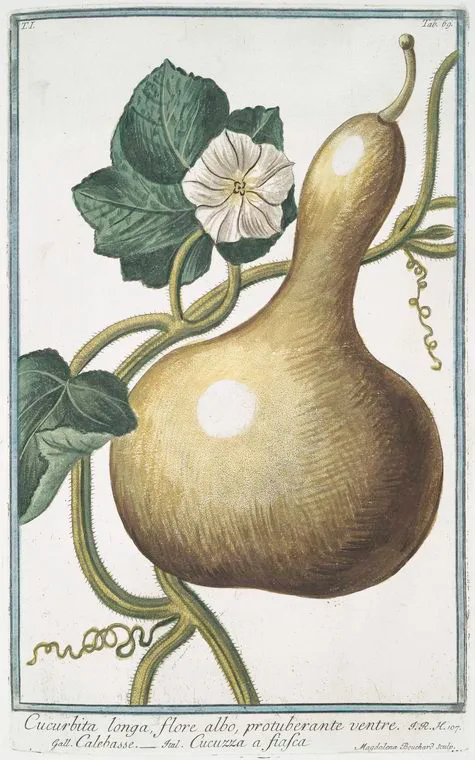
About Bottle Gourd
The Bottle Gourd or Calabash Lagenaria siceraria was one of the first plants to be domesticated by human beings. It has been used for food, for medicine, and for various utensils and musical instruments. It is indigenous to Africa but was probably introduced into Asia and the Americas about ten thousand years ago, with or without the help of humans. The name of the genus comes from the Latin word lagoena, meaning “flask” (but almost certainly the first Roman flasks were dried gourds). The species name is derived from the Latin word for “dry,” suggesting that the fruit is usable in its dried form. Although the people of the Bible lands undoubtedly used the split bottle gourds in their homes as bowls or “dippers,” as we find in Africa and Asia, the only references we have are to the image of the gourd in the artwork carved into the cedar of King Solomon’s palace (1KI 6:18) and in the decorating of the giant bronze basin that stood in front of the Temple (1KI 7:24; 1KI 7:24). According to Zohary, the bottle gourd is also found in the place name “Dilean” (JOS 15:38), which comes from the Hebrew word dela‘ath, a postbiblical name for the bottle gourd.
Key References
The cedar paneling inside the temple was carved with gourds and open flowers. Everything was cedar; not a stone could be seen.
Below the rim, ornamental buds encircled it, ten per cubit all the way around the Sea, cast in two rows as a part of the Sea.
All Scripture References (2)
1 Kings (2)
The cedar paneling inside the temple was carved with gourds and open flowers. Everything was cedar; not a stone could be seen.
Below the rim, ornamental buds encircled it, ten per cubit all the way around the Sea, cast in two rows as a part of the Sea.