Discussion
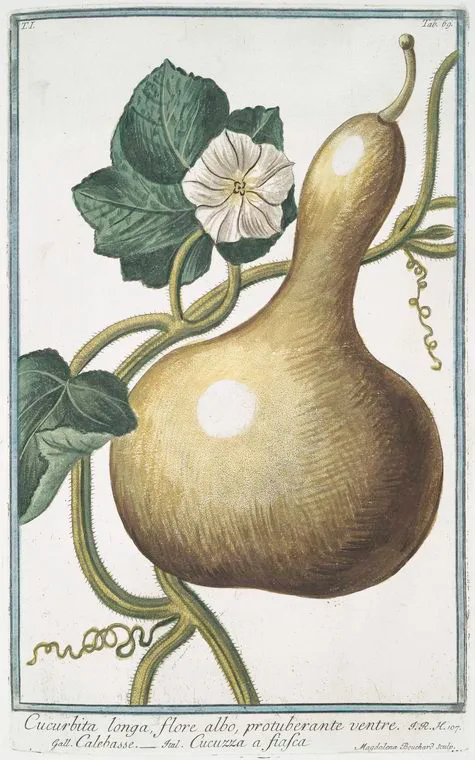
The Bottle Gourd or Calabash Lagenaria siceraria was one of the first plants to be domesticated by human beings. It has been used for food, for medicine, and for various utensils and musical instruments. It is indigenous to Africa but was probably introduced into Asia and the Americas about ten thousand years ago, with or without the help of humans. The name of the genus comes from the Latin word lagoena, meaning “flask” (but almost certainly the first Roman flasks were dried gourds). The species name is derived from the Latin word for “dry,” suggesting that the fruit is usable in its dried form. Although the people of the Bible lands undoubtedly used the split bottle gourds in their homes as bowls or “dippers,” as we find in Africa and Asia, the only references we have are to the image of the gourd in the artwork carved into the cedar of King Solomon’s palace (1KI 6:18) and in the decorating of the giant bronze basin that stood in front of the Temple (1KI 7:24; 1KI 7:24). According to Zohary, the bottle gourd is also found in the place name “Dilean” (JOS 15:38), which comes from the Hebrew word dela‘ath, a postbiblical name for the bottle gourd.
Description
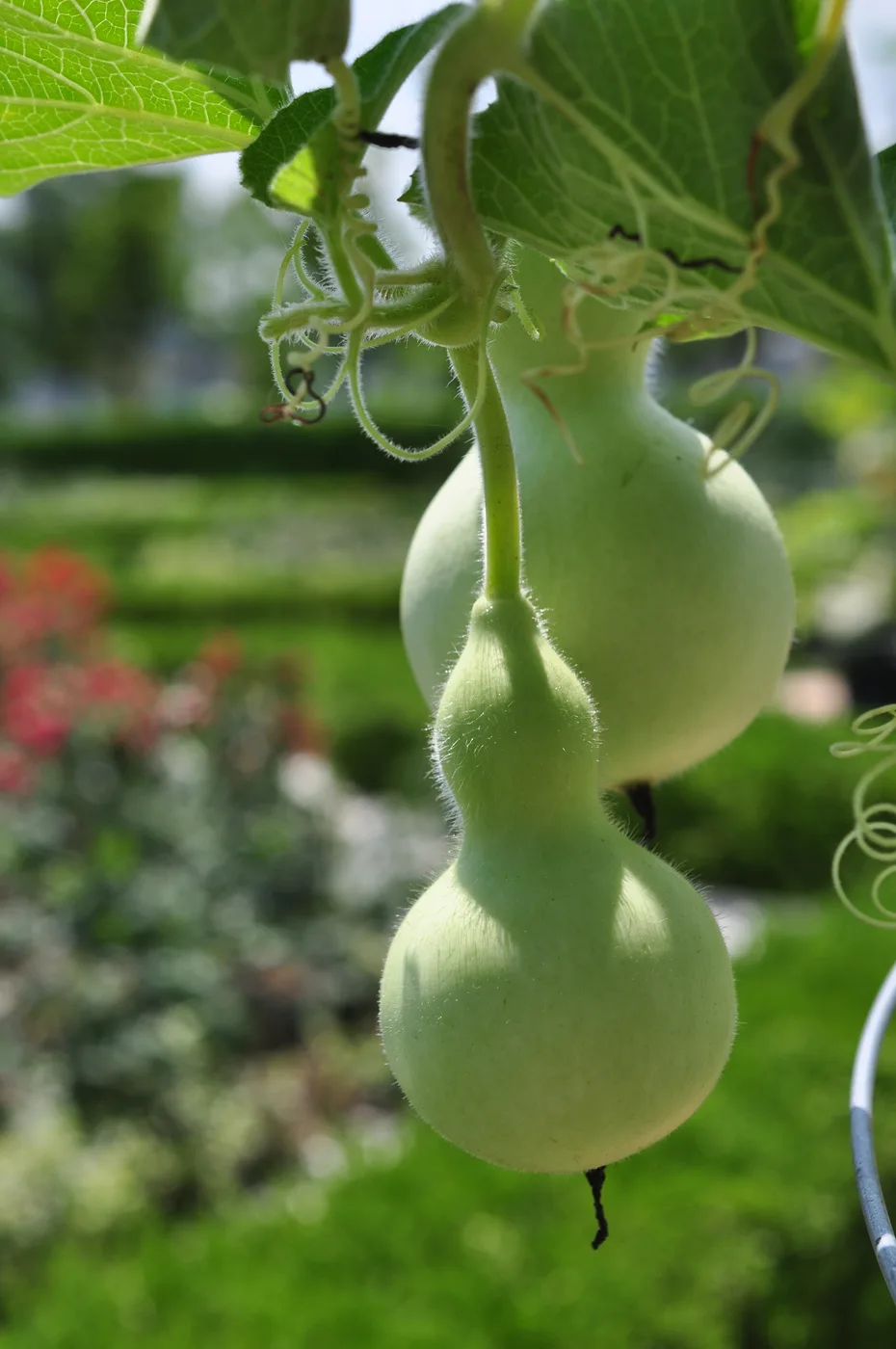
The bottle gourd is a climbing vine like a cucumber or pumpkin. Its stem is square, ribbed, and hairy, and can grow up to 5 meters (17 feet) long. The leaves are heart-shaped, the size of a human hand, and slightly lobed. The flowers are yellow with five petals, giving way to fruits that may be of many different shapes depending on the variety. Most gourds are globular at one end, with a protrusion that may be elongated, making them very useful, when cut in half, as big spoons in the kitchen.
Special significance
Translation
Translators in temperate or tropical areas of Africa and Asia will have a word for these gourds. In French they are called courge bouteille, in Portuguese abobora-carneira or cabaco, in Latin America calabaza or cogorda, in China po gua, in India lauki, in Indonesia labu, in Japan hyotan or yugao, in Malaysia labu ayer, in Philippines upo, in Sri Lanka diya labu, in Thailand buap khaus, and in Vietnam bau.
If the only gourd people are familiar with is round like a ball, then an illustration may help in the text, or a footnote can describe the special shape of the Holy Land gourd, insofar as we know it. The bottle gourd is related to the wild gourd mentioned in 2KI 4:39, which poisoned a group of prophets (see Wild gourd (colocynth, egusi, bitter apple)). The “gourd” (KJV, REB) in JON 4:6 is now thought to be the castor oil plant (see Castor oil plant (castor bean plant)).