It has drooping branches, large white flowers, and buds that are often pickled and eaten to stimulate appetite.
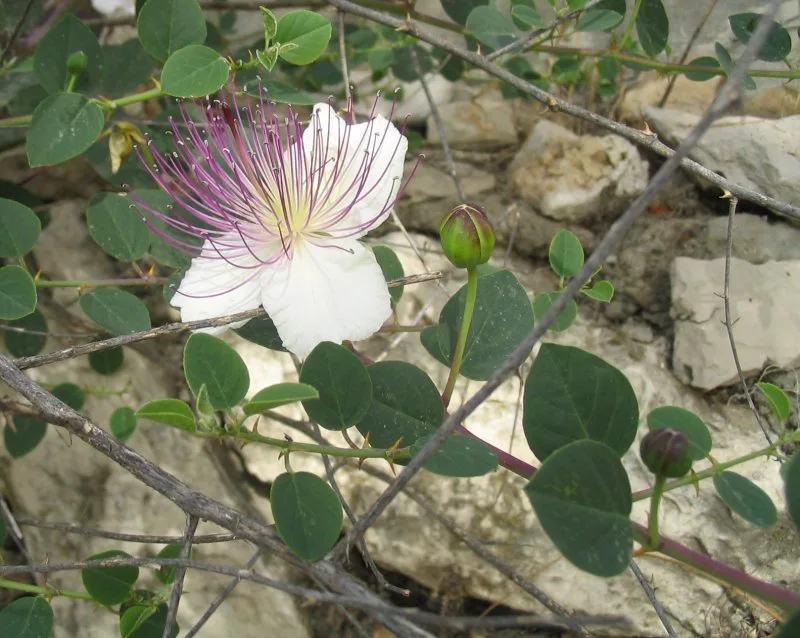
About Caper
In the delightful description of old age in ECC 12:0, a string of metaphors is followed by the clause “desire [’aviyonah in Hebrew] fails.” The word ’aviyonah only occurs once in the Bible, so there has been much debate over its meaning. The Septuagint translators took the first meaning of the word and rendered it “caper berry,” referring to the spicy tasting bud of a small bush (Capparis spinosa) common in the Middle East. The Syriac and the Vulgate have the same rendering, and so do NAB and GECL. GW, JB, and NJPSV are similar with “caper bush,” and so are NEB and REB with “caper-buds.” La Nouvelle Bible Segond and La Sainte Bible: Version Synodale say simply “caper,” and FRCL uses the generic term “spices.”
Key References
when men fear the heights and dangers of the road, when the almond tree blossoms, the grasshopper loses its spring, and the caper berry shrivels—for then man goes to his eternal home and mourners walk the streets.
All Scripture References (1)
Ecclesiastes (1)
when men fear the heights and dangers of the road, when the almond tree blossoms, the grasshopper loses its spring, and the caper berry shrivels—for then man goes to his eternal home and mourners walk the streets.