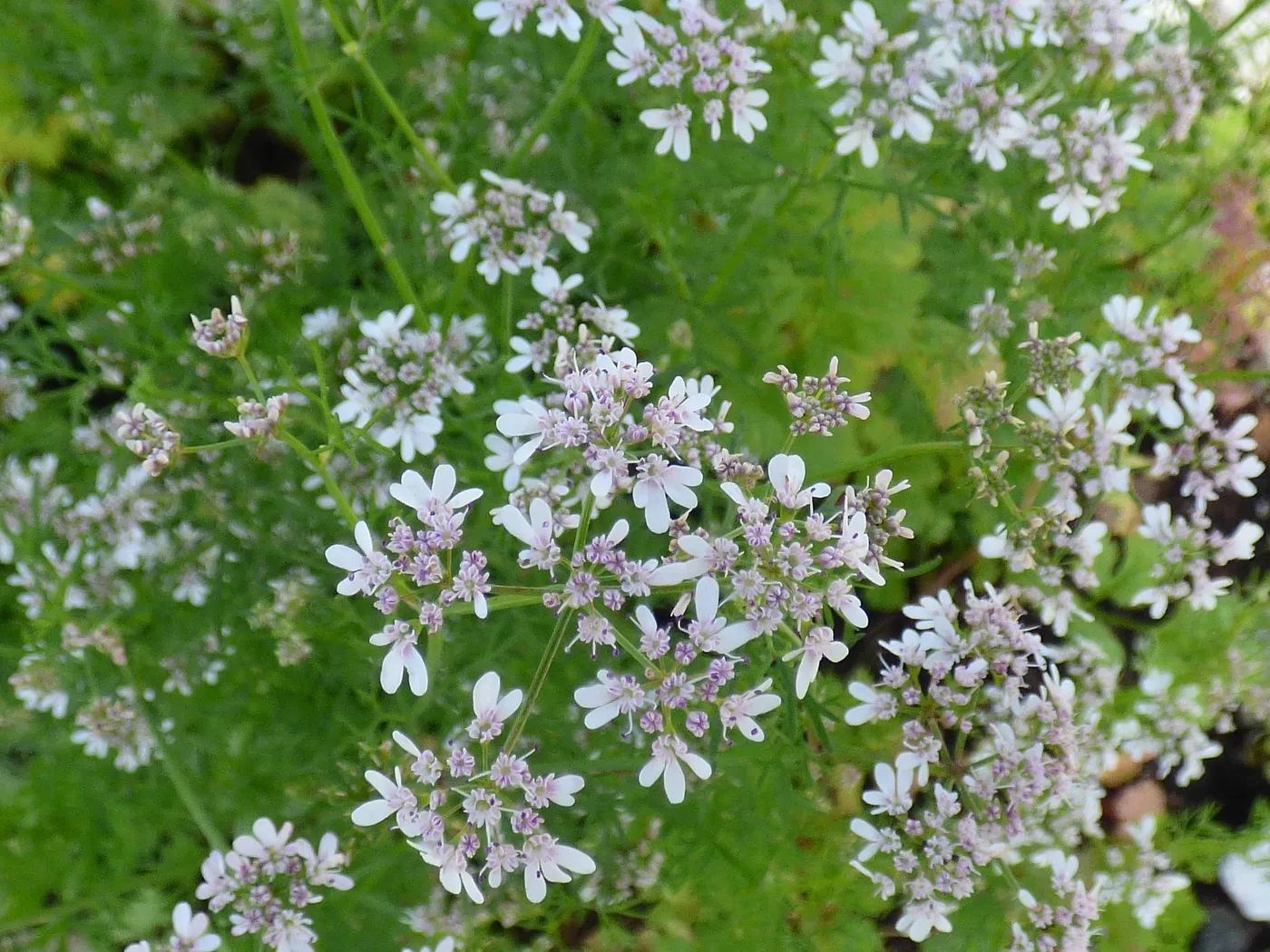
A herb with finely divided upper leaves, broad lower leaves, tiny white or reddish flowers, and seeds used in cooking and perfumes; its seeds look like small peas.
About Coriander
An annual herb native to Palestine. The fragrant seeds of this plant are mentioned twice in the description of manna (Exodus 16:31; Numbers 11:7). The references in these verses clearly refer to the common coriander plant (Coriandrum sativum).
Coriander was commonly found growing alongside grain in cultivated fields throughout Israel and the surrounding areas. It also grows wild in Egypt. Ancient people used it both as a food flavoring and as medicine. The leaves have a strong, pleasant smell and are used in soups and for flavoring puddings, curries, and wines.
Key References
Now the house of Israel called the bread manna. It was white like coriander seed and tasted like wafers made with honey.
Now the manna resembled coriander seed, and its appearance was like that of gum resin.
All Scripture References (35)
Genesis (6)
Then God said, “Let the earth bring forth vegetation: seed-bearing plants and fruit trees, each bearing fruit with seed according to its kind.” And it was so.
The earth produced vegetation: seed-bearing plants according to their kinds and trees bearing fruit with seed according to their kinds. And God saw that it was good.
Then God said, “Behold, I have given you every seed-bearing plant on the face of all the earth, and every tree whose fruit contains seed. They will be yours for food.
Why should we perish before your eyes—we and our land as well? Purchase us and our land in exchange for food. Then we, along with our land, will be slaves to Pharaoh. Give us seed that we may live and not die, and that the land may not become desolate.”
Then Joseph said to the people, “Now that I have acquired you and your land for Pharaoh this day, here is seed for you to sow in the land.
At harvest time, you are to give a fifth of it to Pharaoh, and four-fifths will be yours as seed for the field and food for yourselves and your households and children.”
Exodus (1)
Now the house of Israel called the bread manna. It was white like coriander seed and tasted like wafers made with honey.
Leviticus (5)
If a carcass falls on any seed for sowing, the seed is clean;
but if water has been put on the seed and a carcass falls on it, it is unclean for you.
then this is what I will do to you: I will bring upon you sudden terror, wasting disease, and fever that will destroy your sight and drain your life. You will sow your seed in vain, because your enemies will eat it.
If a man consecrates to the LORD a parcel of his land, then your valuation shall be proportional to the seed required for it—fifty shekels of silver for every homer of barley seed.
Thus any tithe from the land, whether from the seed of the land or the fruit of the trees, belongs to the LORD; it is holy to the LORD.
Numbers (3)
Now the manna resembled coriander seed, and its appearance was like that of gum resin.
Why have you led us up out of Egypt to bring us to this wretched place? It is not a place of grain, figs, vines, or pomegranates—and there is no water to drink!”
Water will flow from his buckets, and his seed will have abundant water. His king will be greater than Agag, and his kingdom will be exalted.
Deuteronomy (4)
For the land that you are entering to possess is not like the land of Egypt, from which you have come, where you sowed your seed and irrigated on foot, like a vegetable garden.
You must be sure to set aside a tenth of all the produce brought forth each year from your fields.
Do not plant your vineyard with two types of seed; if you do, the entire harvest will be defiled—both the crop you plant and the fruit of your vineyard.
You will sow much seed in the field but harvest little, because the locusts will consume it.
1 Samuel (1)
He will take a tenth of your grain and grape harvest and give it to his officials and servants.
1 Kings (1)
And with the stones, Elijah built an altar in the name of the LORD. Then he dug a trench around the altar large enough to hold two seahs of seed.
Job (1)
Can you trust him to bring in your grain and gather it to your threshing floor?
Psalms (1)
He who goes out weeping, bearing a trail of seed, will surely return with shouts of joy, carrying sheaves of grain.
Ecclesiastes (1)
Sow your seed in the morning, and do not rest your hands in the evening, for you do not know which will succeed, whether this or that, or if both will equally prosper.
Isaiah (4)
For ten acres of vineyard will yield but a bath of wine, and a homer of seed only an ephah of grain.”
On the great waters came the grain of Shihor; the harvest of the Nile was the revenue of Tyre; she was the merchant of the nations.
Then He will send rain for the seed that you have sown in the ground, and the food that comes from your land will be rich and plentiful. On that day your cattle will graze in open pastures.
For just as rain and snow fall from heaven and do not return without watering the earth, making it bud and sprout, and providing seed to sow and food to eat,
Jeremiah (4)
I had planted you like a choice vine from the very best seed. How could you turn yourself before Me into a rotten, wild vine?
“The days are coming,” declares the LORD, “when I will sow the house of Israel and the house of Judah with the seed of man and of beast.
Nor are you ever to build a house or sow seed or plant a vineyard. Those things are not for you. Instead, you must live in tents all your lives, so that you may live a long time in the land where you wander.’
Nor have we built houses in which to live, and we have not owned any vineyards or fields or crops.
Ezekiel (1)
He took some of the seed of the land and planted it in fertile soil; he placed it by abundant waters and set it out like a willow.
Amos (1)
“Behold, the days are coming,” declares the LORD, “when the plowman will overtake the reaper and the treader of grapes, the sower of seed. The mountains will drip with sweet wine, with which all the hills will flow.
Haggai (1)
Is there still seed in the barn? The vine, the fig, the pomegranate, and the olive tree have not yet yielded fruit. But from this day on, I will bless you.”