Discussion
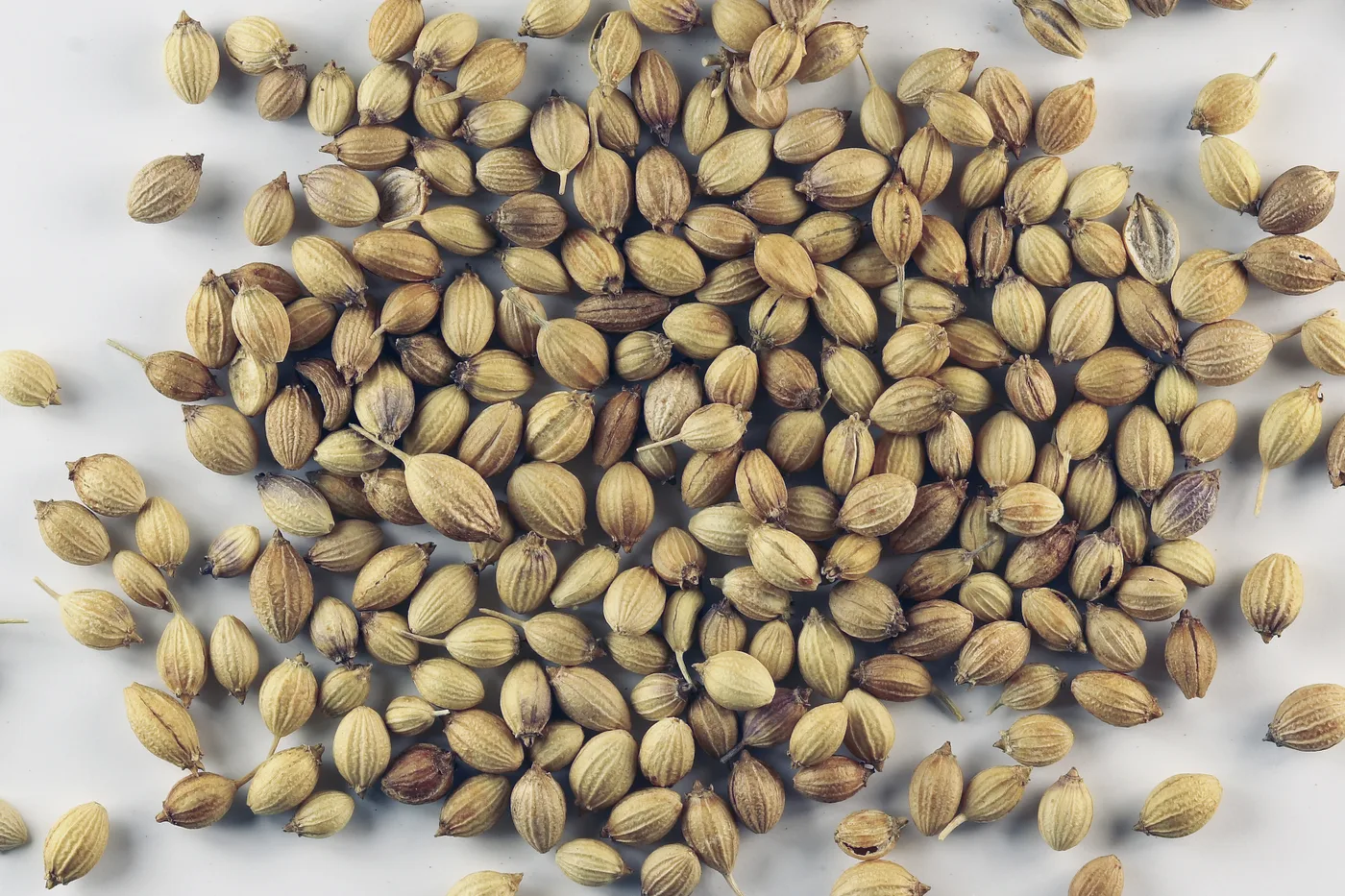
According to EXO 16:31, the miraculous food called “manna” that God sent to the wandering Israelites in the desert was “like coriander seed, white.” Coriander Coriandrum sativum did in fact grow in Egypt and the Holy Land. However, its seed is not very white, but more brown or gray, and the NUM 11:7 tells us that the color was that of bdellium, of which we know almost nothing for certain. Further, the Septuagint has the Greek word korion, which is not coriander. The Arabic name gidda, the cognate of the Hebrew word gad, refers to a different plant, namely wormwood. To complicate the matter further, EXO 16:14 describes manna as “flaky,” whereas coriander seeds are spherical or egg-shaped.
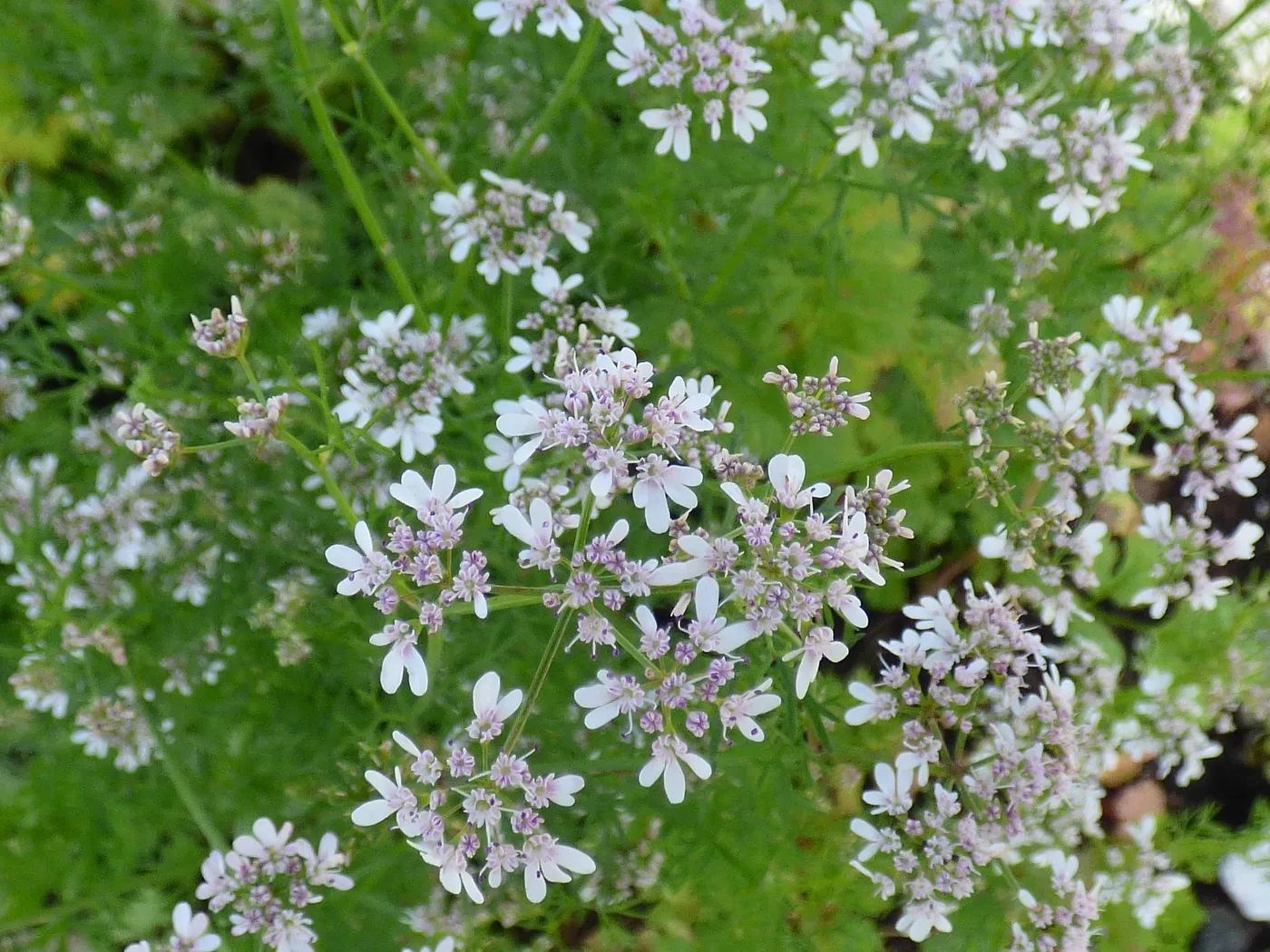
In view of these difficulties, Zohary expresses doubt as to whether the word gad actually refers to the plant we now know as coriander. He speculates that early translators, not knowing what gad referred to, took the Punic word goid for coriander, and made the association between gad and coriander. The writer would have done us a favor if he had said “like coriander flowers,” which can be white, but unfortunately the text has “seed.” Maybe an early narrator or scribe made a mistake in transmitting the text. Could the Hebrew word perach (“flower”) perhaps have been replaced by zera‘ (“seed”)?
However, it is possible that coriander seed really was intended, and that the point of comparison between manna and coriander seeds was their size, which is about 4 millimeters (3/16 inch) in diameter, the size of a peppercorn (black pepper seed). (Thus REB and NAB have “like coriander seed, but white.”) Another possibility is that the writer was thinking of the way the seeds cluster, or of their firmness. We are told in NUM 11:8 that the people pounded the manna in mortars and ground it in mills, suggesting some degree of hardness.
Description
Special significance
As discussed above, coriander is used to describe the appearance of manna. Unfortunately we don’t know whether the point of comparison is the color, shape, size, or texture. Coriander is common in Israel and Egypt, and all the way across to Iraq and India. The leaves are used as a spice for food and also in perfume. But all of that is irrelevant if the point of comparison has to do with the seed.
Translation
A Handbook on Exodus says that it is the shape and size of the coriander seeds that are the point of comparison between coriander and manna, but since we are not sure, it may be difficult to find a cultural equivalent. So translators can give a generic rendering, as GNB has done (“like a small white seed”), omitting reference to coriander (but including it in a footnote). It is also possible to follow REB and NAB (“like coriander seed, but white”), which disassociate the seed from the color. If this is done, translators may transliterate “coriander” from a major language (for example, French koriyandro, korion; Arabic kuzbara; Portuguese coentro; Spanish cilantro) or from the Hebrew gad.
The Septuagint injects the Greek word for coriander (korion) from EXO 16:31 back into verse 14. Some versions have followed this, but it is not particularly helpful.