Laurustinus is an evergreen shrub that grows up to 3.5 meters tall, with shiny dark green leaves, white flowers, and poisonous purple berries.
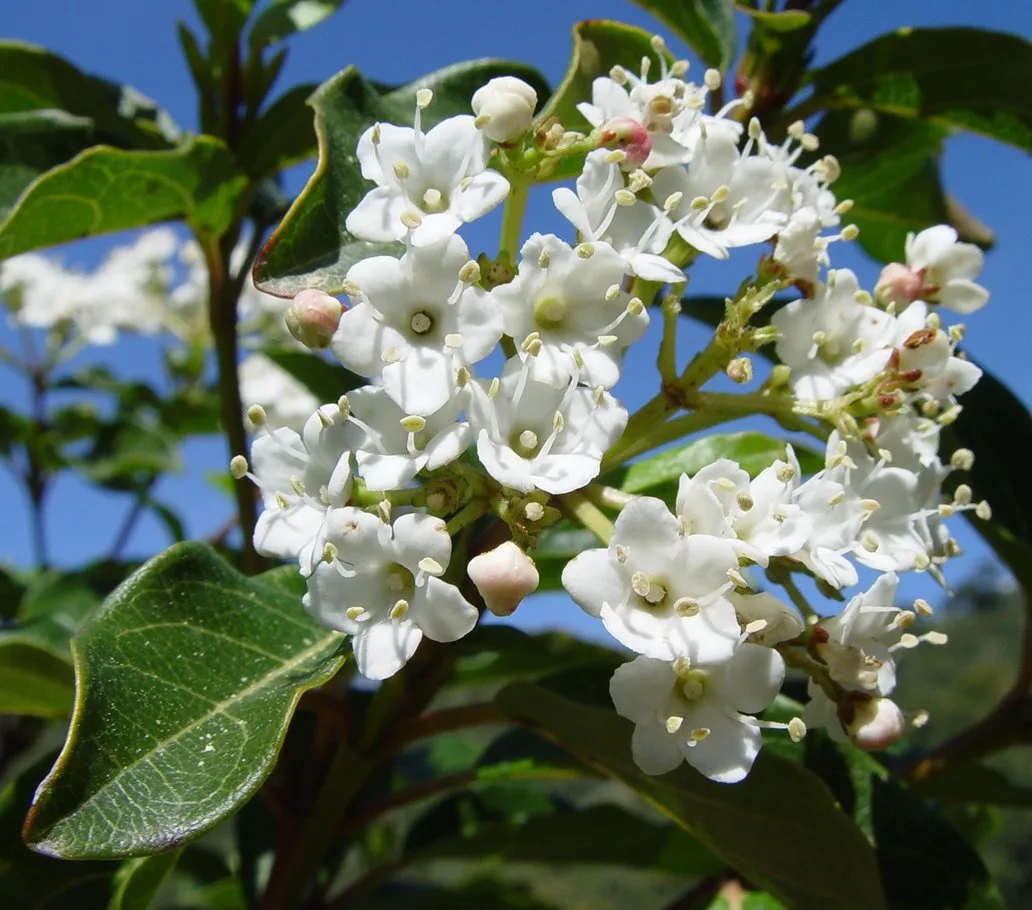
About Laurustinus
The identification of the Hebrew word tidhar in ISA 41:19 and ISA 60:13 is controversial. RSV and JB both use “plane” in these verses, the only places where the word tidhar occurs. Other versions have “fir” (CEV, NIV, NLT, REB, GW), “box” (NJPSV), and “pine” (KJV, supported by Moldenke). Zohary’s identification of tidhar as the Laurustinus Viburnum tinus is based on the Aramaic translation, Targum Jonathan, which translates tidhar as mornian, a cognate with murran, which is the Arabic name for laurustinus. Hepper agrees with Zohary. FFB (following Moldenke) cautiously identifies tidhar as the Brutian (or Turkish) Pine Pinus brutia. BDB and some others follow the Vulgate in translating this as “elm,” noting that the Syriac name for the common elm is “dadar.” The most recent evidence supports the laurustinus. The alternative spelling “laurestinus” is less common.
Key References
I will plant cedars in the wilderness, acacias, myrtles, and olive trees. I will set cypresses in the desert, elms and boxwood together,
The glory of Lebanon will come to you—its cypress, elm, and boxwood together—to adorn the place of My sanctuary, and I will glorify the place of My feet.
All Scripture References (2)
Isaiah (2)
I will plant cedars in the wilderness, acacias, myrtles, and olive trees. I will set cypresses in the desert, elms and boxwood together,
The glory of Lebanon will come to you—its cypress, elm, and boxwood together—to adorn the place of My sanctuary, and I will glorify the place of My feet.