Discussion
The identification of the Hebrew word tidhar in ISA 41:19 and ISA 60:13 is controversial. RSV and JB both use “plane” in these verses, the only places where the word tidhar occurs. Other versions have “fir” (CEV, NIV, NLT, REB, GW), “box” (NJPSV), and “pine” (KJV, supported by Moldenke). Zohary’s identification of tidhar as the Laurustinus Viburnum tinus is based on the Aramaic translation, Targum Jonathan, which translates tidhar as mornian, a cognate with murran, which is the Arabic name for laurustinus. Hepper agrees with Zohary. FFB (following Moldenke) cautiously identifies tidhar as the Brutian (or Turkish) Pine Pinus brutia. BDB and some others follow the Vulgate in translating this as “elm,” noting that the Syriac name for the common elm is “dadar.” The most recent evidence supports the laurustinus. The alternative spelling “laurestinus” is less common.
Description
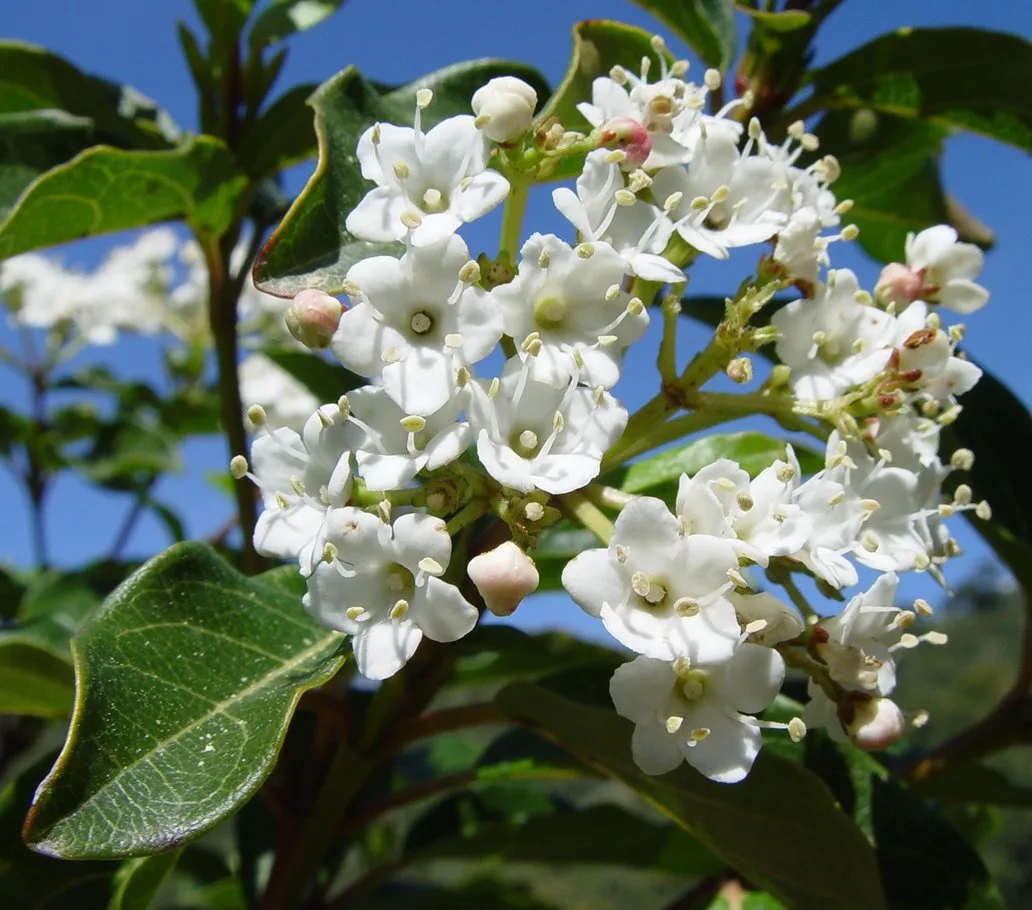
The laurustinus is a sturdy evergreen shrub that reaches 3.5 meters (12 feet) in height, with dark green, shiny leaves, white flowers, and poisonous purple berries.
Translation
The laurustinus belongs to a family of trees that live in temperate and warm climates, including Europe, Asia, and North America, but close relatives of laurustinus are found only in the Mediterranean area. Since “laurustinus” is not a well-known name, and rather bulky for transliteration, it is perhaps better to transliterate from a major version or from Hebrew tidhar or Arabic murran. However, the treatment of tidhar may depend on what the translator has done with the other words for trees in ISA 41:19 and ISA 60:13. If berosh is translated or transliterated as “fir,” then a different word (for example, “plane,” following RSV and JB) should be used for tidhar. In a study Bible “laurustinus” could be cited as a probable identity of tidhar, although “pine” runs a close second.