A plant with lacy leaves, greenish-blue flowers, and black seeds used in cooking.
About Nutmeg Flower
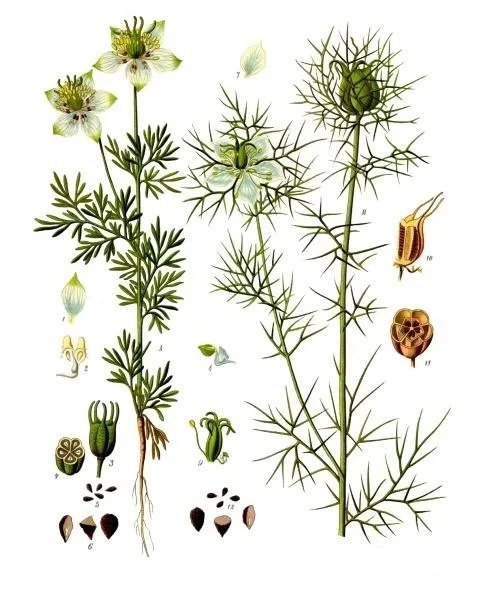
The "caraway" mentioned in Isaiah 28:25–27 ("fitches" in the King James Version) likely refer to Nigella sativa. This plant is sometimes called black cumin, black caraway, or nutmeg flower. This annual plant belongs to the buttercup family (Ranunculaceae). It grows wild in southern Europe, Syria, Egypt, North Africa, and other Mediterranean regions, and is cultivated for its flavorful seeds.
The black seeds have a spicy, pepper-like taste and aroma. People in Eastern countries sprinkle them over breads and cakes, and use them to flavor curries and other dishes, both historically and today.
Key References
When he has leveled its surface, does he not sow caraway and scatter cumin? He plants wheat in rows and barley in plots, and rye within its border.
Surely caraway is not threshed with a sledge, and the wheel of a cart is not rolled over the cumin. But caraway is beaten out with a stick, and cumin with a rod.
All Scripture References (2)
Isaiah (2)
When he has leveled its surface, does he not sow caraway and scatter cumin? He plants wheat in rows and barley in plots, and rye within its border.
Surely caraway is not threshed with a sledge, and the wheel of a cart is not rolled over the cumin. But caraway is beaten out with a stick, and cumin with a rod.