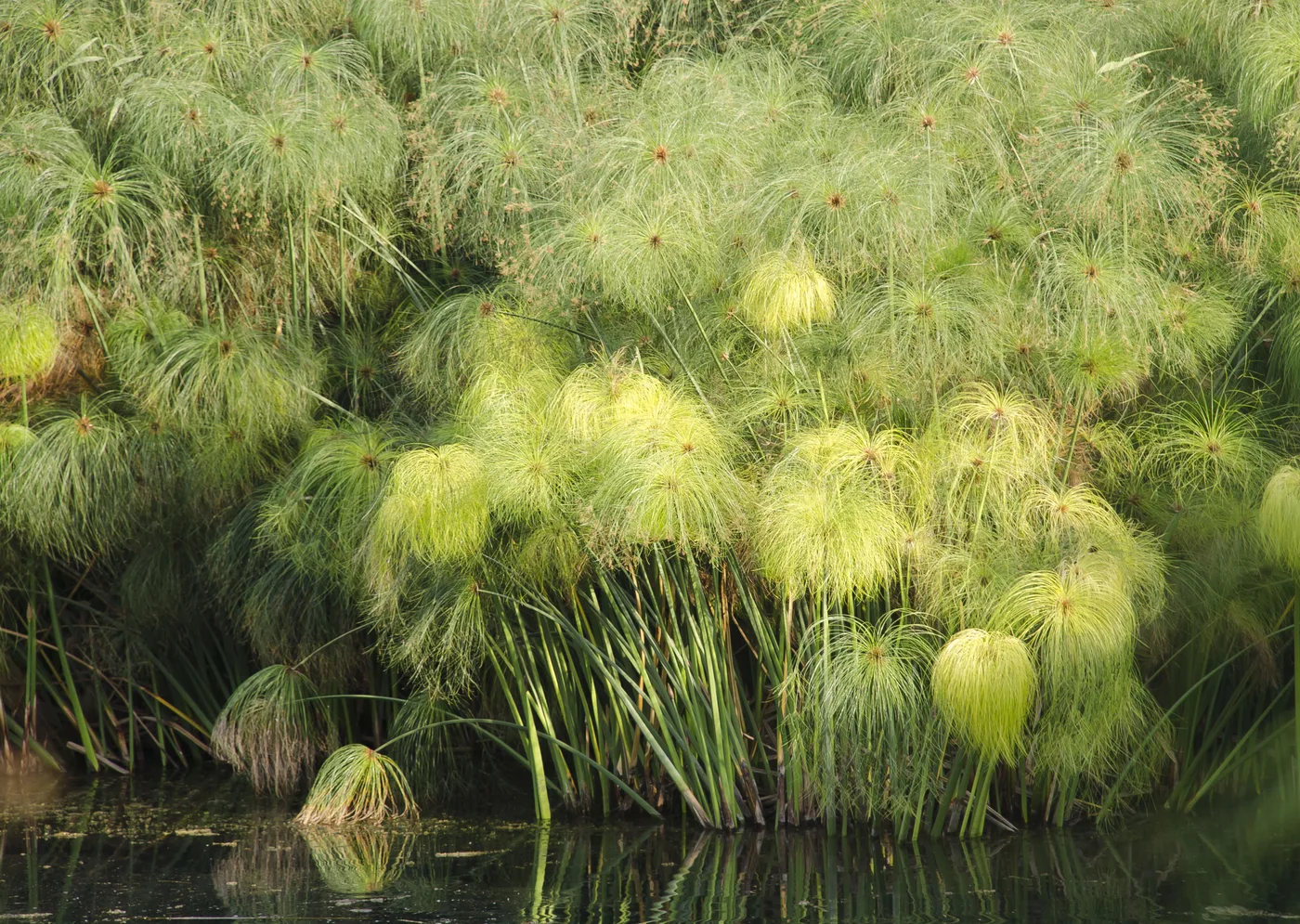
A tall plant with a triangular stem that grows in rivers and marshes. In ancient times, it was used for making paper and various items.
About Papyrus
An ancient Egyptian writing material that comes from the papyrus plant. The Egyptian bulrush or papyrus (Exodus 2:3–5; Job 8:11; Isaiah 18:2; 19:6–7; 35:7; 58:5) has smooth three-sided stems. These stems usually grow 2.4 to 3 meters (8 to 10 feet) tall, but sometimes reach even 4.9 meters (16 feet). At the base, the stems are 5.1 to 7.6 centimeters (2 to 3 inches) thick, with a large tuft of tiny flowers at the end.
The papyrus once grew in great abundance along the banks of the Nile River, forming what was almost a dense jungle. Today it has nearly disappeared from lower Egypt, although it is still found along the White Nile and in Sudan. The papyrus still grows in parts of Israel and the surrounding areas. It grows especially around the northern end of the plain of Galilee and the Huleh swamps.
Key References
But when she could no longer hide him, she got him a papyrus basket and coated it with tar and pitch. Then she placed the child in the basket and set it among the reeds along the bank of the Nile.
Does papyrus grow where there is no marsh? Do reeds flourish without water?
which sends couriers by sea, in papyrus vessels on the waters. Go, swift messengers, to a people tall and smooth-skinned, to a people widely feared, to a powerful nation of strange speech, whose land is divided by rivers.
All Scripture References (6)
Exodus (1)
But when she could no longer hide him, she got him a papyrus basket and coated it with tar and pitch. Then she placed the child in the basket and set it among the reeds along the bank of the Nile.
Job (2)
Isaiah (2)
which sends couriers by sea, in papyrus vessels on the waters. Go, swift messengers, to a people tall and smooth-skinned, to a people widely feared, to a powerful nation of strange speech, whose land is divided by rivers.
The parched ground will become a pool, the thirsty land springs of water. In the haunt where jackals once lay, there will be grass and reeds and papyrus.
2 John (1)
I have many things to write to you, but I would prefer not to do so with paper and ink. Instead, I hope to come and speak with you face to face, so that our joy may be complete.