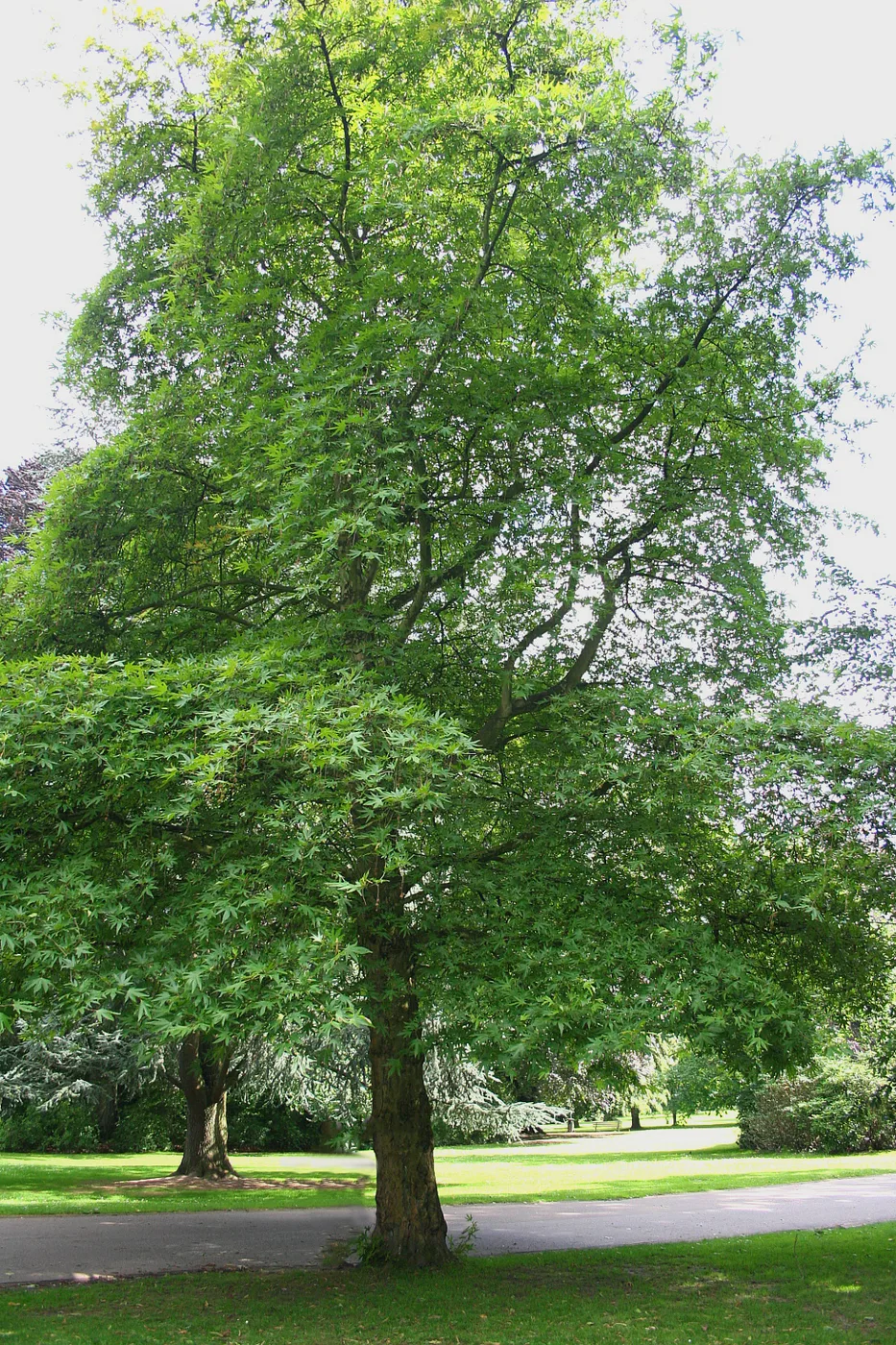
A large tree up to 20 meters tall, with big branches and hand-shaped leaves, known for its peeling bark and good shade.
About Plane Tree
A large spreading tree that has a wide trunk and scaly bark. It is native to the region of Palestine. This tree belongs to a family with bell-shaped fruit clusters. Usually, its outer bark flakes off in patches or strips. The references in Genesis 30:37 and Ezekiel 31:8 are apparently not to the chestnut tree, which does not naturally grow in Palestine. These are references to the oriental plane tree, Platanus orientalis.
The plane tree is a massive tree that can grow 18.3 meters (60 feet) or more in height. Its trunk is often very thick, sometimes reaching around 12.2 meters (40 feet) in circumference. The outer bark peels off in sheets or scales, revealing a smooth whitish or yellowish inner bark underneath.
Key References
Jacob, however, took fresh branches of poplar, almond, and plane trees, and peeled the bark, exposing the white inner wood of the branches.
The cedars in the garden of God could not rival it; the cypresses could not compare with its branches, nor the plane trees match its boughs. No tree in the garden of God could compare with its beauty.
All Scripture References (3)
Genesis (1)
Jacob, however, took fresh branches of poplar, almond, and plane trees, and peeled the bark, exposing the white inner wood of the branches.
Ezekiel (1)
The cedars in the garden of God could not rival it; the cypresses could not compare with its branches, nor the plane trees match its boughs. No tree in the garden of God could compare with its beauty.
Mark (1)
they will pick up snakes with their hands, and if they drink any deadly poison, it will not harm them; they will lay their hands on the sick, and they will be made well.”