A large tree with spreading branches and fruit that grows on its trunk and branches, not very sweet like other figs.
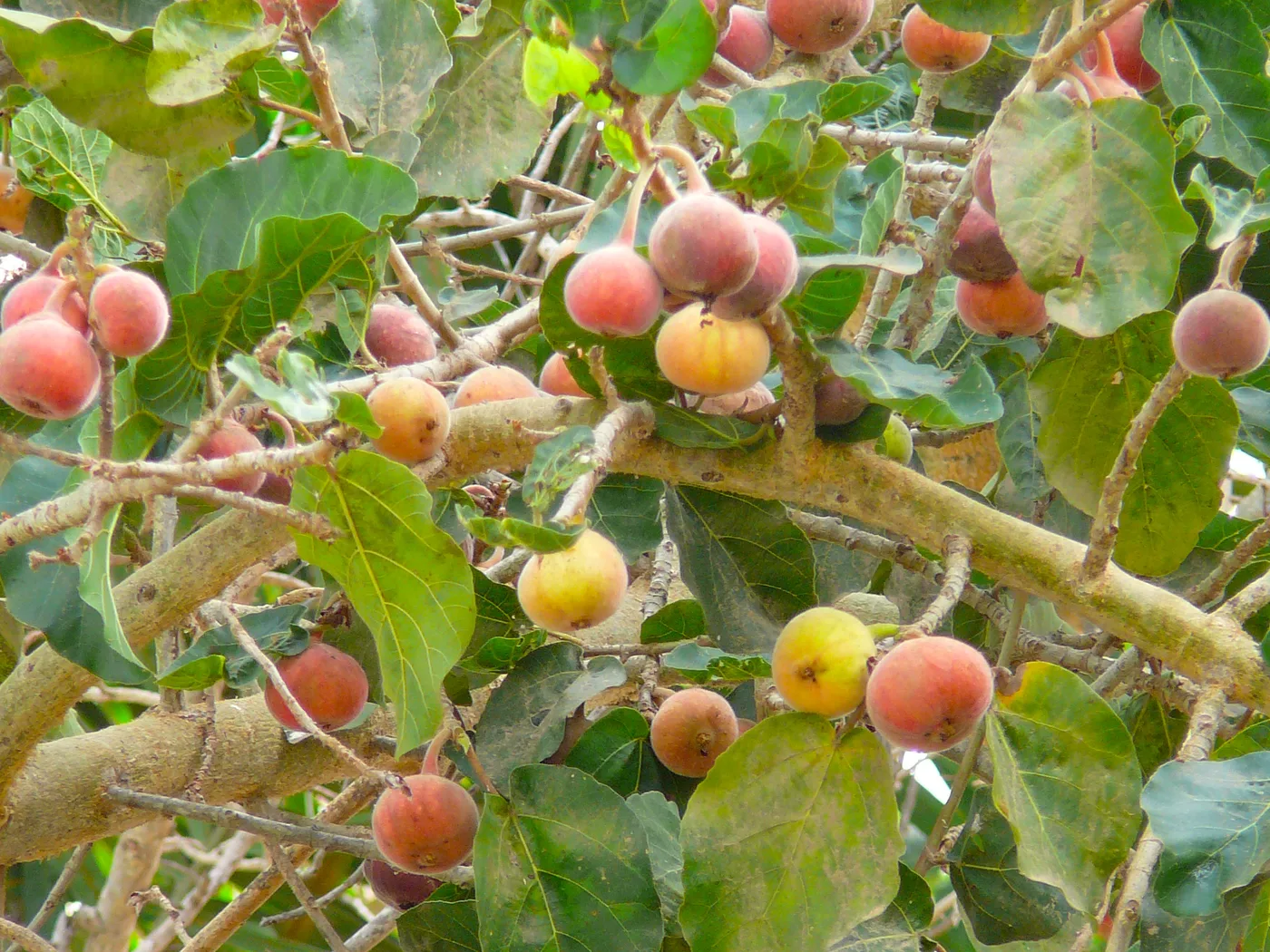
About Sycomore Fig
Following Hepper, we favor the use of “sycomore” rather than “sycamore,” since the “o” spelling preserves the Latin (sycomorus) and Greek (sukomorea) better and is used in French. Note that the tree is spelled with an “o” in KJV and NEB. As Hepper observes (page 114), it may be useful to reserve the name “sycamore” for a kind of plane tree (Platanus) in the United States and a member of the Acer family in Britain.
Key References
The king made silver as common in Jerusalem as stones, and cedar as abundant as sycamore in the foothills.
The king made silver and gold as common in Jerusalem as stones, and cedar as abundant as sycamore in the foothills.
So he ran on ahead and climbed a sycamore tree to see Him, since Jesus was about to pass that way.
All Scripture References (8)
1 Kings (1)
The king made silver as common in Jerusalem as stones, and cedar as abundant as sycamore in the foothills.
1 Chronicles (1)
Baal-hanan the Gederite was in charge of the olive and sycamore trees in the foothills. Joash was in charge of the stores of olive oil.
2 Chronicles (2)
The king made silver and gold as common in Jerusalem as stones, and cedar as abundant as sycamore in the foothills.
The king made silver as common in Jerusalem as stones, and cedar as abundant as sycamore in the foothills.
Psalms (1)
He killed their vines with hailstones and their sycamore-figs with sleet.
Isaiah (1)
All the people will know it—Ephraim and the dwellers of Samaria. With pride and arrogance of heart they will say:
Amos (1)
“I was not a prophet,” Amos replied, “nor was I the son of a prophet; rather, I was a herdsman and a tender of sycamore-fig trees.
Luke (1)
So he ran on ahead and climbed a sycamore tree to see Him, since Jesus was about to pass that way.