Discussion
Following Hepper, we favor the use of “sycomore” rather than “sycamore,” since the “o” spelling preserves the Latin (sycomorus) and Greek (sukomorea) better and is used in French. Note that the tree is spelled with an “o” in KJV and NEB. As Hepper observes (page 114), it may be useful to reserve the name “sycamore” for a kind of plane tree (Platanus) in the United States and a member of the Acer family in Britain.
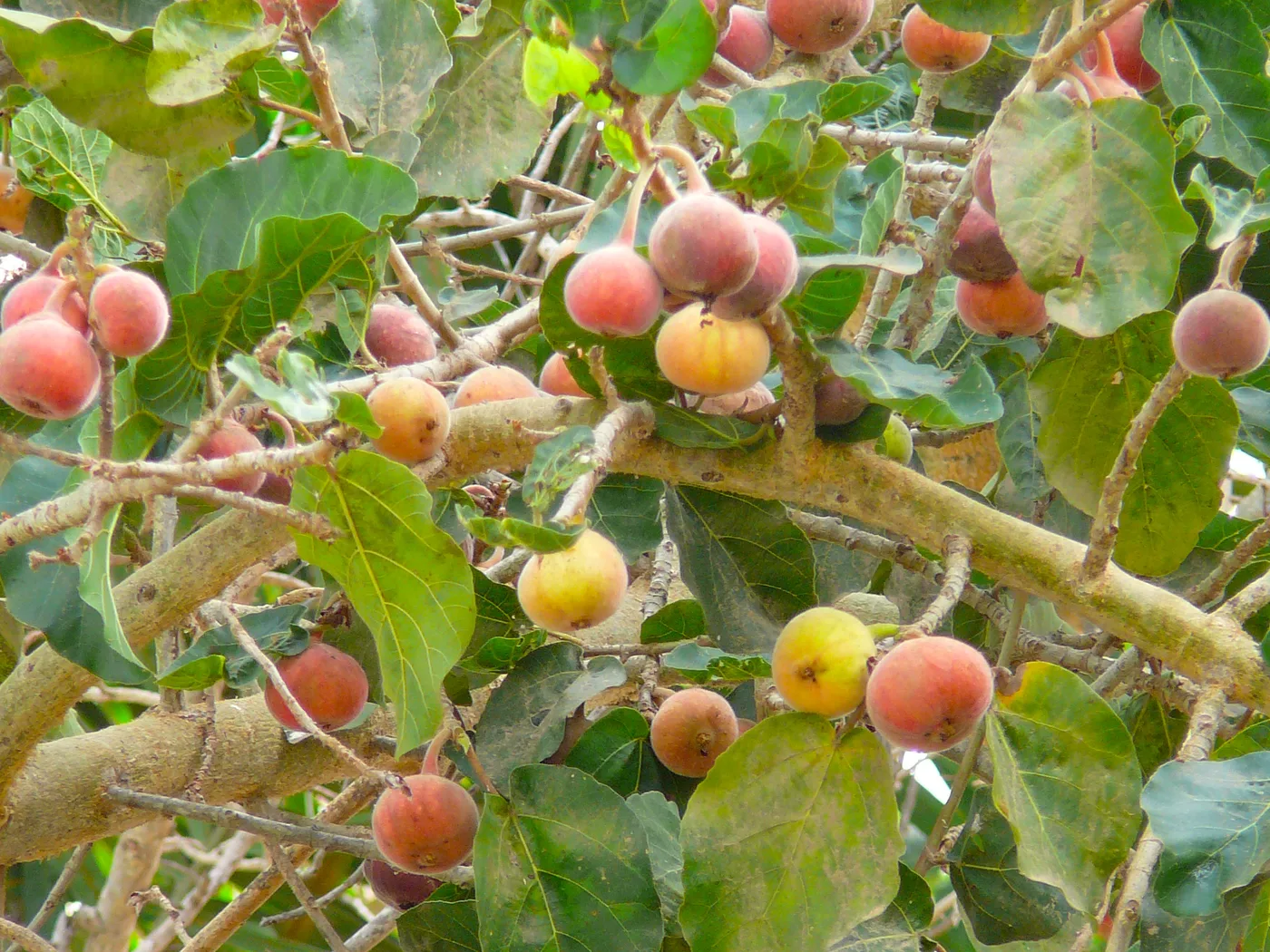
The Sycomore Fig Ficus sycomorus, also called the Mulberry Fig (compare German Maulbeerfeigenbaum), is a type of fig that is found especially in lowland areas in the Mediterranean region. It was known in Egypt as early as 3000 B.C. but also in the Indus Valley in India. Zohary surmises that the Israeli sycomores, found mostly down on the coastal plain, are survivors from an earlier time when this type of fig was more widespread.
The prophet Amos identified himself as “a dresser of sycamore trees” (AMO 7:14). It is possible that this refers to the practice of making a cut in the immature fruit, which has the effect of accelerating the growth of the fruit. Hepper (page 113) reports that this sudden growth is caused by ethylene gas released when the fruit is cut. Incidentally, today ethylene gas is used by fruit sellers to hasten the ripening of oranges and bananas.
Description
Special significance
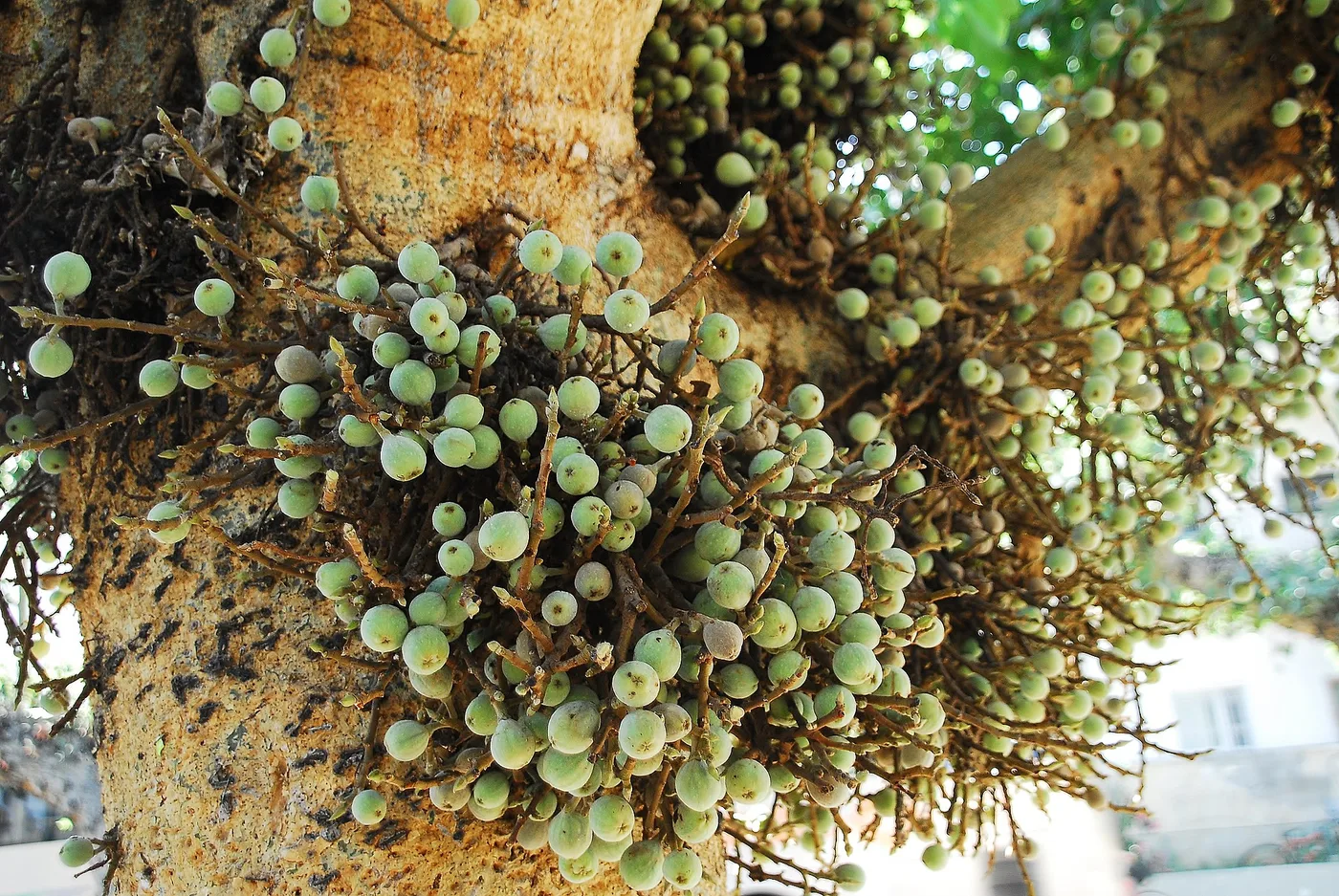
In 1KI 10:27 the sycomore is used as an image of something plentiful. The last half of this verse says “he [King Solomon] made cedar as plentiful as the sycamore of the Shephelah.” Translators should take care with the logic here. The verse does not say that Solomon would introduce cedars into the lowlands (the Shephelah), but rather that just as there are plenty of sycomores in the lowlands, there will be plenty of cedars in the land of Israel.
Translation
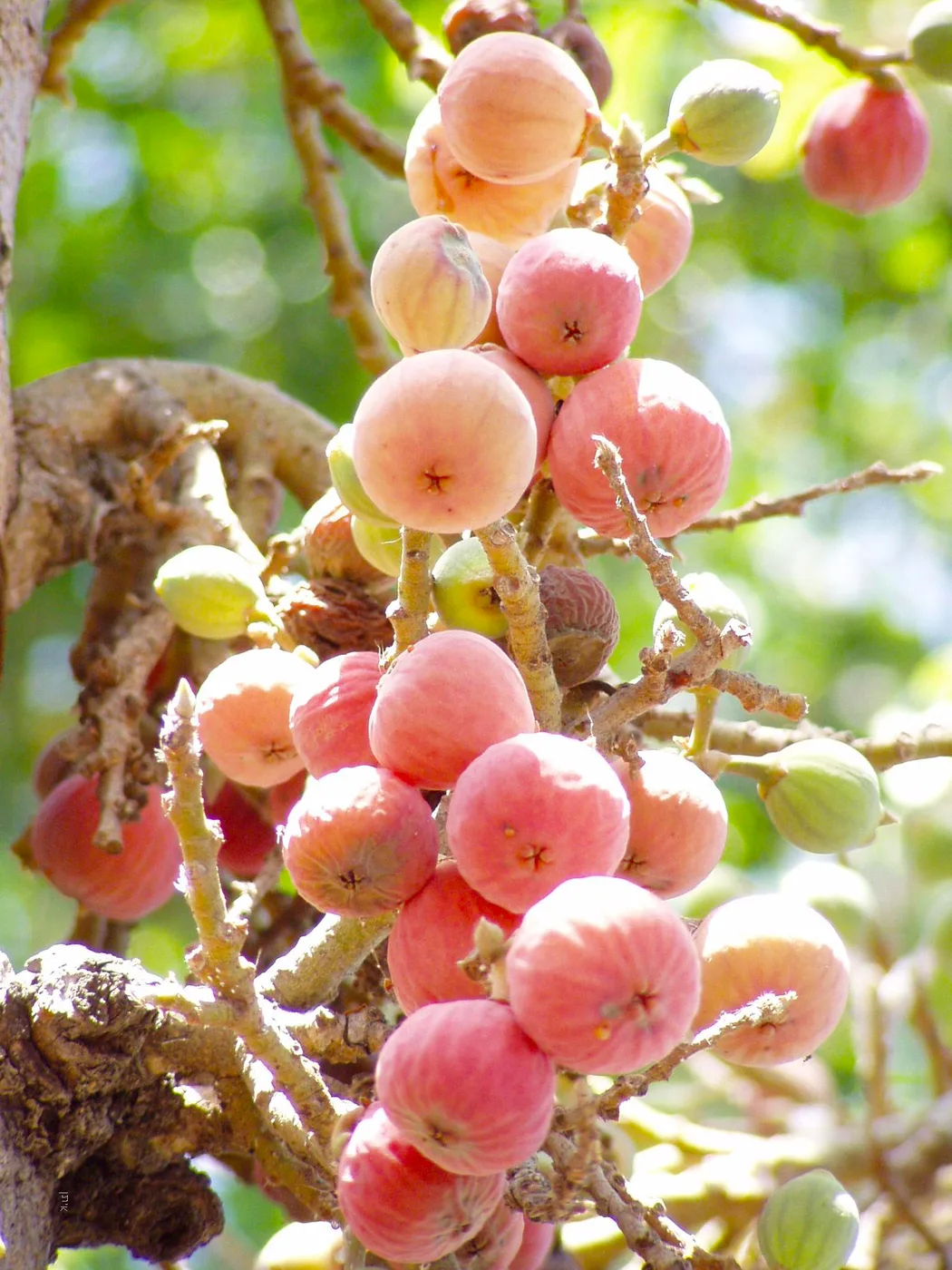
Where figs are totally unknown, transliterations can be made from an international language, for example, French (sycomore), Spanish (sicomoro), or Hebrew (shiqmah). In contrast to the regular fig, the sycomore grows in the lower elevations (Shephelah), a fact that could potentially come into use in a translation (for example, “lowland fig”). GECL uses Maulbeerfeigenbaum (“mulberry fig”).