A flower that grows naturally without cultivation.
About Wild Flower
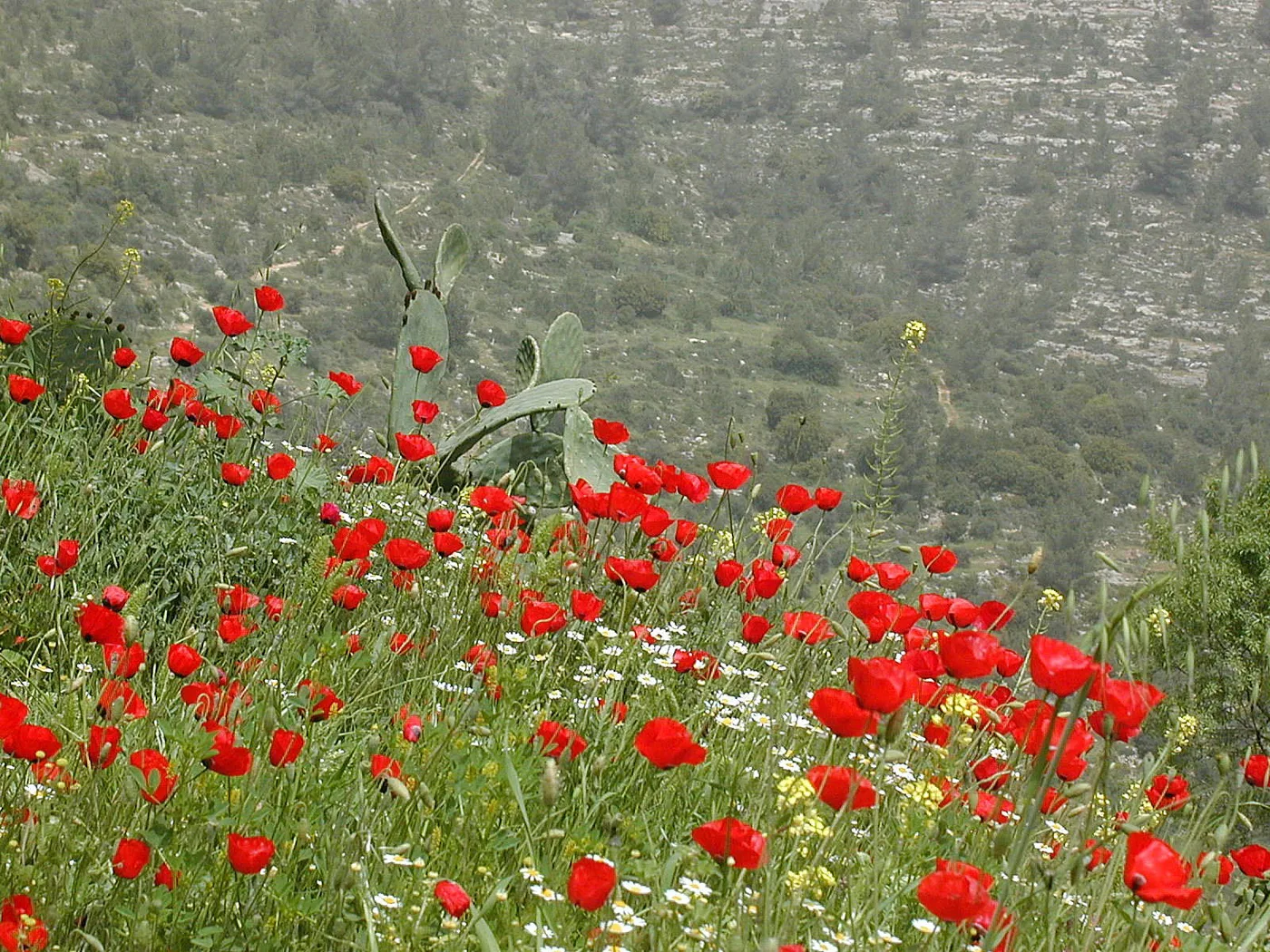
The debate over the “lilies of the field” mentioned by Jesus is endless. The problem many scholars have with “lily” is that the popular “white lily” was not well known and was not a “flower of the field” at the time of Jesus. The Greek word krinon may have been a generic word for many types of lily (as it is in English). One botanist (Smith, of Kew Gardens) claimed that the red Martagon lily was native to the Levant, but this is disputed. Krinon may in fact refer to a broader group of flowers. We can only suggest some of many possibilities. One is the Crown Anemone Anemone coronaria, which blooms profusely in different colors every spring throughout the Mediterranean basin. It belongs to the buttercup family and blooms from January to March.
Key References
And why do you worry about clothes? Consider how the lilies of the field grow: They do not labor or spin.
Consider how the lilies grow: They do not labor or spin. Yet I tell you, not even Solomon in all his glory was adorned like one of these.
All Scripture References (6)
Matthew (1)
And why do you worry about clothes? Consider how the lilies of the field grow: They do not labor or spin.
Mark (1)
they will pick up snakes with their hands, and if they drink any deadly poison, it will not harm them; they will lay their hands on the sick, and they will be made well.”
Luke (1)
Consider how the lilies grow: They do not labor or spin. Yet I tell you, not even Solomon in all his glory was adorned like one of these.
James (2)
But the one who is rich should exult in his low position, because he will pass away like a flower of the field.
For the sun rises with scorching heat and withers the plant; its flower falls and its beauty is lost. So too, the rich man will fade away in the midst of his pursuits.
1 Peter (1)
For, “All flesh is like grass, and all its glory like the flowers of the field; the grass withers and the flowers fall,