A decorative stand with branches designed to hold oil lamps, used in the Hebrew tabernacle.
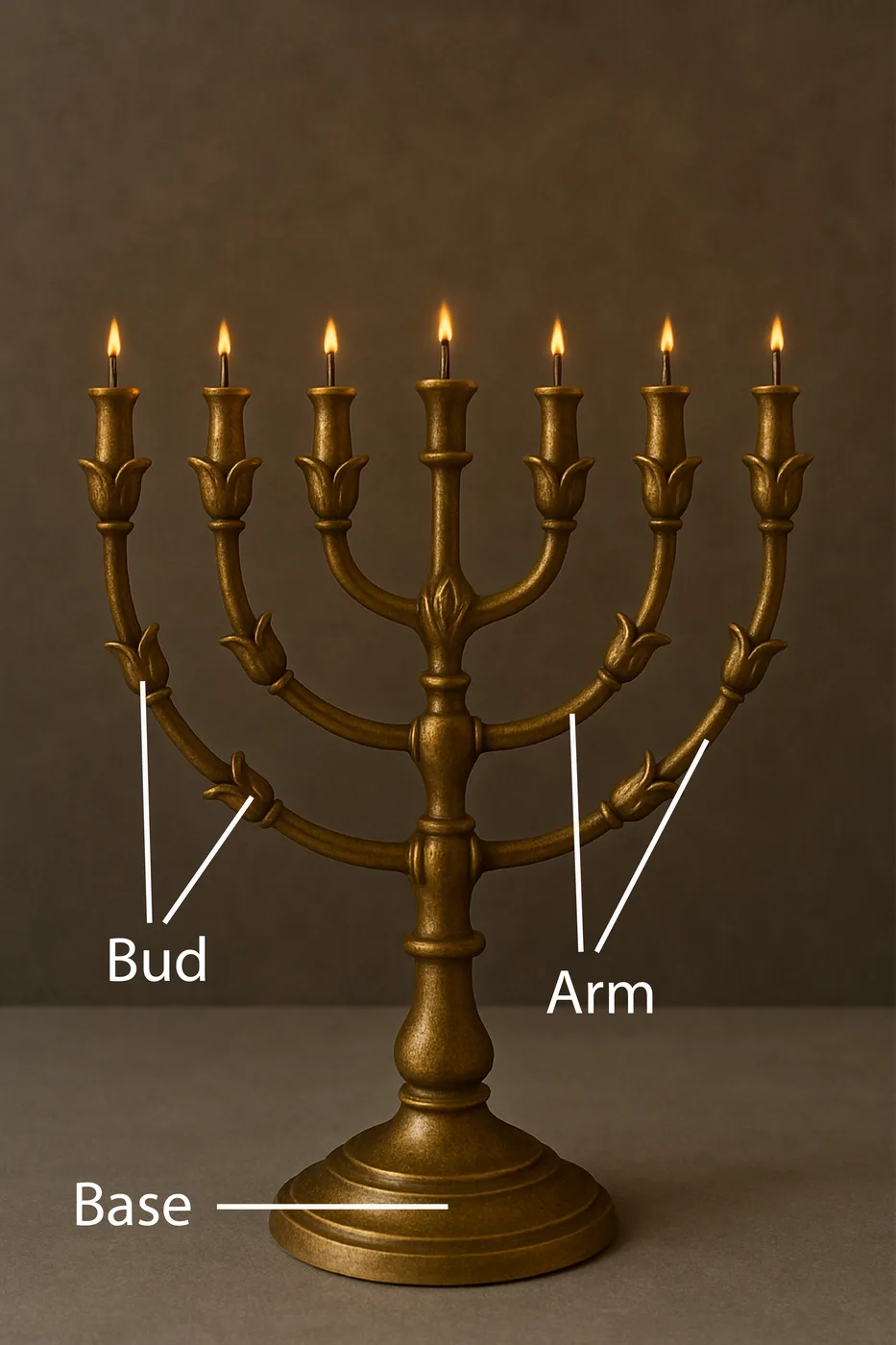
About Lampstand
Israelite lamps developed from those in general use among the Canaanites in the second millennium BC. Their shape was similar to a shell or saucer with a lip. Lamps of stone, metal, and shells were used, although the majority were made of pottery. A multitude of clay lamps, fashioned in a variety of designs, have been excavated in Palestine.
The clay bowl was fashioned first, and the rim was folded over to help contain the oil. A spout was pinched in place at one end, into which the wick would be placed. When the clay had dried, the lamp would be fired to a dull brown shade. Gradually a style with an increasingly sharply pinched lip was developed. The wick was generally made of flax (Is 42:3, kjv), although an old piece of linen cloth was sometimes used. Salt could be added to the wick for a brighter flame, and frequently extra wicks were used. This led to the development of multispouted lamps like those found at Tell Dotha from 1200 BC.
Key References
Then you are to make a lampstand of pure, hammered gold. It shall be made of one piece, including its base and shaft, its cups, and its buds and petals.
Six branches are to extend from the sides of the lampstand—three on one side and three on the other.
Then he made the lampstand out of pure hammered gold, all of one piece: its base and shaft, its cups, and its buds and petals.
All Scripture References (12)
Exodus (12)
Then you are to make a lampstand of pure, hammered gold. It shall be made of one piece, including its base and shaft, its cups, and its buds and petals.
Six branches are to extend from the sides of the lampstand—three on one side and three on the other.
There are to be three cups shaped like almond blossoms on the first branch, each with buds and petals, three on the next branch, and the same for all six branches that extend from the lampstand.
And on the lampstand there shall be four cups shaped like almond blossoms with buds and petals.
For the six branches that extend from the lampstand, a bud must be under the first pair of branches, a bud under the second pair, and a bud under the third pair.
The buds and branches are to be all of one piece with the lampstand, hammered out of pure gold.
Then he made the lampstand out of pure hammered gold, all of one piece: its base and shaft, its cups, and its buds and petals.
Six branches extended from the sides, three on one side and three on the other.
There were three cups shaped like almond blossoms on the first branch, each with buds and petals, three on the next branch, and the same for all six branches that extended from the lampstand.
And on the lampstand were four cups shaped like almond blossoms with buds and petals.
A bud was under the first pair of branches that extended from the lampstand, a bud under the second pair, and a bud under the third pair.
The buds and branches were all of one piece with the lampstand, hammered out of pure gold.