Description
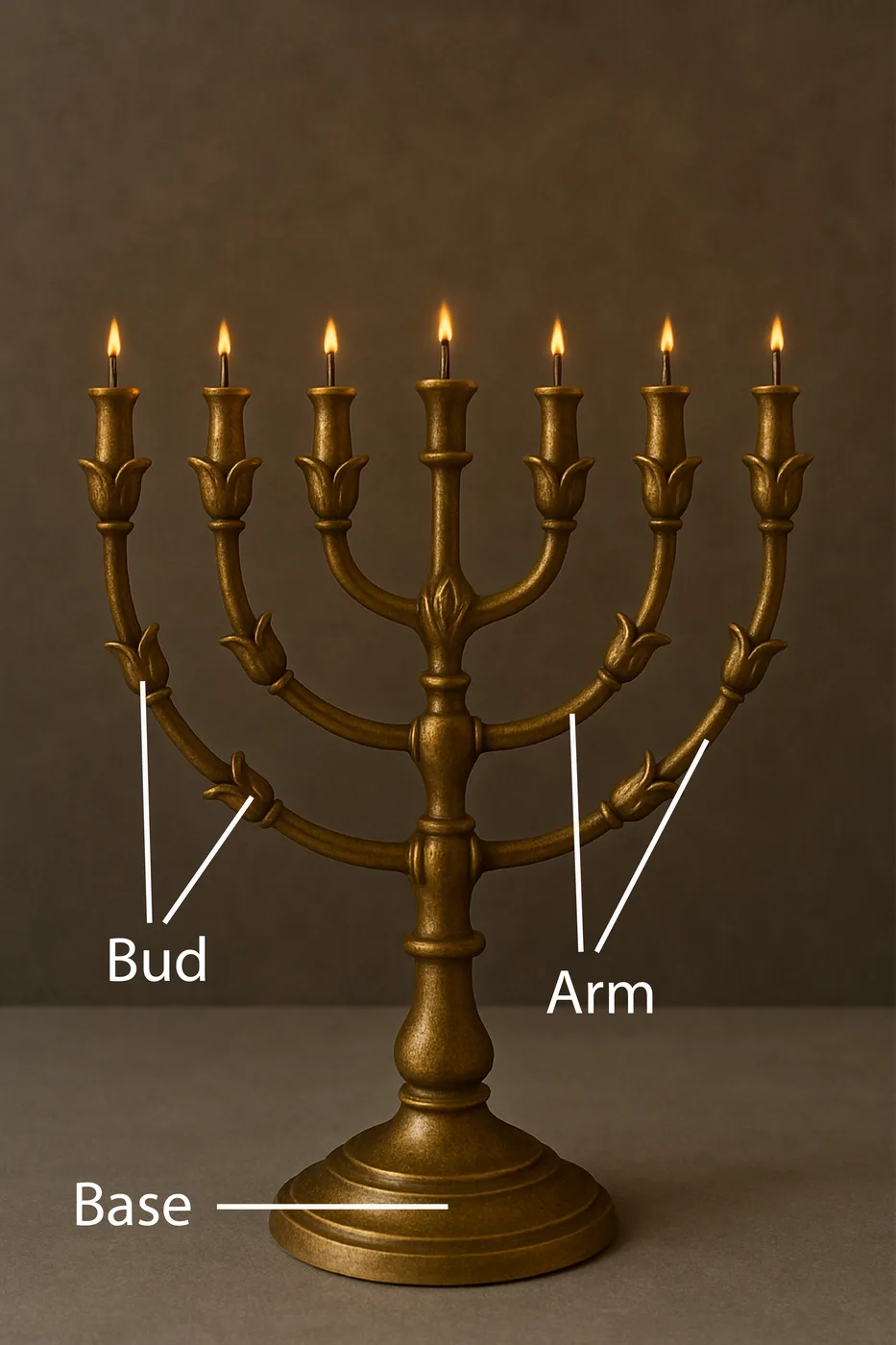
The construction of the lampstand in the Tabernacle is discussed in EXO 25:31–EXO 25:40; EXO 37:17–EXO 37:24; LEV 24:1–LEV 24:4. It was shaped from a single block of gold and consisted of five distinct parts. These parts were the base, the shafts (or stems), and the flowerlike cups with buds and petals. The lampstand had a central shaft, which stood on a base and out of which projected six arms, making a total of seven branches. A lamp that burned oil stood on the top of each of these branches.
Only one lampstand was prescribed for the Tabernacle. However, when Solomon built and furnished the Temple, he is said (1KI 7:49; 2CH 4:7) to have included ten lampstands. No explanation is given in the text for the increase to ten. Solomon also furnished the Temple with ten tables and ten washbasins, where only one of each was called for in the Tabernacle. One Jewish tradition says that the ten lampstands were in addition to the single prescribed lampstand and that their location “to the right” and “to the left” meant to the right and left of the single holy lampstand. We have no indication that the structure of the lampstand changed in Solomon’s time, and the ten lampstands which he made probably looked like the one described for the Tabernacle.
Translation
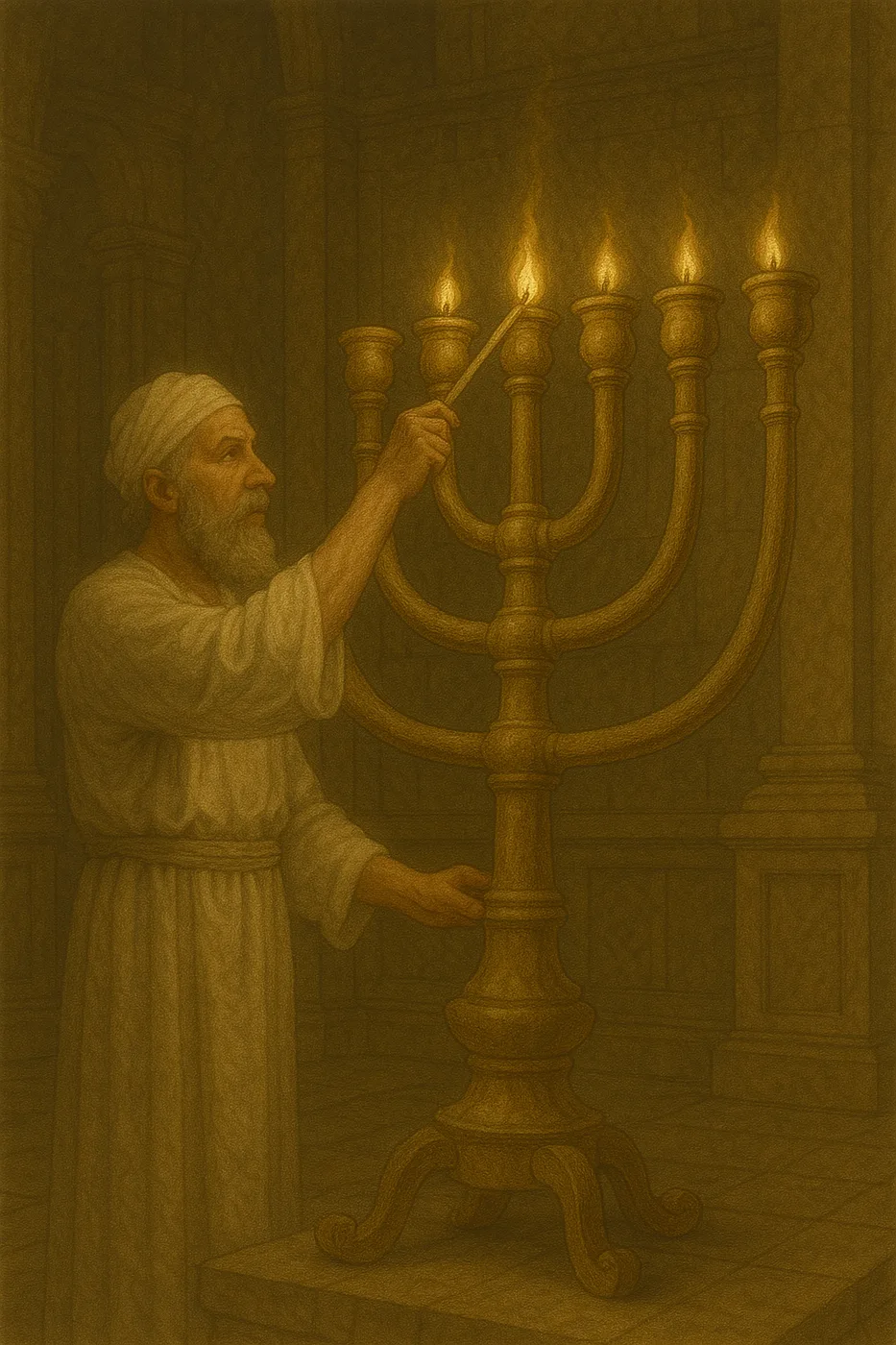
Since there is no special word for “lampstand” in many cultures, it may have to be translated “lamp holder” or “thing on which lamps are placed.” It should be emphasized that this object did not hold candles but oil lamps (see Oil lamp and wick).
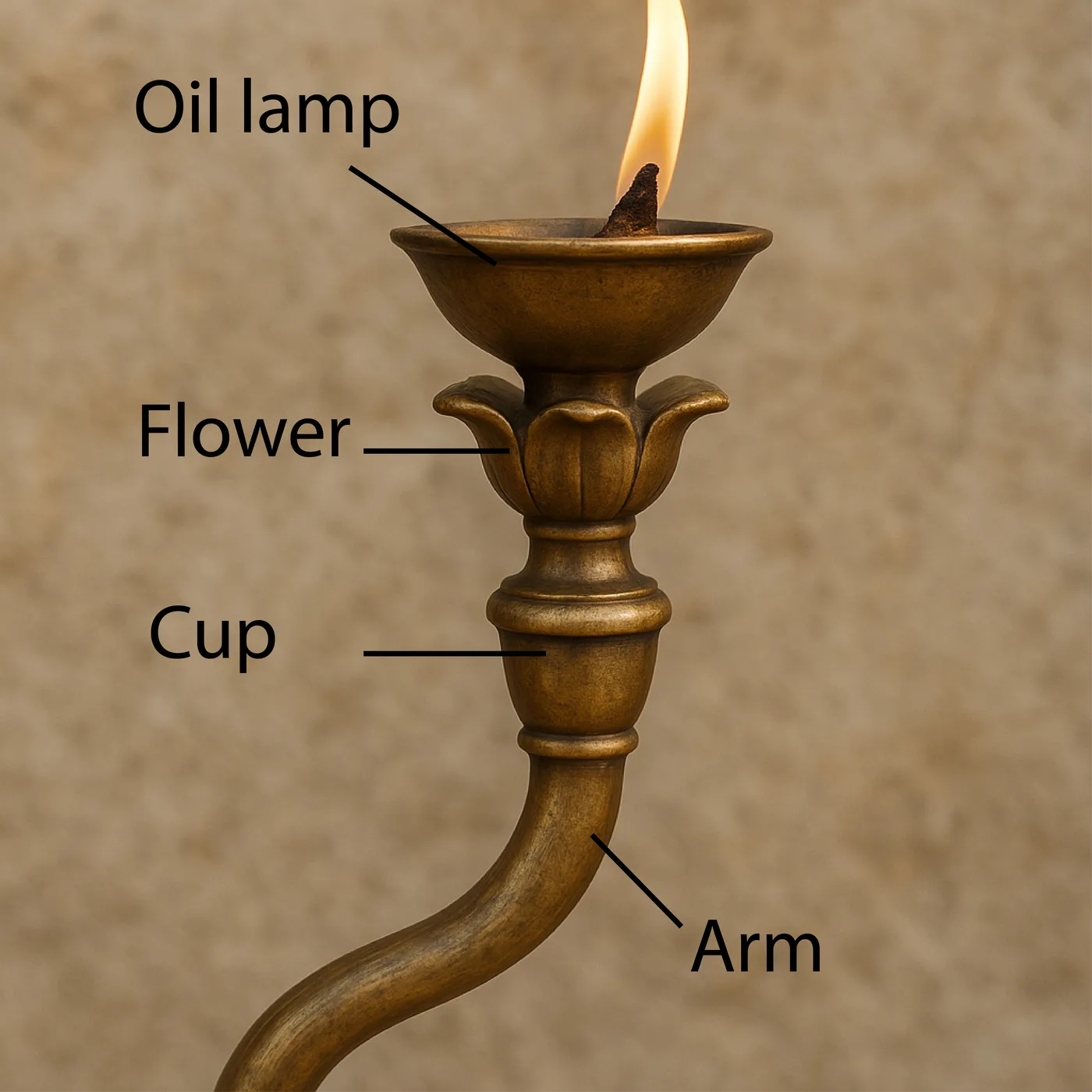
The lampstand (mnorah in Hebrew) is mostly described in terms of flower parts. Knowing this may be helpful when seeking for appropriate terms to translate the individual parts of the lampstand. The flowerlike parts included “stems,” “buds” or “calyxes,” and “cups,” which were like the heads of open flowers. ITCL includes the following useful footnote: “The terms used in the Hebrew text are difficult to interpret. It has been suggested that the decorations of the lampstand were taken from the world of plants and flowers.”
LEV 24:4: In this verse the Hebrew text literally speaks of “the pure lampstand” (so NJB, NJPSV), which possibly refers to the sacred character or ritual cleanness of the lampstand without reference to the gold of which it was made. NEB, for example, has “the lamp-stand, ritually clean.” But the majority of versions (for example, NIV) take it to mean “the pure gold lampstand.” If the “pure gold” interpretation is followed, the idea of “purity” in this case may have to be expressed as “containing no other things” or “made of nothing but [gold].” The word for “gold” may have to be borrowed in some languages (in which case, it should be explained in the glossary).
The parts of the lampstand, from bottom to top, were:
Yarek (EXO 25:31; EXO 37:17; NUM 8:4): This Hebrew word refers to the “base” or “foot” on which the entire lampstand stood. In NUM 8:4 the literal phrase “from its base to it’s flowers” (RSV) may be rendered “from top to bottom” (so GNT).
Qaneh (EXO 25:0 [12 times]; EXO 37:0 [12 times]): This Hebrew word literally means “reed.” In EXO 25:0 and EXO 37:0 it indicates a long, straight stem of a flower. There were six of these stems on the lampstand, three on each side symmetrically, coming out of a central one, making a total of seven. GECL drops the flower image and calls them “arms.” This will be natural where a multi-branched candlestick is known, but it may sound strange where such an item is unknown.
Gavi‘a (EXO 25:31, EXO 25:33; EXO 25:34; EXO 37:17, EXO 37:19; EXO 37:20): This Hebrew word refers to a kind of cup at the top of each of the seven stems of the lampstand. Olive oil and wicks that burned, giving off light, were placed into the seven cups. The cups were evidently shaped like the head of a flower when it is open. NCV has “flower-like cups” (similarly NIV). REB has simply “cups,” while GNT says “decorative flowers.”
Kaftor (EXO 25:0 [8 times]; EXO 37:0 [8 times]): This Hebrew word is also used to designate the “capital” (so RSV in AMO 9:1) of a column (see Column, pillar, capital). Here it seems to indicate a kind of knob or bulb, a swelling like a ball or an egg at the joints between the branches and where the head of the flower joined the stem. Most translations maintain the flower image by rendering this word “buds” (GNT, NIV) or “calyxes” (NRSV, NJPSV).
Perach (EXO 25:0 [4 times]; EXO 37:0 [4 times]; NUM 8:4; 1KI 7:49; 2CH 4:21): This Hebrew word means “flower,” or more specifically “bloom,” which is the head of a flower made by the open petals. The flowers of the lampstand formed the cups. While most translations keep the flower image for this word, they vary in how they express it. Some have “petals” (GNT, NJPSV), while others say “flowers” (RSV).