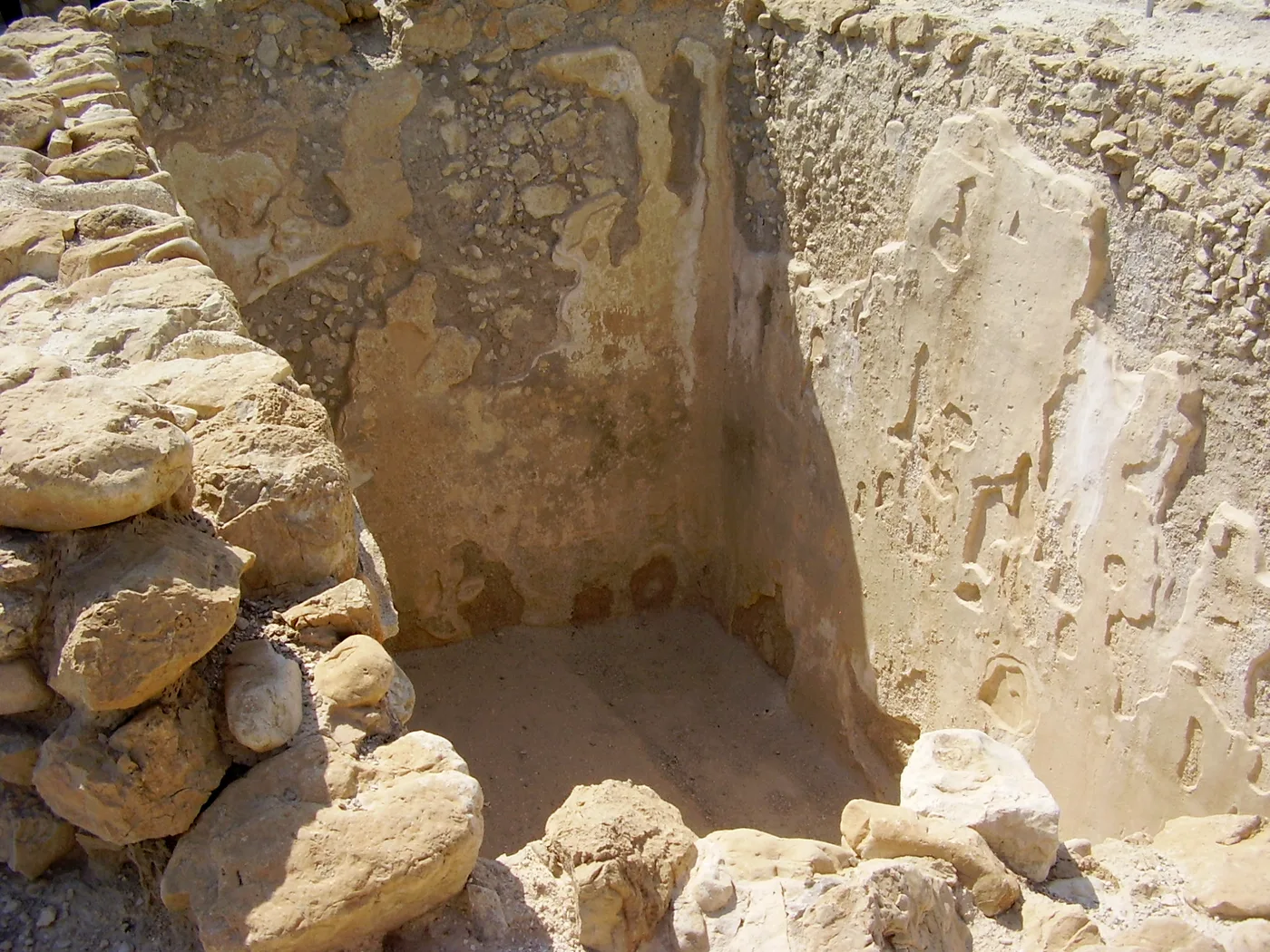
About Pit
Word used frequently in the OT to denote the grave, the abode of the dead, or Sheol—that is, a shadowy existence that the living feared because it cut them off from light, joy, and vitality. Godly people abhorred it because it seemed to them that it would negate their fellowship with God: Hezekiah (Is 38:17–18), Job (Jb 17:13–16; 33:22), and the psalmists (Pss 28:1; 30:3; 55:23; 88:4–6).
See also Bottomless Pit; Dead, Place of the; Death; Sheol.
All Scripture References (40)
Genesis (5)
“Come now, let us kill him and throw him into one of the pits. We can say that a vicious animal has devoured him. Then we shall see what becomes of his dreams!”
“Do not shed his blood. Throw him into this pit in the wilderness, but do not lay a hand on him.” Reuben said this so that he could rescue Joseph from their hands and return him to his father.
and they took him and threw him into the pit. Now the pit was empty, with no water in it.
So when the Midianite traders passed by, his brothers pulled Joseph out of the pit and sold him for twenty shekels of silver to the Ishmaelites, who took him to Egypt.
When Reuben returned to the pit and saw that Joseph was not there, he tore his clothes,
Exodus (2)
If a man opens or digs a pit and fails to cover it, and an ox or a donkey falls into it,
the owner of the pit shall make restitution; he must pay its owner, and the dead animal will be his.
Leviticus (1)
Nevertheless, a spring or cistern containing water will remain clean, but one who touches a carcass in it will be unclean.
Deuteronomy (1)
with houses full of every good thing with which you did not fill them, with wells that you did not dig, and with vineyards and olive groves that you did not plant—and when you eat and are satisfied,
1 Samuel (2)
Seeing that they were in danger because their troops were hard-pressed, the men of Israel hid in caves and thickets, among the rocks, and in cellars and cisterns.
Finally, Saul himself left for Ramah and came to the large cistern at Secu, where he asked, “Where are Samuel and David?” “At Naioth in Ramah,” he was told.
2 Samuel (4)
As soon as Joab had left David, he sent messengers after Abner, who brought him back from the well of Sirah. But David was unaware of it.
David longed for water and said, “Oh, that someone would get me a drink of water from the well near the gate of Bethlehem!”
So the three mighty men broke through the Philistine camp, drew water from the well near the gate of Bethlehem, and brought it back to David. But he refused to drink it; instead, he poured it out to the LORD,
And Benaiah son of Jehoiada was a man of valor from Kabzeel, a man of many exploits. He struck down two champions of Moab, and on a snowy day he went down into a pit and killed a lion.
2 Kings (2)
Then Jehu ordered, “Take them alive.” So his men took them alive, then slaughtered them at the well of Beth-eked—forty-two men. He spared none of them.
Do not listen to Hezekiah, for this is what the king of Assyria says: Make peace with me and come out to me. Then every one of you will eat from his own vine and his own fig tree and drink water from his own cistern,
1 Chronicles (3)
David longed for water and said, “Oh, that someone would get me a drink of water from the well near the gate of Bethlehem!”
So the Three broke through the Philistine camp, drew water from the well at the gate of Bethlehem, and brought it back to David. But he refused to drink it; instead, he poured it out to the LORD,
And Benaiah son of Jehoiada was a man of valor from Kabzeel, a man of many exploits. He struck down two champions of Moab, and on a snowy day he went down into a pit and killed a lion.
2 Chronicles (1)
Since he had much livestock in the foothills and in the plain, he built towers in the desert and dug many cisterns. And since he was a lover of the soil, he had farmers and vinedressers in the hill country and in the fertile fields.
Nehemiah (1)
They captured fortified cities and fertile land and took houses full of all goods, wells already dug, vineyards, olive groves, and fruit trees in abundance. So they ate and were filled; they grew fat and delighted in Your great goodness.
Psalms (2)
His trouble recoils on himself, and his violence falls on his own head.
He put a new song in my mouth, a hymn of praise to our God. Many will see and fear and put their trust in the LORD.
Proverbs (1)
Drink water from your own cistern, and running water from your own well.
Ecclesiastes (1)
Remember Him before the silver cord is snapped and the golden bowl is crushed, before the pitcher is shattered at the spring and the wheel is broken at the well,
Isaiah (2)
Do not listen to Hezekiah, for this is what the king of Assyria says: Make peace with me and come out to me. Then every one of you will eat from his own vine and his own fig tree, and drink water from his own cistern,
“Listen to Me, you who pursue righteousness, you who seek the LORD: Look to the rock from which you were cut, and to the quarry from which you were hewn.
Jeremiah (9)
“For My people have committed two evils: They have forsaken Me, the fountain of living water, and they have dug their own cisterns—broken cisterns that cannot hold water.
So they took Jeremiah and dropped him into the cistern of Malchiah, the king’s son, which was in the courtyard of the guard. They lowered Jeremiah with ropes into the cistern, which had no water but only mud, and Jeremiah sank down into the mud.
Now Ebed-melech the Cushite, a court official in the royal palace, heard that Jeremiah had been put into the cistern. While the king was sitting at the Gate of Benjamin,
“My lord the king, these men have acted wickedly in all that they have done to Jeremiah the prophet. They have dropped him into the cistern, where he will starve to death, for there is no more bread in the city.”
So the king commanded Ebed-melech the Cushite, “Take thirty men from here with you and pull Jeremiah the prophet out of the cistern before he dies.”
Then Ebed-melech took the men with him and went to the king’s palace, to a place below the storehouse. From there he took old rags and worn-out clothes and lowered them with ropes to Jeremiah in the cistern.
and they pulled him up with the ropes and lifted him out of the cistern. And Jeremiah remained in the courtyard of the guard.
And when they came into the city, Ishmael son of Nethaniah and the men with him slaughtered them and threw them into a cistern.
Now the cistern into which Ishmael had thrown all the bodies of the men he had struck down along with Gedaliah was a large one that King Asa had made for fear of Baasha king of Israel. Ishmael son of Nethaniah filled it with the slain.
Lamentations (2)
They dropped me alive into a pit and cast stones upon me.
I called on Your name, O LORD, out of the depths of the Pit.
Zechariah (1)
As for you, because of the blood of My covenant, I will release your prisoners from the waterless pit.