Reference:"
Discussion
While the major English versions interpret the word barbur as meaning “fowl", that is, “domestic chickens", many commentaries suggest that the word means “goose". In Europe, the Middle East, and Egypt the graylag goose was domesticated centuries before the domesticated chicken was introduced from India, and this has led these commentators to suggest that the bird prepared for Solomon’s table was the goose.
An Egyptian illustration from around 2500 B.C. shows geese being force-fed with grain, a process that fattened the goose quickly and caused it to develop an oversized liver, which was a delicacy. This may have been the method used for fattening Solomon’s geese too.
However, the fact that in Arabic birbir is the name for the domestic chicken has led a few commentators to suggest that the Hebrew barbur is the domestic fowl. Against this is the fact that barbur is derived from a root that means “pure white,” and white strains of domestic fowl were not developed until fairly recently. All ancient chickens were reddish brown.
The JB rendering “cuckoos” can be discounted, as it derives from the fact that a type of cuckoo was considered a delicacy in ancient Rome centuries after the time of Solomon. The other food items on the list of provisions for Solomon are ordinary food items rather than exotic delicacies, and there is no reason to suppose that the barburim were any different.
One or two commentaries have suggested that barbur was the name for the swan, as is the case in modern Hebrew. However, swans were very rare visitors to Israel, and there is no evidence to suggest that they were domesticated or even well-known in biblical times.
Description
Geese belong to the same bird family as ducks and swans, which all have webbed feet for swimming. Geese are larger than ducks and smaller than swans and spend more time out of the water than either of the others. While ducks and swans eat mainly underwater vegetation, geese graze on the shores.
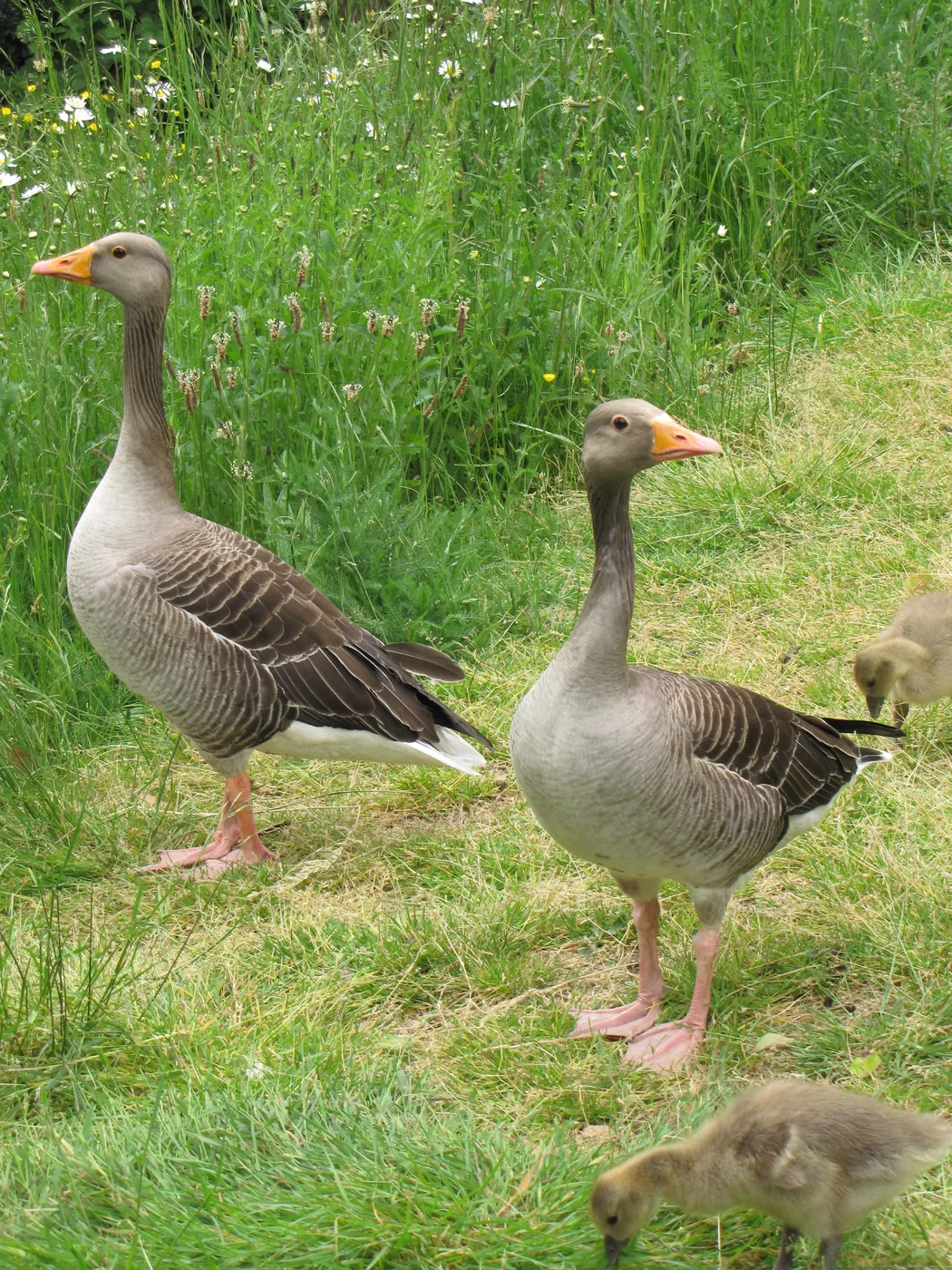
The Graylag Goose Anser anser is a large gray goose with soft white down on its belly. This down has been collected since ancient times to stuff pillows and mat-tresses. Its beak is not as long nor as flat as a duck’s. It is very vigilant, and when suspecting danger or seeing strangers approaching, it first lifts its beak skywards; then if the danger is confirmed, it begins to utter a series of loud honks. This made the goose a sought-after watchdog to warn householders about the approach of robbers at night. Geese saved Rome by warning the citizens that their enemies, the Gauls, were approaching one night in 390 B.C.
Translation
A word for goose or large duck is appropriate where such birds are known. In sub-Saharan Africa the specific word for the large Spurwing Goose Plectropterus gambensis is the closest equivalent. In North America the Canada goose and in New Guinea and Australia the Pied Goose Anseranas semipalmata would be the local equivalents. Otherwise, a more general expression for big fattened birds can be used. In some languages a phrase literally meaning “meat-birds” has been possible
Because of the doubt concerning the precise meaning of this word, a general inclusive word like “poultry", or even “fowl” or “chickens", is perfectly admissible.