Discussion
There is no consensus among scholars about the bird this word refers to. The word occurs five times, and from the contexts it can be stated with some certainty that
a. it is an unclean bird (that is, it is not a seed eater)
b. it is associated with the Judean Desert
c. it is associated with ruin
An additional feature, which has largely been overlooked, is that in four of the five verses the discourse structure indicates that it was paired in the biblical writers’ minds with the raven. This would indicate that this bird is probably a carrion eater or scavenger and possibly black.
These contexts would rule out the interpretation “pelican". PSA 102:6 could possibly be construed as referring to the great distress a pelican would suffer in the desert. However, this argument is weakened by the fact that it would be almost nonsensical in ISA 34:11 to indicate that Edom will become a place of hot springs and desolation by saying that it will be “a dwelling place of pelicans". The White Pelican Pelecanus onocrotalus, which is the pelican seen most often in the land of Israel, lives in large rivers, lakes, lagoons, and oceans. They are passing migrants in Israel, staying only a few weeks in autumn. They stop briefly in the Huleh and Eilat areas, as they move from the Black Sea, the Danube Delta, and the Caspian Sea to Africa. No place in the whole of the Middle East could be called a “dwelling place of pelicans". To do so would be to indicate that the place has become a wetland or full of suitable lakes well-stocked with fish.
Some sort of owl seems more likely, and most modern English translations follow Driver’s suggestion in this regard. NEB and REB have “horned owl". This is not a species of owl but a much broader classification referring to a family of owls that have prominent ear tufts. NIV and NAB have an even more general term, “desert owl". There is no such family or species of owl, and the phrase simply means an owl found in the desert.
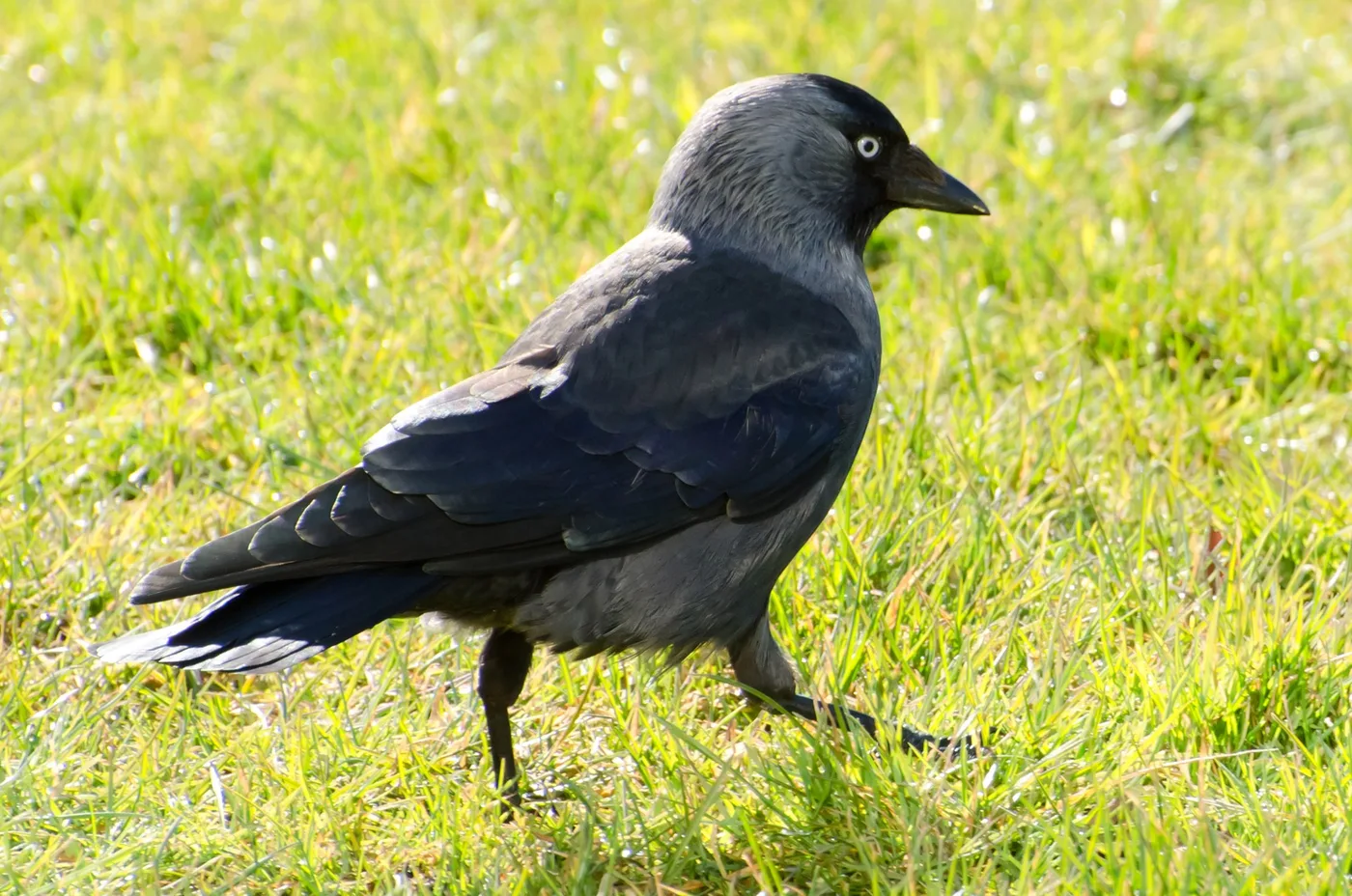
However, another interesting suggestion has been the jackdaw. Besides fitting all of the contexts, it also makes a fitting pairing with the raven in LEV 11:18; DEU 14:17; ISA 34:11; and ZEP 2:14. In the latter two passages the birds mentioned would be the jackdaw, two types of owl, and the raven, making a typical Hebrew correspondence between opening and closing items, and between the two middle items. The structure of the lists of unclean birds in LEV 11:13–LEV 11:19 and DEU 14:11–DEU 14:18 is discussed in the section specifically dealing with these lists (see Birds, clean and unclean). In modern Hebrew the jackdaw is called qa’ak, which might be a slightly modified form of the biblical qa’ath. All scholars are agreed that the name relates to the sound the bird makes, and this would certainly be a good representation of the sound made by the jackdaw.
Description
Since the pelican is unlikely as the proper translation of this name, it will not be described here. Descriptions of owls indigenous to Israel can be found in Owl.
The Jackdaw Corvus monedula is a member of the same family as ravens and crows but is smaller. It is black all over. See the illustration at Crow, raven.
Special significance or symbolism
This bird is a symbol of uncleanness, desolation, and possibly death.
Translation
Jackdaws are found in the Middle East, South Asia, and Europe. A word for a small type of crow would be the best choice in most other places. Even a phrase such as “small crows and big crows” could be used for jackdaws and ravens.
If an owl is accepted as the meaning of qa’ath then a general word for owl is a better choice than any one subspecies of owl. However, care should be taken not to introduce an association with witchcraft, since this was not the case in the original Hebrew.