Discussion
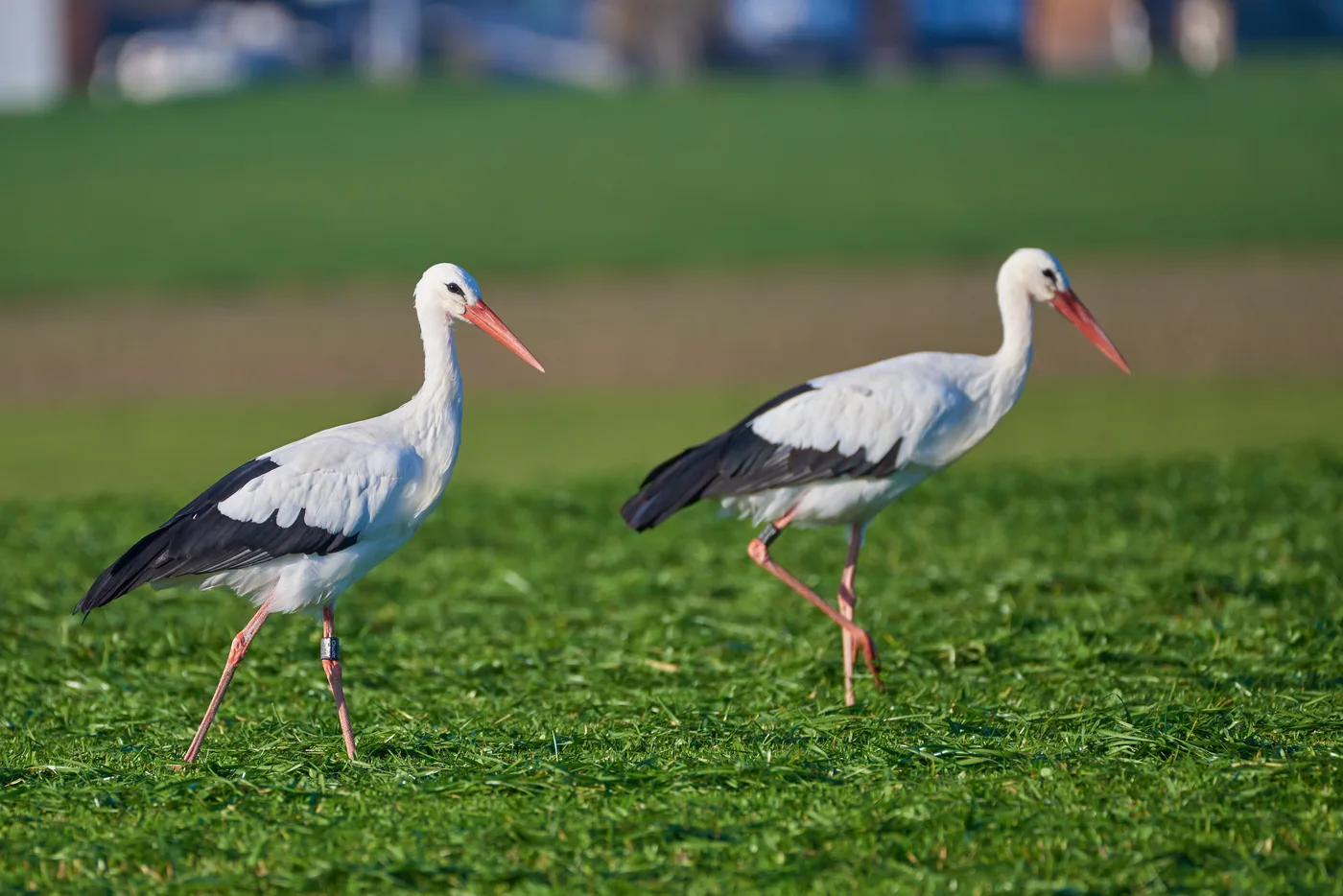
There is almost complete agreement that chasidah is the stork. There are two species of stork that pass over Israel, where they stay for a few days as they migrate from Europe to Africa and vice versa. These are the White Stork Ciconia ciconia and the Black Stork Ciconia nigra.
Description

When storks are about to move to another feeding ground, they usually soar around in upward currents of air called thermals, reaching great heights, and then they soar off in the direction they have chosen, conserving their energy by only occasionally beating their wings.
Special significance or symbolism
It is possible that the name chasidah is derived from the word chesed, meaning “kindness” or “faithfulness", perhaps a reference to the fact that they seem to take especially good care of their young when nesting.
Translation
Storks of various species are found in most parts of the world, and many of them have migrating habits. There are species of stork that migrate from Europe to India and the Far East, some that migrate from Southeast Asia to Australia, and one, the Abdim’s Stork Ciconia abdimii, which migrates from Ethiopia to Zimbabwe and Botswana, signaling the arrival of the rainy season wherever it goes.
In the few areas where storks are not known, a borrowed word or a transliteration can be used, perhaps with a footnote to indicate that this is a big bird that migrates long distances over Israel.
JOB 39:13: The Hebrew of this verse is difficult to interpret. The reading supported by most commentaries is “The wings of the ostrich beat rapidly or, joyfully, but they certainly are not comparable to the wings of a stork.” Some, however, suggest that chasidah be corrected to read chaserah (which looks very similar in Hebrew), and then the verse would mean “The wings of an ostrich beat quickly, but they lack flight feathers.” Whichever interpretation is reflected in the text, the alternative should be given in a footnote.