
Discussion
Scholars are agreed that the Hebrew word ‘adashah refers to the Lentil Lens culinaris (formerly known as Lens esculenta). The Arabic word ‘adas, as well as several references in post-biblical Hebrew, confirm this identification, as does the Septuagint. Seeds found in excavations dating to the sixth or seventh millennium B.C. show that the lentil is one of the first species to be cultivated by humans. In those excavations lentils are often found together with seeds of wheat and barley.
Description
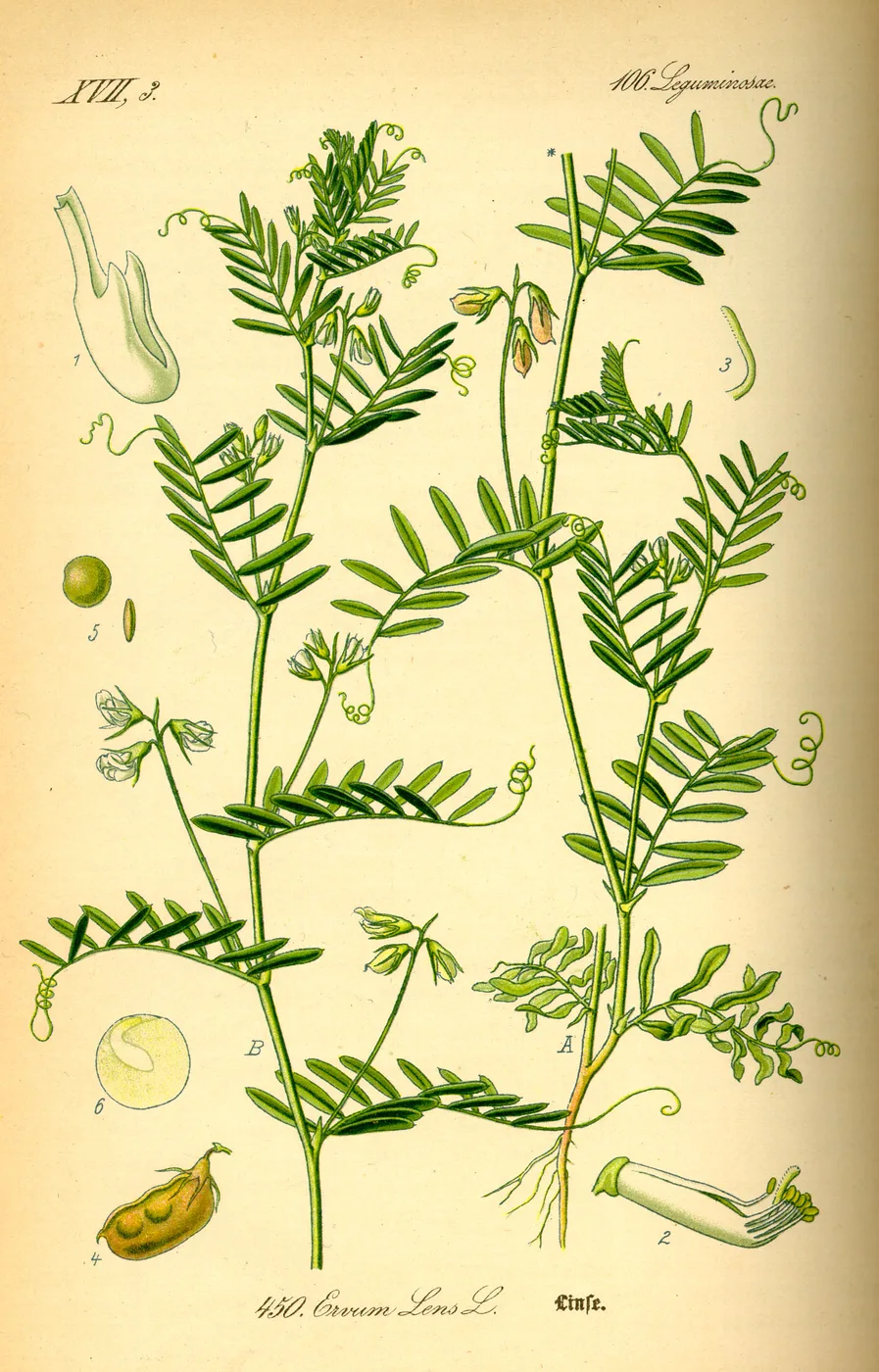
Special significance
In EZK 4:9 the strange bread, made from six kinds of grains and legumes including lentils, was probably intended to show that food would become scarce and that the people would have to eat whatever they could find. The lentil is typically used in soups and stews, as it was when Jacob used it to trick his brother Esau into giving up his rights as the firstborn son. Lentils were among the foodstuffs brought to David by local people when he was pursued by Absalom.
Translation
Lentils are now widespread in Asia, India, and North Africa. In places where they are not known, we suggest using the word for a local type of bean rather than a transliteration. However, in EZK 4:9 “beans” are also mentioned, so a possible rendering for “beans and lentils” is “different kinds of beans.” In GEN 25:34 a generic expression for “pottage of lentils” would be appropriate, such as “bean soup,” “bean stew” (CEV), or “vegetable soup” (NCV). If a transliteration from a major language is desired, consider Arabic adas; French cristallin, lentille; Spanish lenteja; Portuguese lentilha; and Swahili adesi.