Reference:”
Discussion
Most scholars believe the Hebrew word ’avattiach refers to the Common Watermelon Citrullus vulgaris /lanatus, and it should be so identified since there are other types of melons, such as the muskmelon, with which it should not be confused. In fact, until recently, some botanists thought that this word referred to the muskmelon. Watermelons probably originated in Africa (possibly in the Kalahari) and were probably domesticated in the Neolithic Period. They have been cultivated in Egypt since prehistoric times and are used for food, drink, and medicine. Even the seeds are eaten. The Arabic cognate batekh /batikh is used for both the muskmelon and the watermelon.
Description
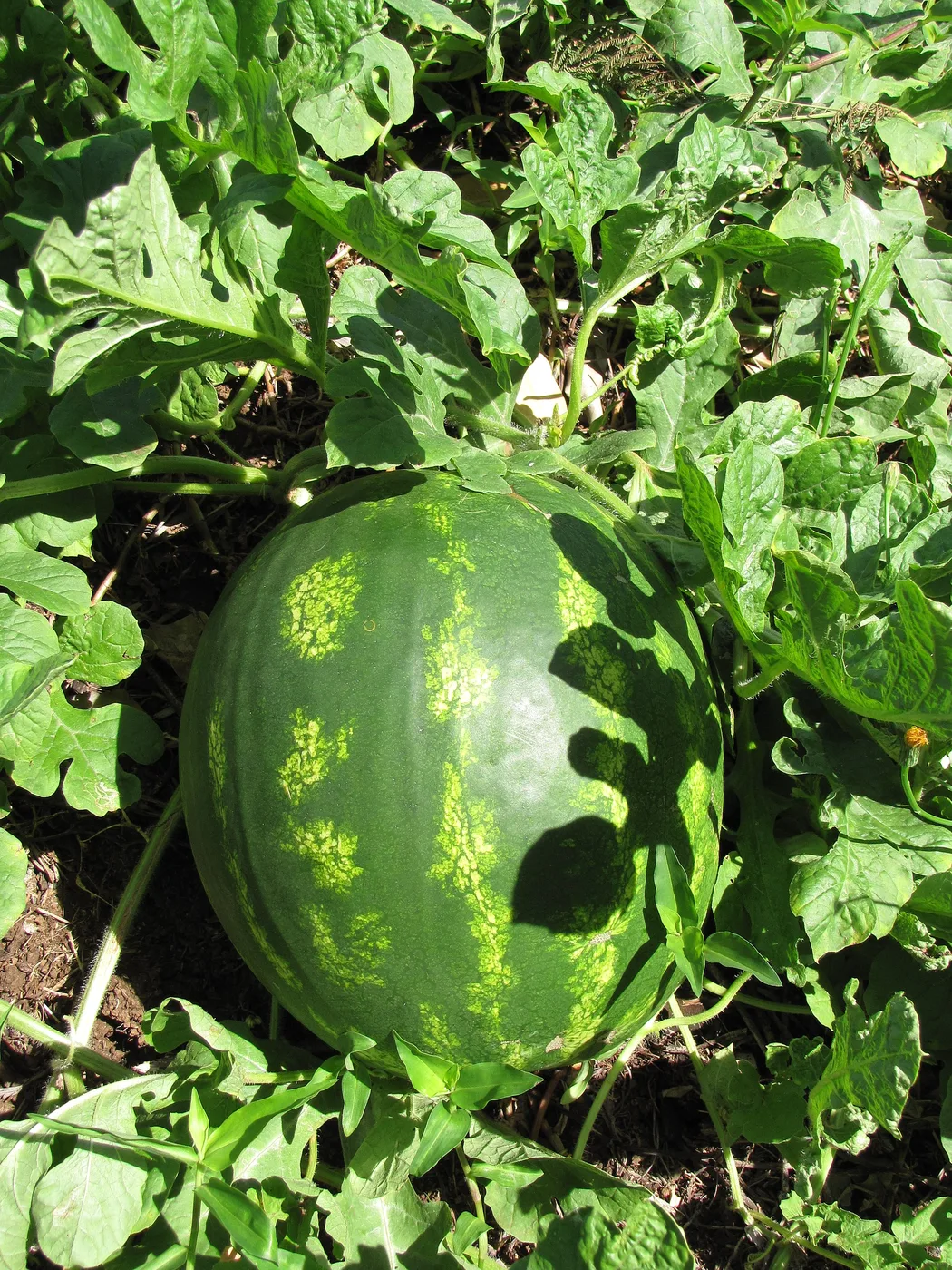
The watermelon plant is a vine like a pumpkin or a squash. The fruits vary widely in size, shape and color, some being striped, others being plain colored (mostly dark or light green).
Special significance
According to NUM 11:5, watermelons were among the fruits that the wandering Israelites remembered from Egypt when they complained to Moses.
Translation
By now watermelons are a fairly common sight in the cities of the world. Where the fruit is marketed, there will be a name for it, often based on a major language (for example French pastèque; Spanish sandía; Portuguese melancia; Arabic batekh, batikh; and Swahili tikiti).