Discussion
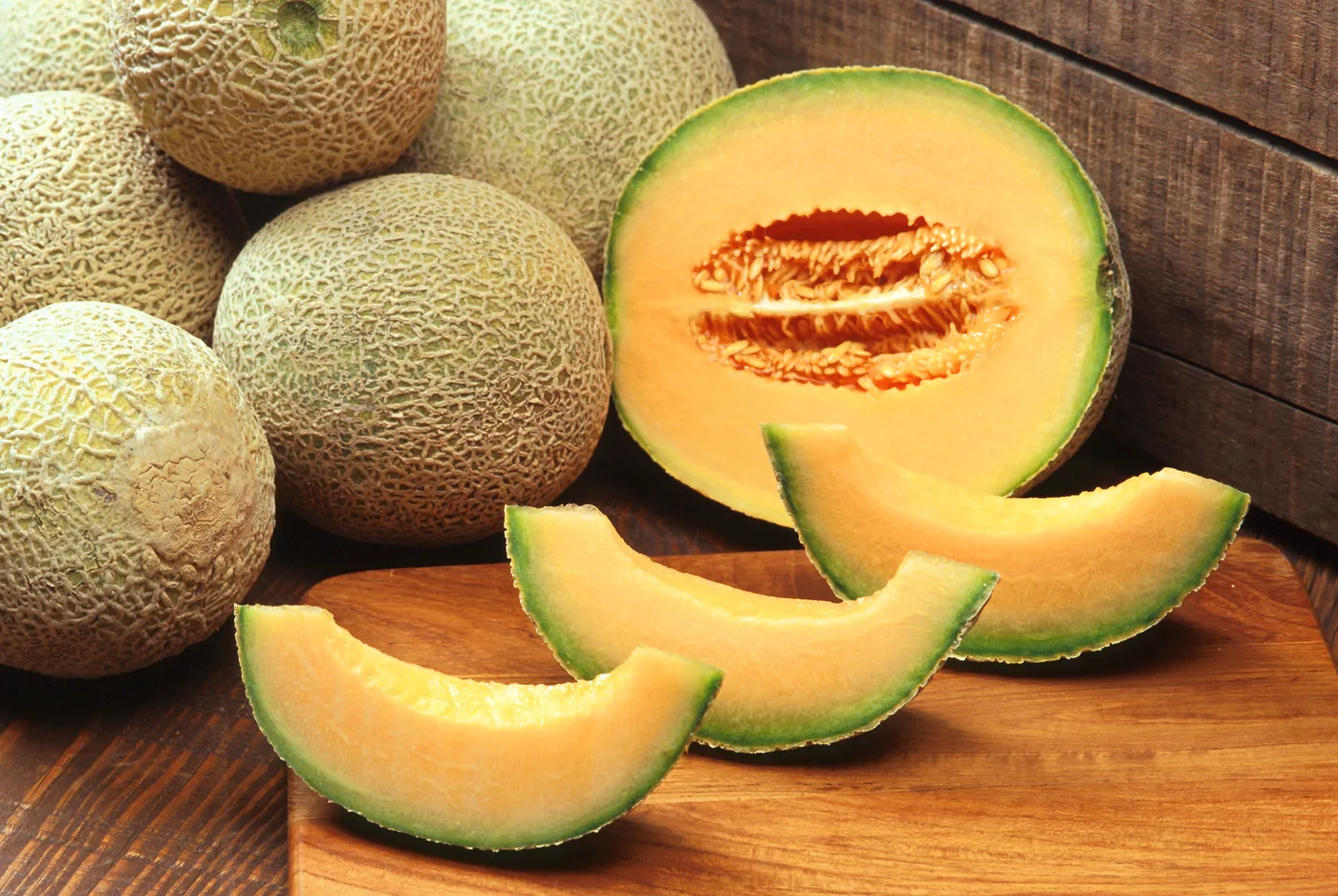
RSV renders the Hebrew words qishshu’ah and miqshah as “cucumber.” Against Moldenke and others, Zohary argues forcefully that these words refer to the Muskmelon Cucumis melo, and that “garden cucumbers did not exist in Egypt in biblical times” (page 86). Hepper concurs with this, as does The Interpreter’s Dictionary of the Bible. Confusingly, one narrow and curved type of muskmelon is called the “snake cucumber.”
Cultivated muskmelons started out in and around Persia (now Iran) before moving into northern India, Kashmir, and Afghanistan. Although truly wild forms of Cucumis melo have not been found in those regions, several related wild species have been noted.
A picture of offerings presented at a funeral in Egypt around 2400 B.C. contains fruit that some experts take to be muskmelons. The Greeks appear to have known the fruit in the third century B.C., and in the first century after Christ it was definitely described by the Roman philosopher Pliny, who said it was something new in Campania in Italy. The Greek physician Galen, in the second century A.D., wrote of its medicinal qualities, and Roman writers of the third century gave directions for growing it and preparing it with spices for eating. The Chinese apparently did not know the muskmelon until it was introduced to their country around the beginning of the Christian Era from the regions west of the Himalayas.
Description
Special significance
Translation
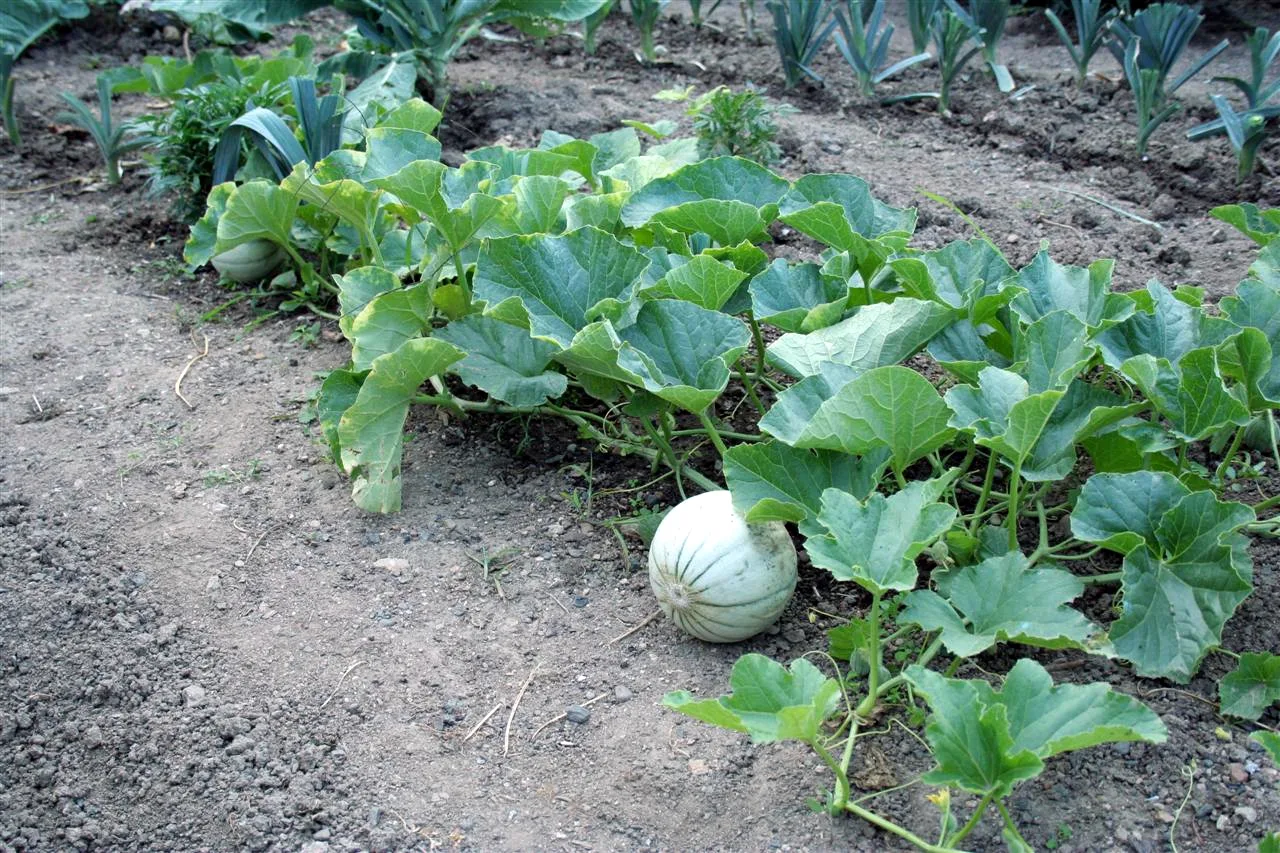
Many varieties of muskmelon are known around the world in warm countries. If it is not known, it may be translated contextually. NUM 11:5 is non-rhetorical, and a transliteration from a major language is recommended (for example, French cantaloupe, Spanish and Portuguese cantalupo, Arabic abd el lawi). However, the reference to the temporary shelter in the melon patch in ISA 1:8 is metaphorical, so a cultural equivalent representing a lonely or abandoned place could be considered. In this verse translators should keep in mind its parallel images, which are “a booth in a vineyard” and “a besieged city.”
JER 10:5: RSV renders the first line of this verse as “Their idols are like scarecrows [tomer in Hebrew] in a cucumber field [miqshah ].” Exegetical questions swallow up the botanical ones here, and they all hinge on the Hebrew words tomer miqshah, which could be understood to mean “a straight palm tree” (so KJV, NKJV, ancient Greek versions of Aquila and Theodosius), “a handcarved pillar” (so Keil and Delitzsch, McKane), or “a scarecrow in a cucumber/melon field” (so RSV, GNB, and most other English versions). The Septuagint does not have this phrase at all, so there is no help there. Keil and Delitzsch argue for taking tomer miqshah as a handcarved pillar since the word miqshah means “hammered work” in EXO 25:18, EXO 25:31, EXO 25:36. KJV has “upright as the palm tree” (similarly NKJV), based on the idea that the word tomer is a variant of tamar, the normal word for palm tree. Tomer also occurs in JDG 4:5, where it seems to be universally accepted as meaning “palm tree,” although no one can satisfactorily explain the unusual vowel pattern (tomer instead of tamar). See Date palm.
Among the texts of JER 10:5 found at Qumran, 4QJera and 4QJerb do not have this line, but according to Lundbom, both Janzen and Tov believe that 4QJerb included something in that place that is now missing. According to Lundbom, it should begin with “It is worked silver, they will not walk,” which is similar to the reading in the Septuagint but with something added. In other words, Lundbom concludes that if we had a complete 4QJerb it would not have the words tomer miqshah and therefore would not help to resolve the issue of cucumber/melon patch versus palm tree or pillar.
The cucumber field interpretation has apparently been influenced by LJE 1:69 (70), which begins with “Like a scarecrow in a cucumber bed, that guards nothing.” The Greek word sikuēraton (“cucumber bed”) may even be derived from the Hebrew word qishshu’ah by inversion of the first two consonants.
Most versions and commentators seem to favor the cucumber/melon patch interpretation rather than the palm tree or pillar interpretation. However, the evidence on the other side is such that I would suggest including it in a footnote that offers these alternatives: “a carved post” or “a carved palm tree.”
If translators decide on the botanical interpretation of miqshah, they still have to decide what vegetable or fruit it was. Zohary strongly favors muskmelon and Hepper appears to agree. NIV says “a melon patch” (similarly GNB, NCV). NLT generalizes by saying “a garden.”