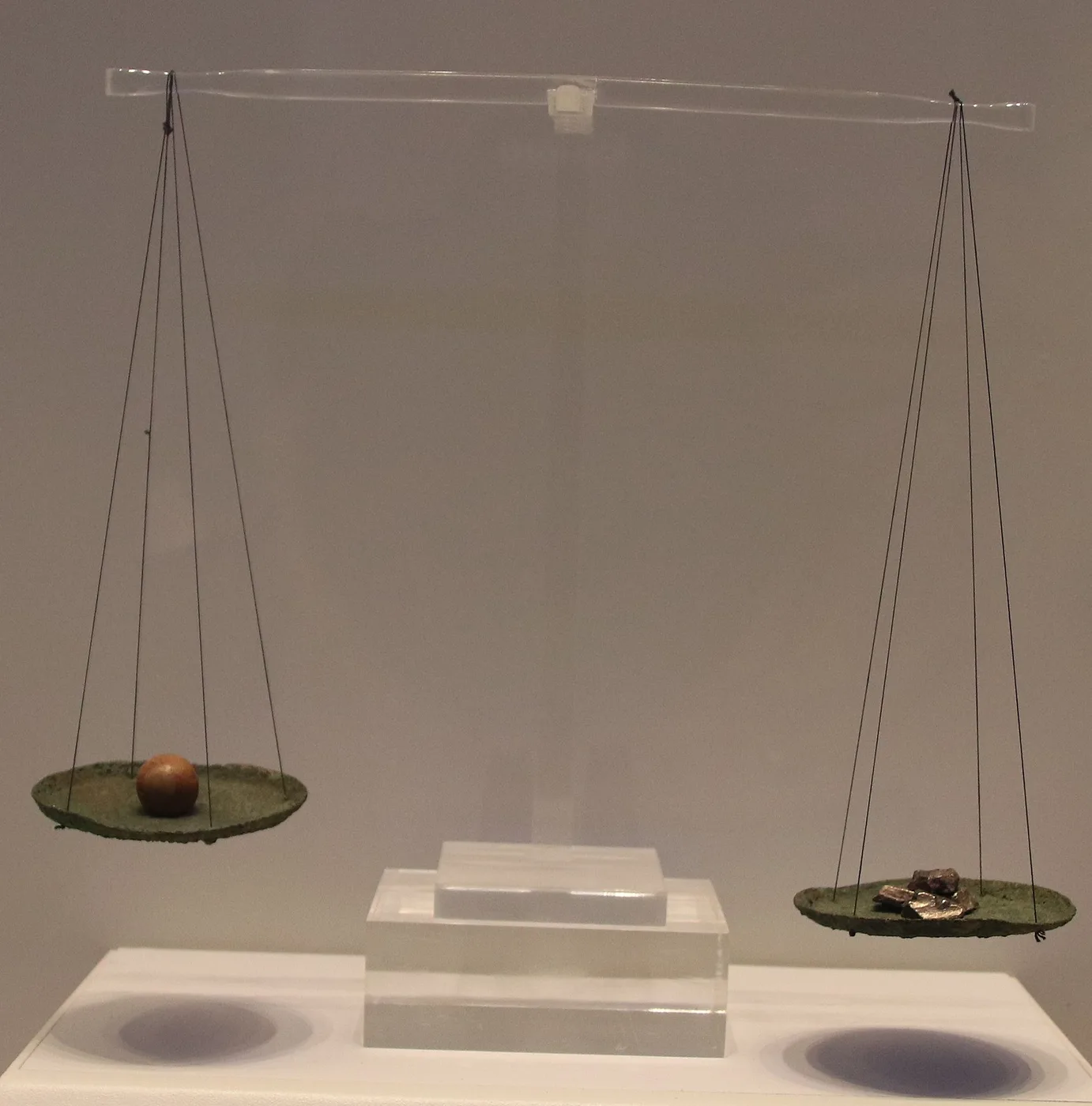
Description
The balance scales were an instrument for weighing objects. Ancient balance scales often consisted of a rod held by a cord or a chain in the middle and with pans attached to both ends.
Usage
Weights were placed in one pan, while the items to be weighed were placed in the other. When the rod was parallel to the ground, then the items in the two pans were of equal weight.
Translation
“Balance scales” may be rendered in some languages as “tool for weighing” or “instrument for knowing how much something weighs.” The translator should avoid using an anachronistic word for modern types of scales, such as a spring scale or a hydraulic scale.
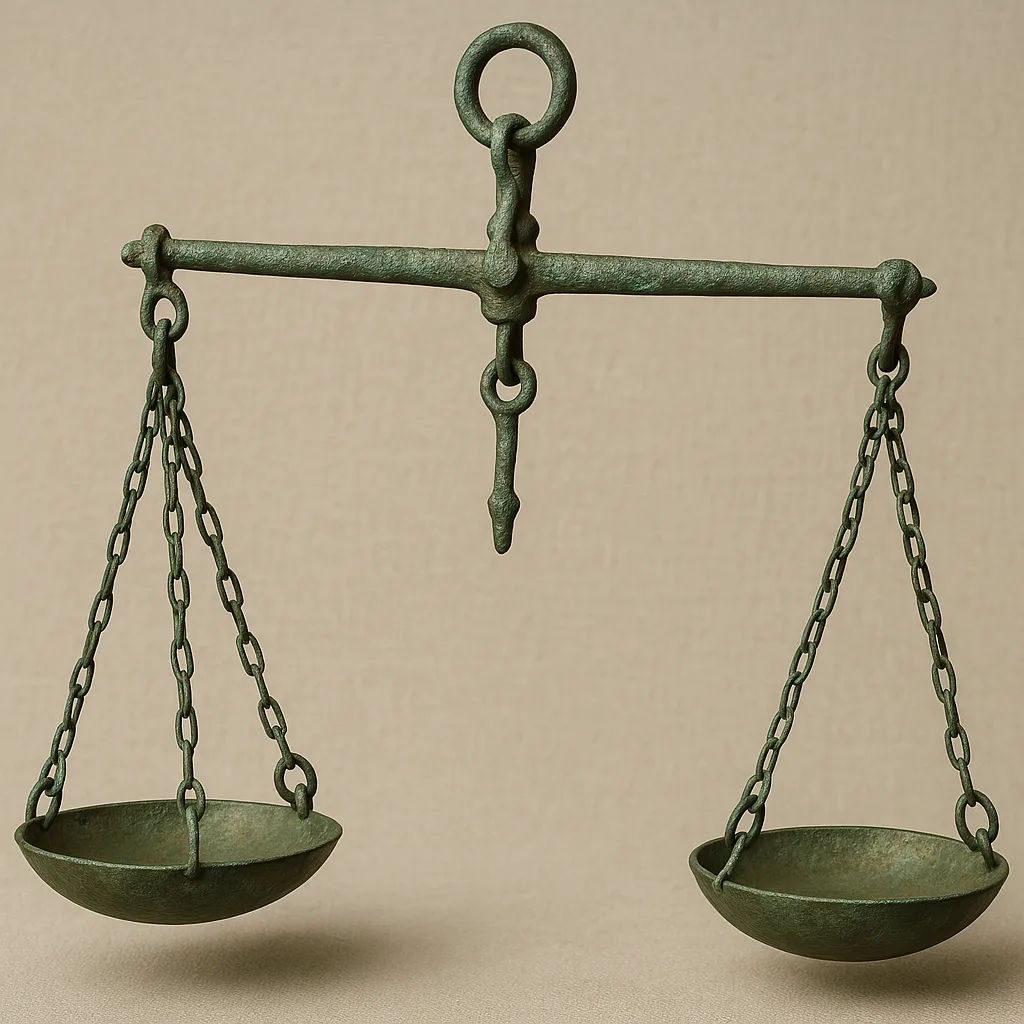
Because the ancient scale compared the relative weights of two objects, in the intertestamental period it became a symbol for considering the relative value or right and wrong of two activities or choices. Compare the English idiom “weigh his actions.” This figurative usage appears in SIR 1:22; SIR 21:25; SIR 28:25; and to a slightly lesser extent in DAN 5:27. Translators will often prefer to abandon the physical object and translate according to the meaning; compare GNT at SIR 21:25, which reads “the wise will consider the consequences of what they say.” Similarly, at SIR 1:22, instead of the literal text “a man’s anger tips the scale to his ruin” (RSV), GNT has “it [anger] can bring about your downfall.”