Bit and bridle

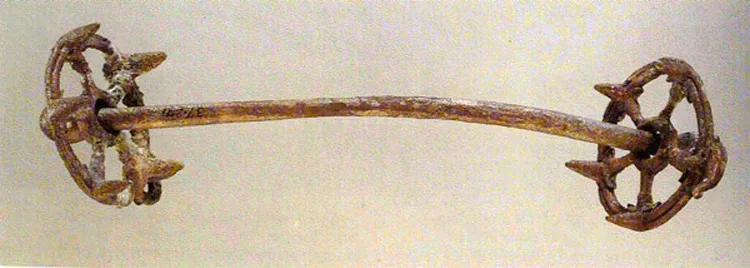
Ancient bronze horse bit
Ancient bronze horse bit (© Deutsche Bibelgesellschaft, Stuttgart by United Bible Societies)

Description

The bit was a short bar, usually made of metal, placed in the mouth of a horse. Its ends, which projected from the mouth of the animal, were attached to ropes or leather straps that fitted over the head as the bridle.


Usage
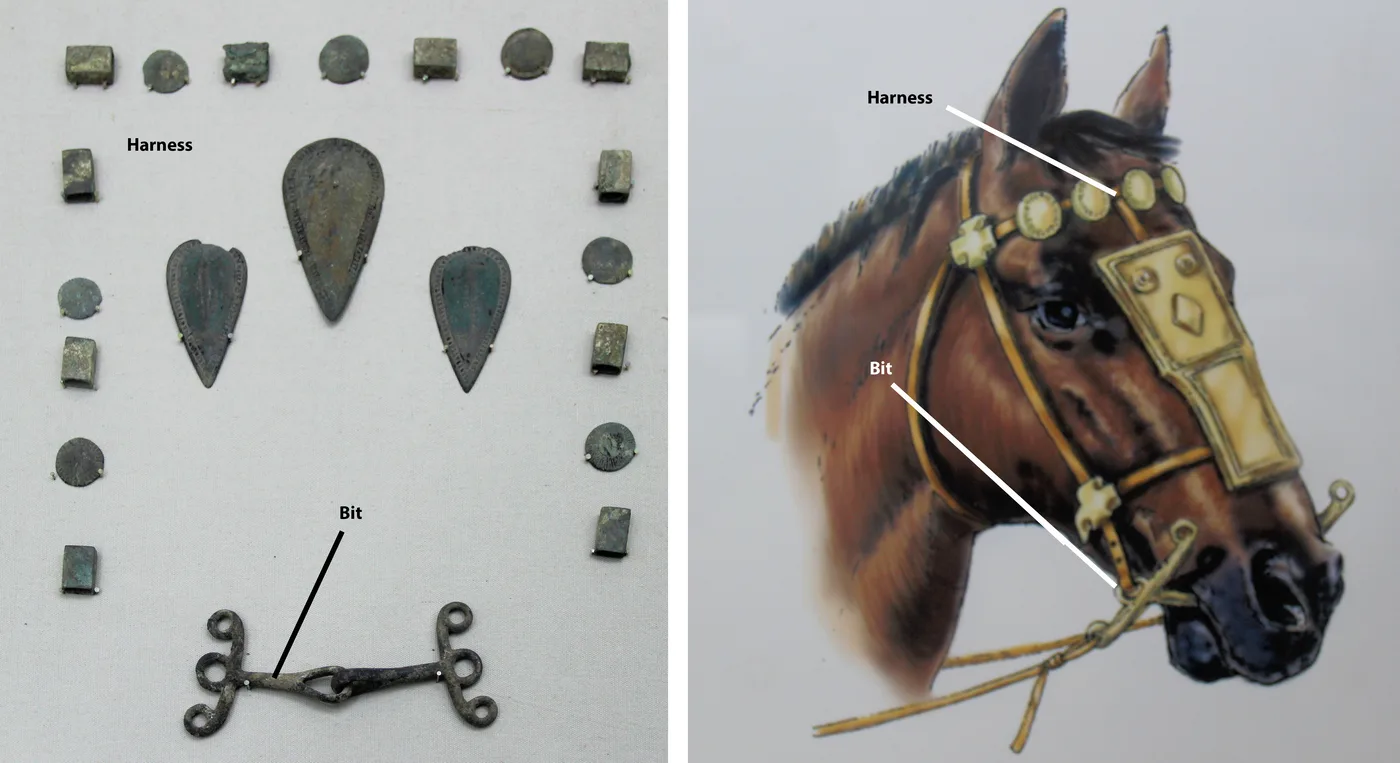
Harness with bridle and bit fitted on the horse's head
Harness with bridle and bit fitted on the horse's head (© Gary Todd - Wikimedia Commons)
By pulling on the bridle straps to the right or left, the rider or driver of the wagon could control the actions of the horse.


Translation

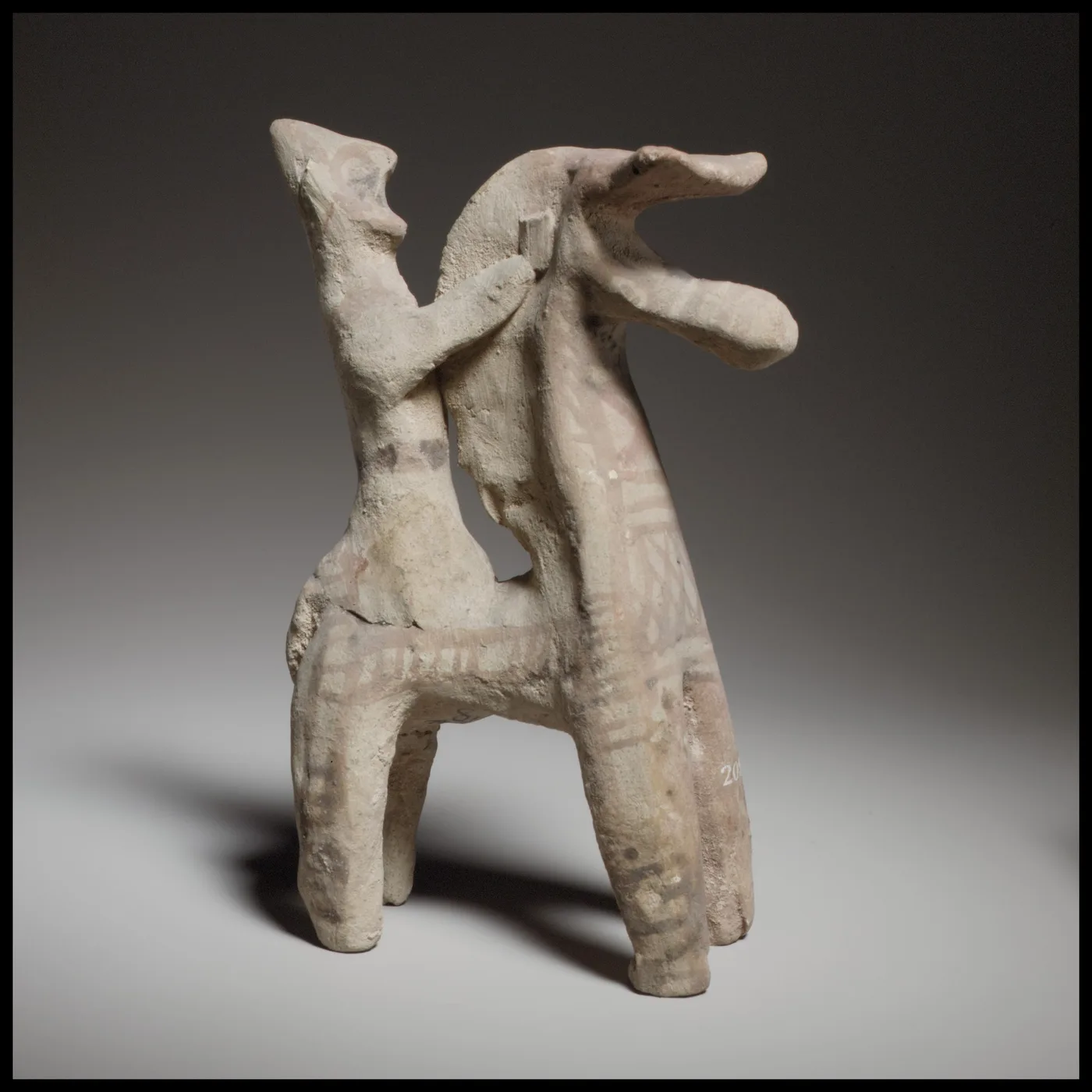
Horse and rider showing use of reins
Horse and rider showing use of reins (© Wikimedia Commons)
The Hebrew words metheg and resen respectively refer to the “bit” and “bridle” (although RSV has once rendered metheg as “bridle” in PRO 26:3). The Greek words chalinos and chrusochalinos refer to both the bit and bridle. Where a bit or bridle as a piece of harness is unknown, translators can use a descriptive phrase, such as “something to guide a horse with” or “something to put in the mouth of a horse to guide it.”

The Hebrew word mtsilah in ZEC 14:20 probably refers to some sort of noise-making decoration on the harness of a horse. The word occurs only here in the Bible.

In REV 14:20 the reference to “a horse’s bridle” (RSV) is merely an indication of measurement. It refers to the height of the bridle from the ground, so we may render this measurement as “about a meter and a half” (FRCL) or “about five feet” (GNT).

The Greek word used in 2MA 10:29 and 1ES 3:6 indicates that the metal parts of the bridle were made of gold.

Scripture References (9)

2 Kings

Job

Psalms

Proverbs

Zechariah

James

Revelation