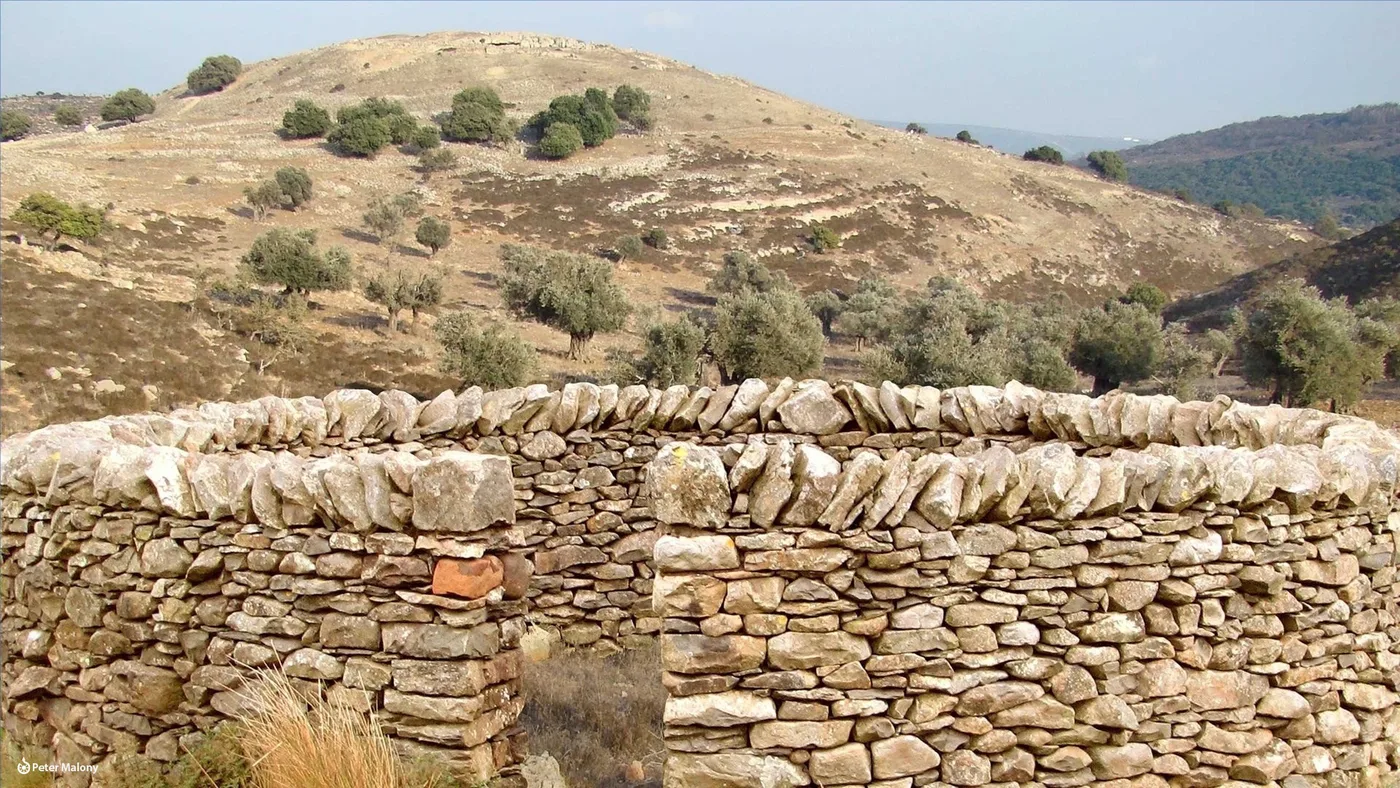
Description and usage
The sheep pen was an area enclosed by a stone wall or hedge made of branches and thorns. It had a narrow opening through which the sheep could pass and which could be closed with brush or by the shepherd’s body. Sheep were put in the pen at night to protect them from thieves or wild animals.
Translation
“Sheep pen” must often be rendered “place for the protection of sheep,” “place for sheep with a wall built around it,” or “enclosure for sheep.” In contrast to the next entry (Animal pen, stall), this enclosure was built out in the areas where the sheep were grazing, and not near the house. It could often be a temporary structure.
In JER 49:3 the Hebrew word gderoth is rendered “sheep-pens” by NJB and “sheepfolds” by NJPSV. Others have “walls” (NIV, NASB, New Century Version [NCV]) or “hedges” (RSV, New Living Translation [NLT]). Others, however, prefer a small change in the Hebrew, so that it would mean “covered with gashes” as an expression of mourning. Translations that take this approach render the last half of the fourth line in this verse as “lament, and slash yourselves with whips” (NRSV) or “and score your bodies with gashes” (Revised English Bible [REB]).
The Hebrew words mishpthayim and shfatayim are translated in different ways. In GEN 49:14RSV and NJPSV have “sheepfolds,” while REB says “cattle pens.” These versions believe these words refer to an enclosure for domestic animals. GNT and NIV have “saddlebags,” which is preferred by A Handbook on Genesis, page 1090.