Description and usage
In buildings made of stone, the cornerstone was the first stone laid in the foundation (see the illustration at Foundation). Its orientation gave direction to the entire structure, and its position in the foundation meant it gave support to the building.
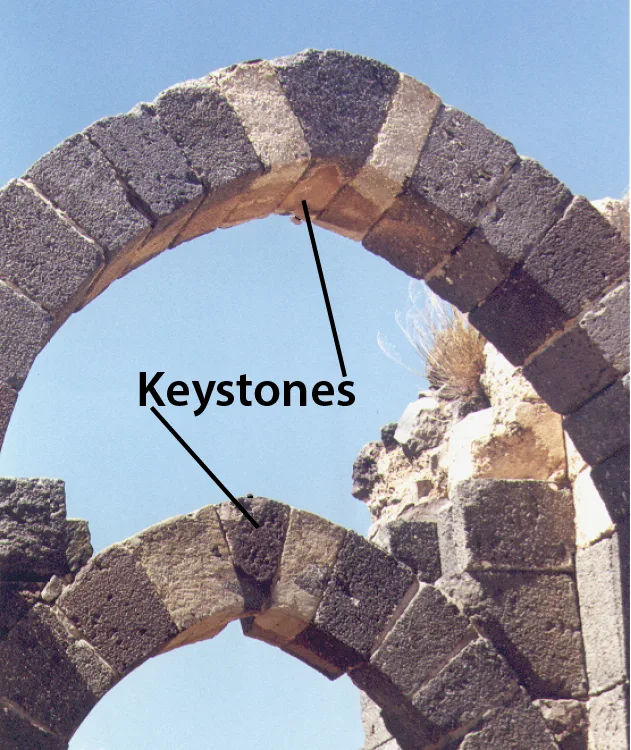
The keystone or capstone, on the other hand, was the final stone in a structure, for example, in an arch. At a time when much building was done without mortar or other material to cement stones to each other, the keystone was the strategic stone that locked the whole structure together.
Translation
It is impossible in most cases to determine precisely which stone is meant by the Hebrew and Greek expressions listed above. The stone in question could be the large stone used in ancient buildings that extended to the corner of the building. Others take each of these expressions to mean “keystone,” the stone at the top of an arch. (It is, in fact, probable that these expressions refer to the type of stone that was used in the Temple in Jerusalem, and therefore it is far more likely that they refer to a cornerstone rather than a capstone of a peaked roof or arch.)
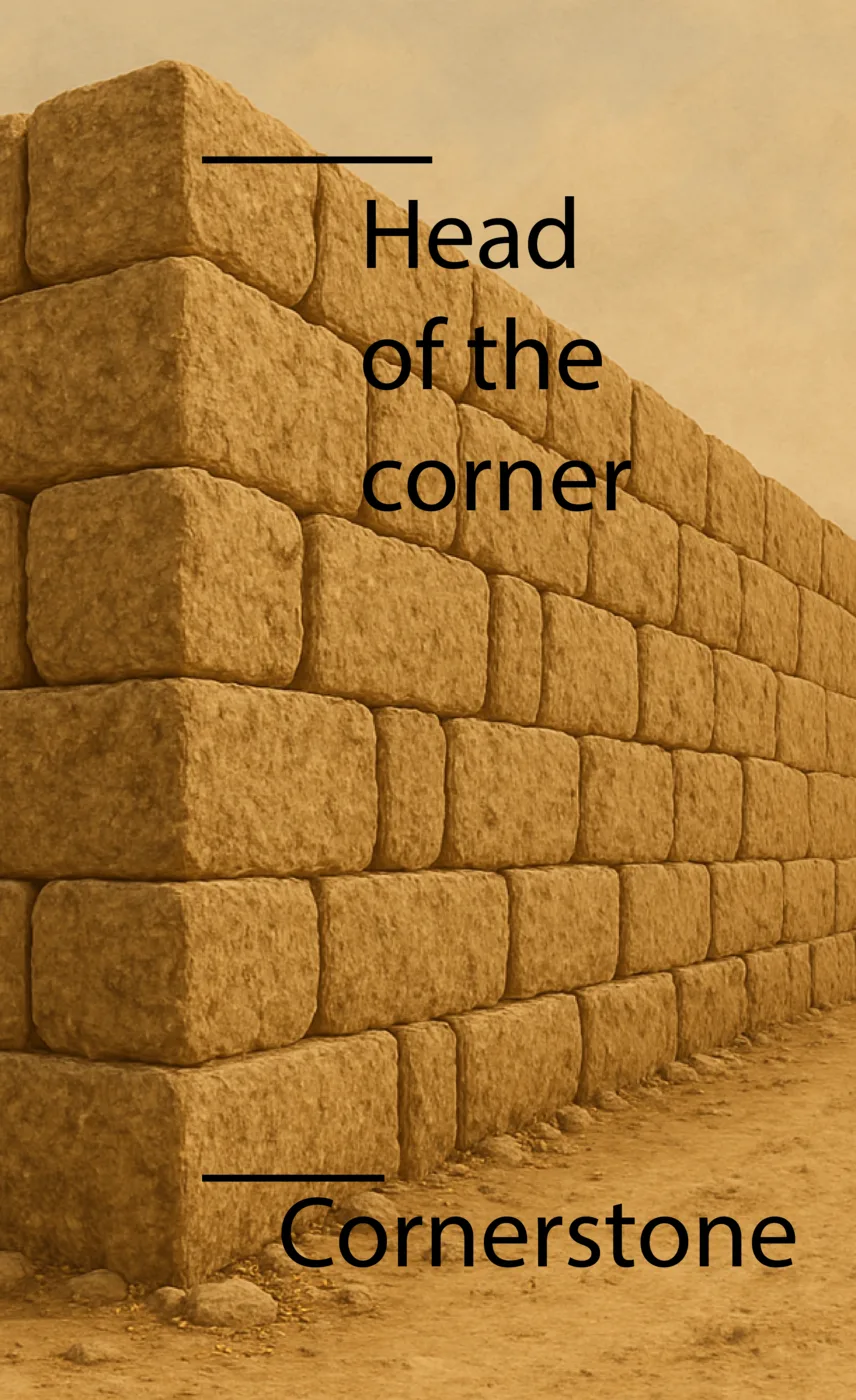
When translators use expansions such as these, it becomes much easier to translate with metaphors or similes, where the comparisons are made clear. One way to do this in EPH 2:20 is “You, too, are part of a building. The base they build that building on was put there by the apostles and the prophets, and the stone that gives it strength is Christ Jesus himself.” Another model is “You, too, are like part of a building for which the apostles and the prophets laid down the base that gives it strength; and Christ Jesus is the important stone that gives strength to the building.”
JOB 38:6: Where cornerstones are unknown, it may be possible to render the second line of this verse as “or who finished the work of setting it in place?” or “who completed the place where it would rest?”
ZEC 10:4: It has been suggested that the Hebrew word pinah (literally “corner”) here indicates the corner tower or fortifications of a walled city (compare 2CH 26:15; NEH 3:24). However, no translation consulted has followed this. Some (for example, DUCL) see this word as a reference to military leaders and have translated accordingly. From earliest times this verse has been understood to refer to a messianic figure. Some translations have tried to reflect that by capitalizing “Cornerstone.” Such visual hints may be too subtle for most readers and are, of course, lost when the text is read aloud. A literal rendering of the two Hebrew words at the beginning of this verse (RSV “Out of them shall come the cornerstone”) will be unintelligible in some languages. It is better to show that the prophecy is speaking about a leader. Good examples for the whole verse are GNT “From among them will come rulers, leaders, and commanders to govern my people” and CEV “From this flock will come leaders who will be strong like cornerstones and tent pegs and weapons of war.”