Description and usage
Altar horns were projections from the four upper corners of an altar, shaped like the horn of a sacrificial animal. Some scholars maintain that the horns were intended to represent the animals sacrificed, but others feel that they originally functioned as points on which cooking utensils rested. In Israelite law the horns of the altar were also a place of refuge where a person who had accidentally killed someone could be safe from an avenging relative of the one who had been killed.
Translation
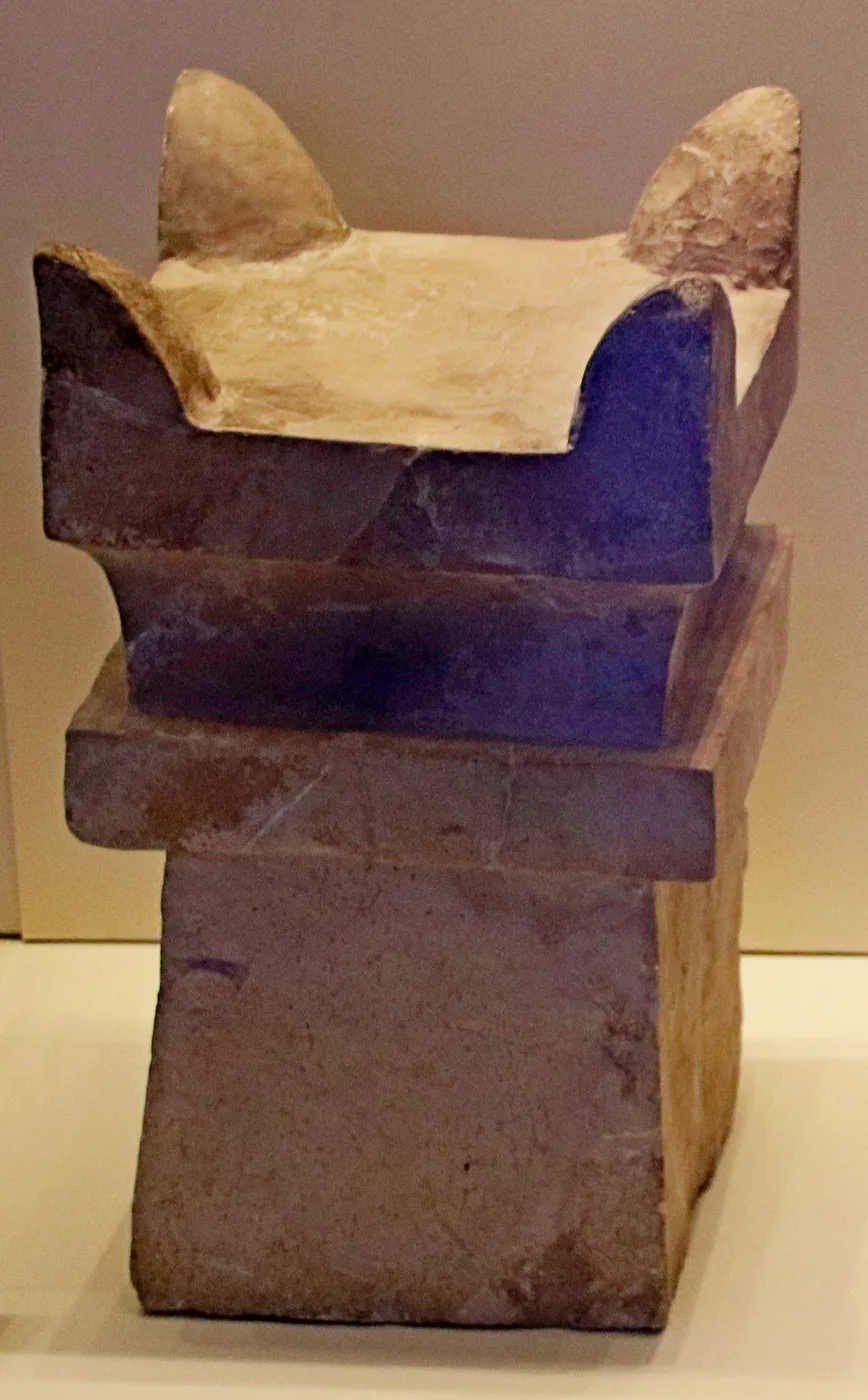
It would be possible to translate the literal phrase “the horns of the altar” as “the projections in the form of horns on the corners of the place of sacrifice [or, of the thing on which offerings are placed],” but there is no need for something so long and involved; the emphasis is not usually on the shape. For this reason in AMO 3:14GNT has “The corners of every altar,” which makes clear the location instead of the shape. This will be a good solution in many languages.
PSA 118:27: The last two lines of this verse contain directions about the festival procession in the Temple, but there is some uncertainty concerning the exact meaning of the Hebrew, which seems to say “Bind up the festival with branches to [or, as far as] the horns of the altar.” HOTTP says the Hebrew text can be taken in two different ways: “bind the feast victim(s) with ropes as far as the horns of the altar” or “line up the feast [pilgrims] with ropes at the horns of the altar,” meaning that the worshipers were enclosed within ropes to set them off as a holy people. HOTTP follows NJPSV in translating “ropes” instead of “branches” [or, boughs].” NJPSV translates “bind the festal offering to the horns of the altar with cords.” NJB has “Link your processions, branches in hand, up to the horns of the altar,” and explains the following in a footnote: “Ritual of the lulab, branch of myrtle or palm, waved as the procession circled the altar.” These interpretations, however, seem rather doubtful, and the GNT translation is recommended as a reasonable representation of the meaning of the text: “With branches in your hands, start the festival and march around the altar.” SPCL has “Begin the festival, and take boughs up to the horns of the altar.” AT says “Arrange the festal dance with branches, up to the horns of the altar.”