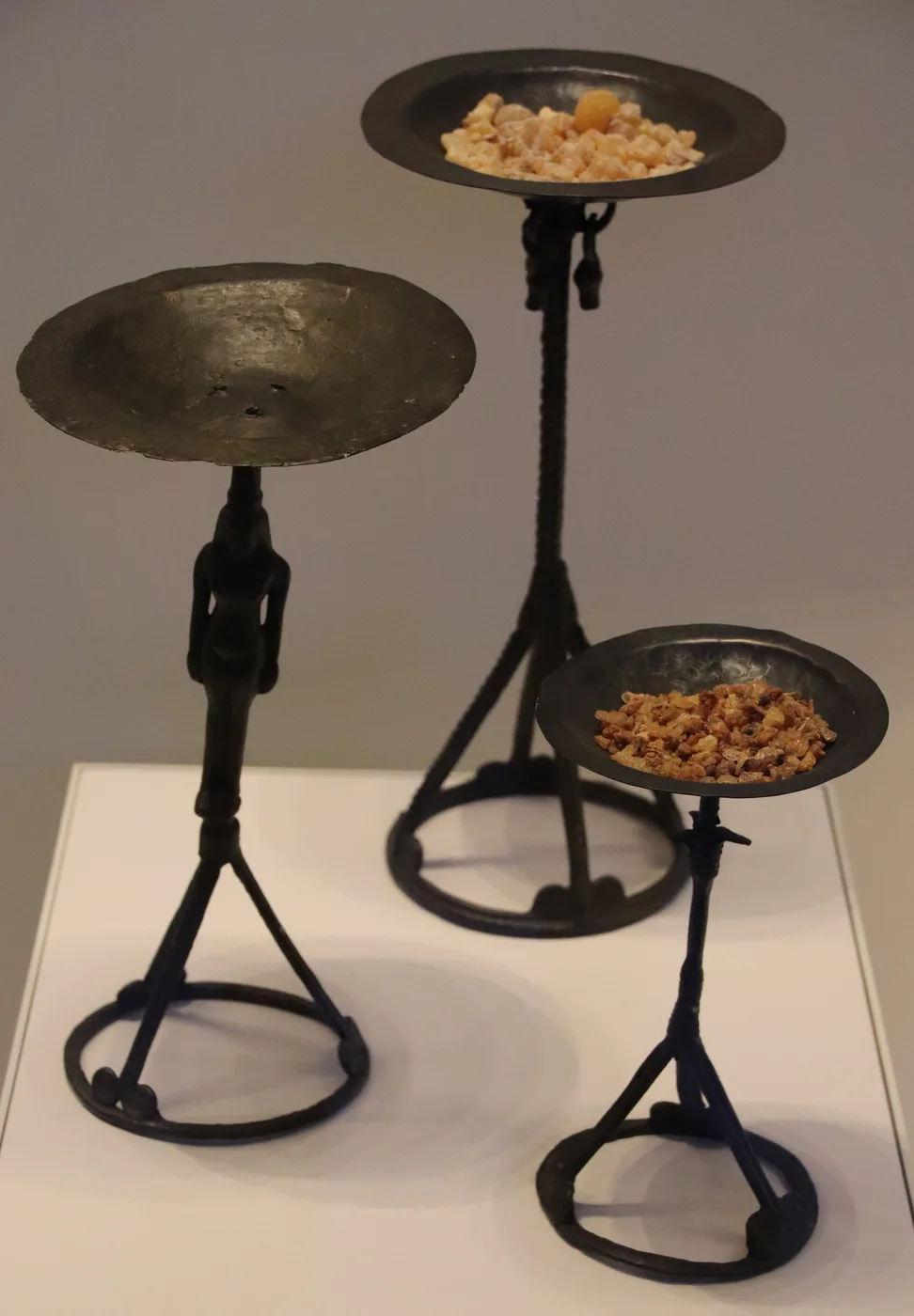
Description and usage
Incense was any aromatic substance (usually a resin) burned for its pleasing aroma.
Translation
Since some form of incense is very widely known, there is normally no difficulty involved in finding some term to designate “incense.” However, it is always possible to employ a descriptive phrase, for example, “a substance which gives off a sweet-smelling smoke” or “… a good smelling smoke.”
In the Bible the burning of incense occurs only in the context of religious worship, including both Israelite worship and pagan worship.
The Hebrew word lvonah refers to “frankincense”; the Greek word libanos is derived from lvonah. “Frankincense” would always be a correct translation for these two words. Where no specific word for frankincense exists, a general word for “incense” will usually be acceptable. One exception is EXO 30:34, where frankincense is just one of several ingredients of the “incense” to be used in the Tabernacle. A Handbook on Exodus (pages 734–735) suggests listing the ingredients by their names and then describing them in a glossary.
In DAN 2:46 the Aramaic word nichoach means “pleasing smell” and could refer to animal sacrifices or to incense or even to a combination of the two. If it is understood to refer to incense (so RSV, NIV), it will be best to use a general word for incense. Other translations prefer “offerings” (GNT), “soothing offerings” (REB), or “pleasing offerings” (NJPSV). The same word is used in EZR 6:10, where RSV renders it “pleasing sacrifices” (similarly NIV).
In PRO 27:9 the Hebrew word qtoreth, which appears together with (and follows) the word for “oil,” is understood by some versions to mean “perfume” in this context (so RSV, GNT), but others render it “incense” (NIV, REB, NJPSV).