Description and usage
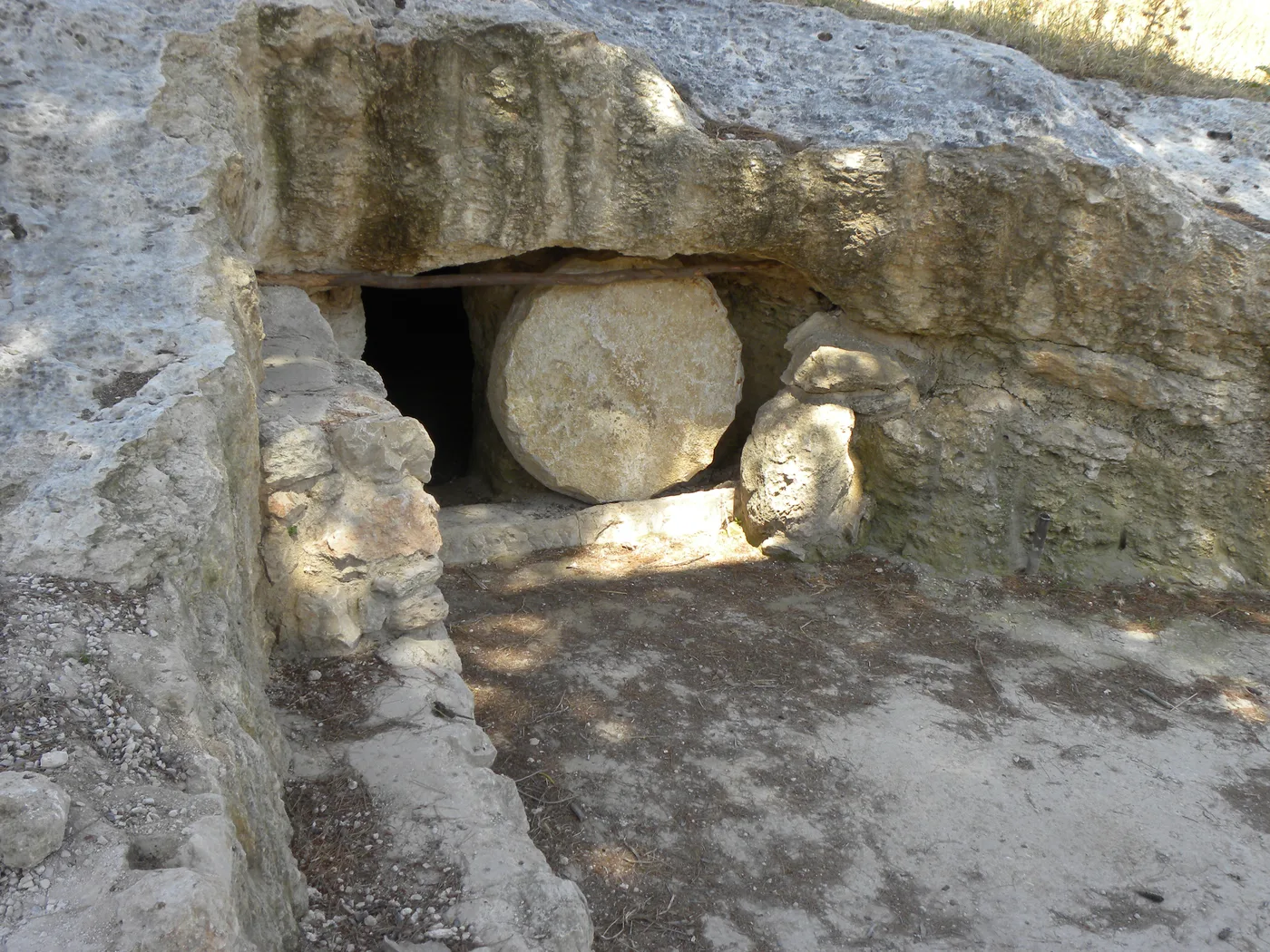
A large, heavy stone was used to close the entrance to a cave or tomb cut out of the rock.
Translation
Two different methods were used to close tombs with stones, and it is unclear from the Gospels which method is described in the accounts of Jesus’ burial. In one method the stone was cylindrical. It sat on its side in a channel the same width as the stone, and it was pushed sideways until it covered the mouth of the tomb. By the second method the entrance to the tomb was reached by going down a short incline. The stone was spherical and was rolled down the incline until it plugged the tomb entrance.
JHN 11:39; JHN 11:39; JHN 11:41: The place where Lazarus was buried is described as a cave with a stone placed at the entrance. In JHN 11:38 the Greek phrase that GNT renders “at the entrance” is ambiguous. It may mean “on it,” in which case the shaft of the burial tomb was vertical. Or it may mean “against it,” in which case the shaft was horizontal. Commentators are divided in their opinions, but the weight of evidence seems to favor a horizontal cave. In either case, the purpose of the stone was primarily to keep animals from entering the tomb and devouring the body. “A stone placed at the entrance” (GNT) may often be best translated “a stone covering the opening to the cave” or “a large stone covering the hole of the cave.” Note that the text does not state here, as in the case of Jesus’ burial, that the stone was “rolled” in front of the entrance.