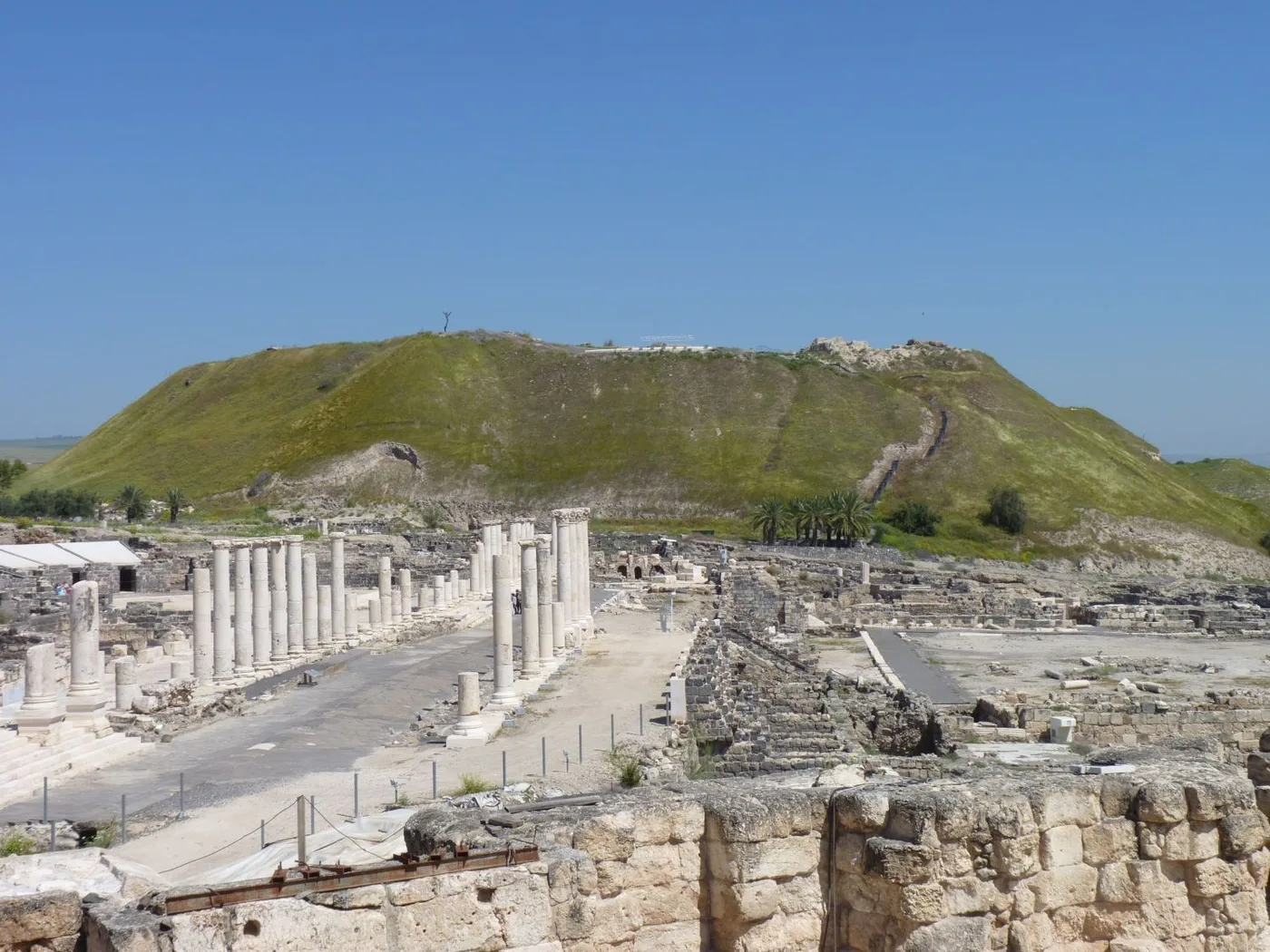
Description
The tell was a hill formed by the accumulation of ruins of a succession of ancient towns. There are numerous tells in the Bible lands, and many have been excavated and identified as ancient biblical cities.
Translation
Ancient cities and towns were often destroyed in war or abandoned after plague or famine, and the buildings collapsed over time. Frequently new cities were built on the ruins of the old cities without clearing away all of the foundations and buildup of the former cities. This process of building on top of the old gradually created an artificial hill or mound. In biblical descriptions these mounds represent destruction and decay. However, cities built on top of these mounds had a higher elevation and were thus easier to fortify and defend.
With JOS 11:13 and JER 30:18 as possible exceptions, the words listed above all connote something negative, not just a mound on which a city sits but a pile of ruins resulting from destructive activity.
JER 49:2: The literal clause “it will become a desolate tell” is rendered by NCV as “It will become a hill covered with ruins.” Some versions do not try to preserve the element of elevation; for example, GNT and CEV have “it will be left in ruins.” GECL provides a useful model with “Rabbah will become a heap of rubble.”