Description and usage
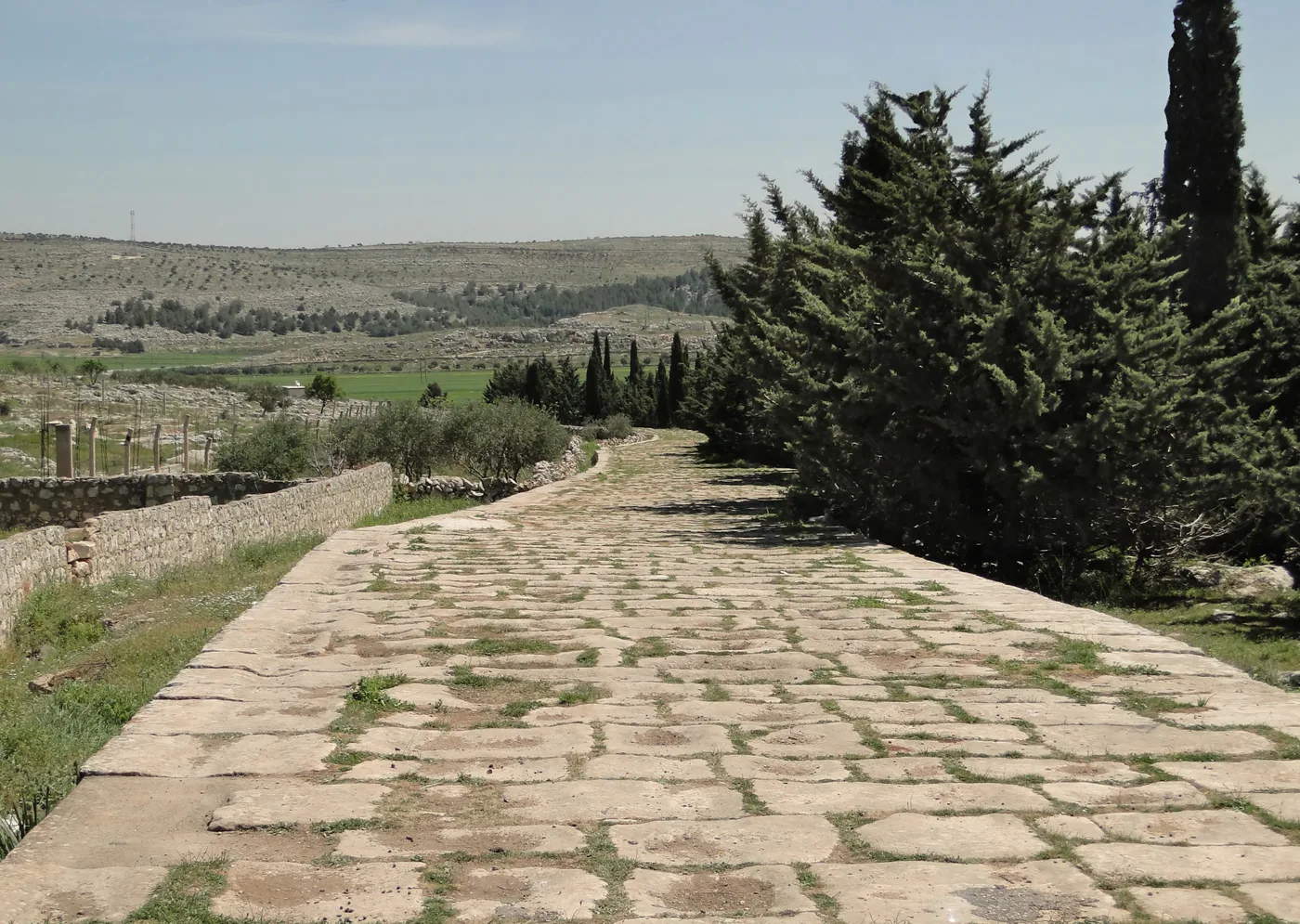
This entry includes a variety of roads, either shorter ones within a town or village or longer ones between cities and even countries. Most roads were not paved but were simply paths worn by the passage of many feet and vehicles. Some roads between cites (especially in the Roman period) and more streets within cities and towns were paved, usually with stones.
Translation
Some languages contain a wide variety of words for roads within settled areas like towns or cities and also between such urban units. Hebrew and Greek are no exception, with at least a dozen such words. While some of the words are general terms, others indicate roads differing in width, length, or purpose. Translators will, of course, want to choose words in their language that take the context into consideration.
Most of the roads mentioned in the Bible would have been local ways that were little more than wide walking paths. These were usually unpaved, followed the topography, and for the most part would not have been used by vehicles. Some of the roads mentioned in the New Testament were Roman roads and were specially prepared and paved with stone. This kind of road is mentioned, for example, in MRK 10:46. Strictly speaking, the roads within towns were not “man-made” in the sense that they were not specially constructed according to some plan. They were simply the product of the space between buildings.
Some languages make a distinction between a road inside a town or city and one that passes through the countryside. Where the context is not clear and the language does not have a generic word for “road,” it will usually be best to select a word for a road that connects towns.
As with many languages, words for thoroughfares in Hebrew and Greek often serve figuratively to indicate the “way” a person lives or does something; for example, PSA 1:1 praises the person who does not “follow the example of sinners” (GNT). The Hebrew text says literally “does not stand in the way of sinners.” Here a literal translation into English is a mistranslation, because the English idiom “to stand in someone’s way” means to prevent them from acting. NIV renders this verse literally by saying “Blessed is the man who does not … stand in the way of sinners … ,” which praises the person who allows sinners to do wrong. This, of course, is not the message of the text.
It is not clear just what Solomon built with algum wood in 2CH 9:11. The hilly topography of Jerusalem and the fact that Solomon used wood indicate that he could have made a kind of path “paved” with wood or even a kind of “boardwalk.” For the Hebrew word msilahNJPSV has “ramps,” and NKJV says “walkways.” Many translations say “steps” (RSV, NASB) here but inconsistently translate this word everywhere else as “highway,” “road,” or “path.”
The Hebrew words ma’gal and ma’galah are related to the word for “wagon” or “ox-cart” (see Cart, wagon) and indicate the track in which the wheels of a wagon would go.
MAT 6:2: The word “streets” in this verse follows the Greek text and is the rendering of most translations (for example, RSV, GNT); Anchor Bible has “market places.” In some languages it may sound odd to have the people standing out in the middle of busy streets praying; any place where large crowds of people normally gather for daily activities, such as “marketplaces” or “street corners” (CEV), would seem a more satisfactory rendering. So instead of “in the streets,” translators may say “out in the middle of towns” or “in the busy parts of towns.” Also in JDT 1:14 the rendering “marketplaces” (so NJB, NAB) is better than “streets.”