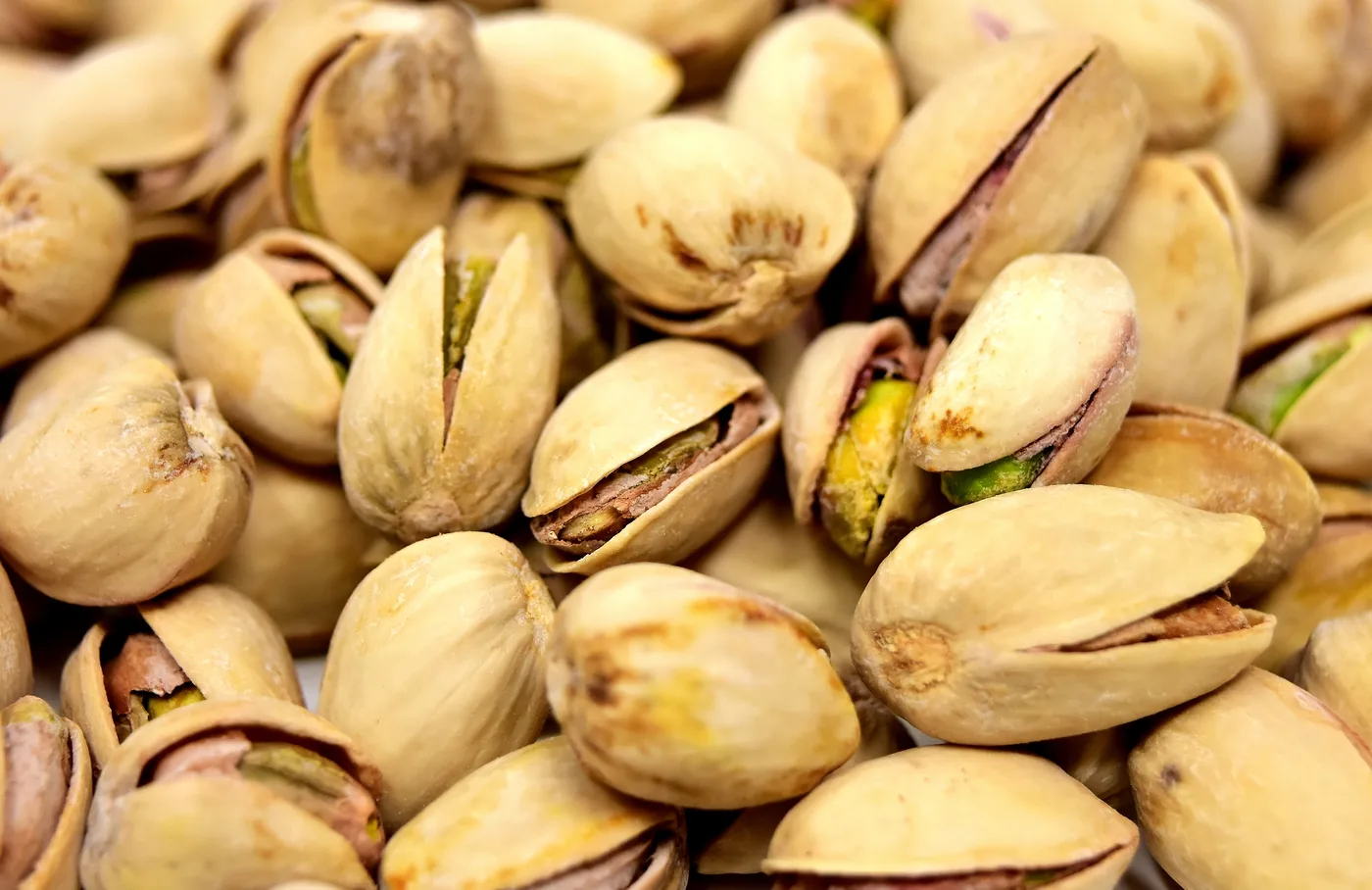
Edible green seeds inside a hard shell, coming from a small tree that loses its leaves in the winter.
About Pistachio Nuts
The plant genus Pistacia has representatives throughout the world, especially in Europe and Asia. The fruit-bearing ones grow well in the Mediterranean region and in West Asia up to Pakistan, and they were probably there in Bible times. There are three species that concern us: Pistacia vera, the True Pistachio; the Pistacia palaestina; and the Pistacia atlantica (also called the Atlas pistacio or Mount Atlas mastic tree). The latter two are called ’elah or ’alah (“terebinth”) in the Bible; see Terebinth. Zohary holds that in GEN 43:11 the botnim that Jacob’s sons carried to Egypt as a gift to Pharaoh could have been the fruit of any of these three species, since all grew there. He also believes that the place named Betonim in JOS 13:26 is a reference to the fruit of either the terebinth or the true pistachio tree.
Key References
Then their father Israel said to them, “If it must be so, then do this: Put some of the best products of the land in your packs and carry them down as a gift for the man—a little balm and a little honey, spices and myrrh, pistachios and almonds.
All Scripture References (1)
Genesis (1)
Then their father Israel said to them, “If it must be so, then do this: Put some of the best products of the land in your packs and carry them down as a gift for the man—a little balm and a little honey, spices and myrrh, pistachios and almonds.