Reference:”
Discussion
The plant genus Pistacia has representatives throughout the world, especially in Europe and Asia. The fruit-bearing ones grow well in the Mediterranean region and in West Asia up to Pakistan, and they were probably there in Bible times. There are three species that concern us: Pistacia vera, the True Pistachio; the Pistacia palaestina; and the Pistacia atlantica (also called the Atlas pistacio or Mount Atlas mastic tree). The latter two are called ’elah or ’alah (“terebinth”) in the Bible; see Terebinth. Zohary holds that in GEN 43:11 the botnim that Jacob’s sons carried to Egypt as a gift to Pharaoh could have been the fruit of any of these three species, since all grew there. He also believes that the place named Betonim in JOS 13:26 is a reference to the fruit of either the terebinth or the true pistachio tree.
Description
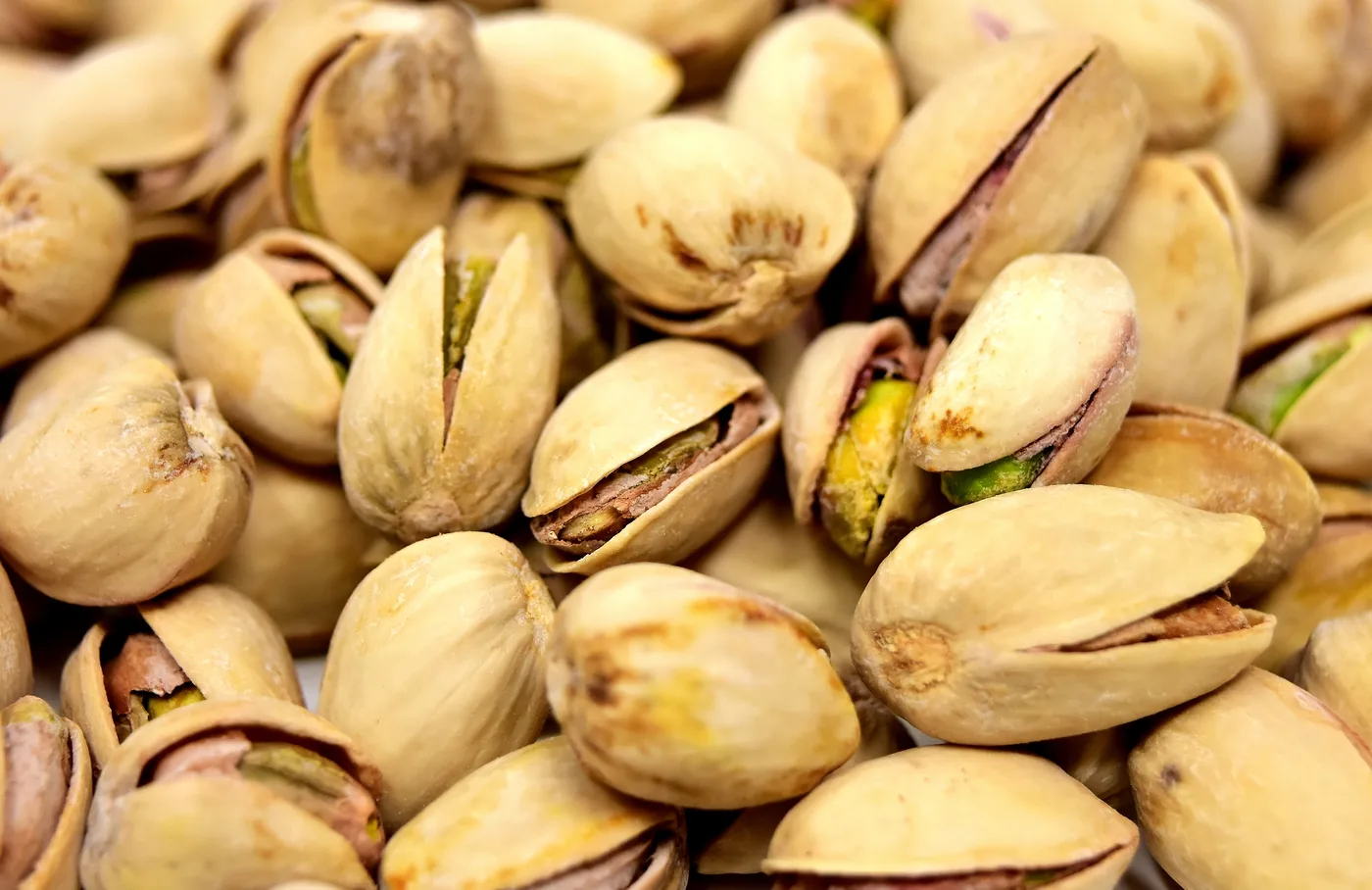
The true pistachio (Pistacia vera) is a small tree with many branches that lose their leaves in winter. The seeds are nuts with a hard, red, heart-shaped shell about 2 centimeters (1 inch) long, and the oily green kernel inside is about a centimeter (1/2 inch) long.
Special significance
Whatever botnim referred to, whether true pistachio nuts or the fruit of the terebinth, they were obviously highly valued, as we see Jacob sending them with his sons as a gift to Pharaoh.
Pistachio nuts in European shops are often dyed red. This tradition started in the 1930s, when importers began dyeing the shells to hide blemishes that occurred during harvesting.
Translation
Since the only occurrence of botnim refers to the fruit, and we are not sure whether it is the fruit of the true pistachio or the terebinth, translators who live where these trees do not grow are free to follow a major language version, using a transliteration of pistachio or of terebinth, or even a generic term. Possible transliterations for pistachio are French pistache, Arabic fustuq /futua, Spanish pistachio /alfonigo, and Portuguese alfoncico.