Discussion
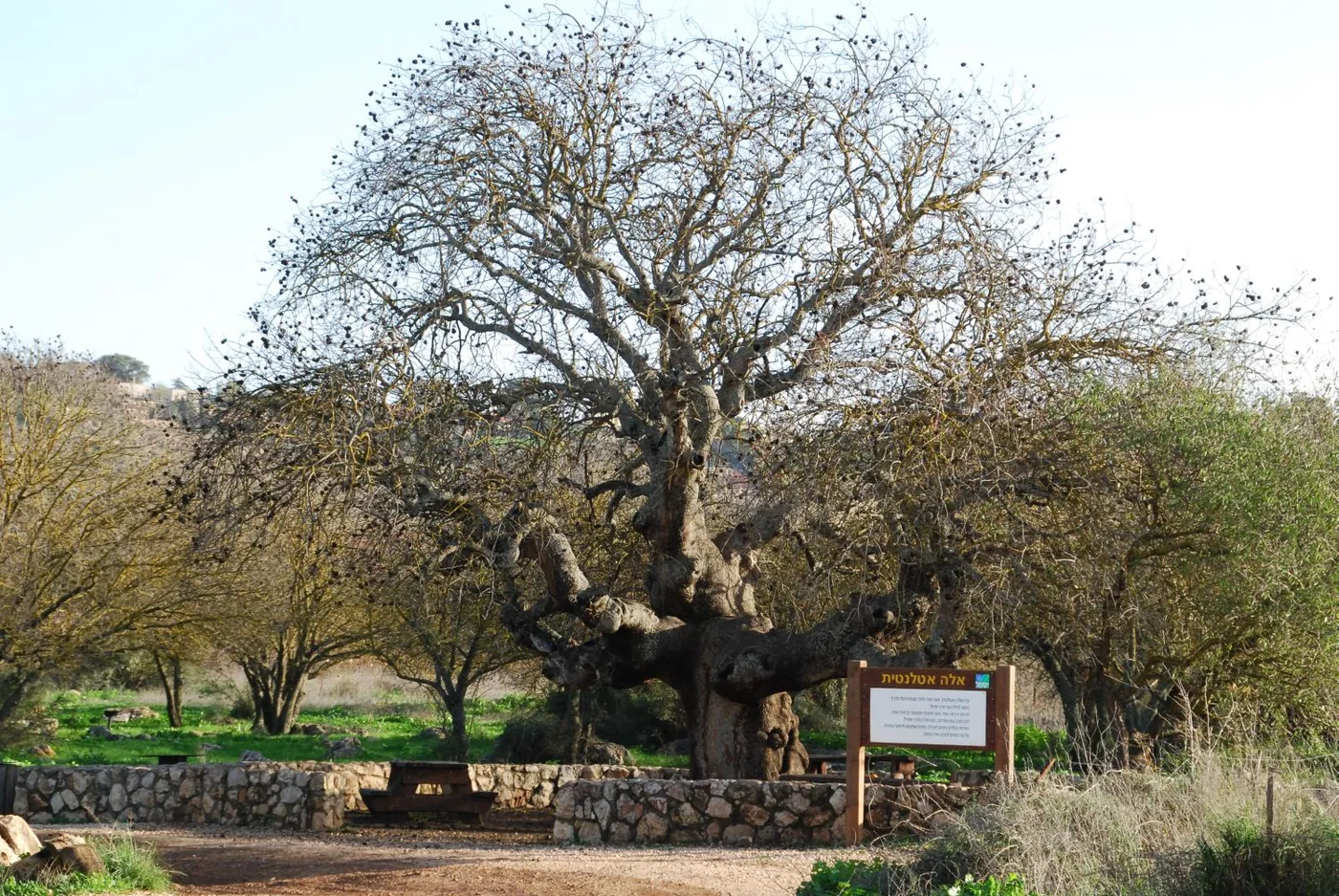
The Hebrew words ’elah and ’alah refer to any of three species of terebinth mentioned in the Bible: 1) the Atlantic Terebinth Pistacia atlantica, 2) the Palestinian Terebinth Pistacia palaestina (or Pistacia terebinthus), and 3) the Lentisk Terebinth Pistacia lentiscus (or Pistacia lenticus), also called the mastic tree.
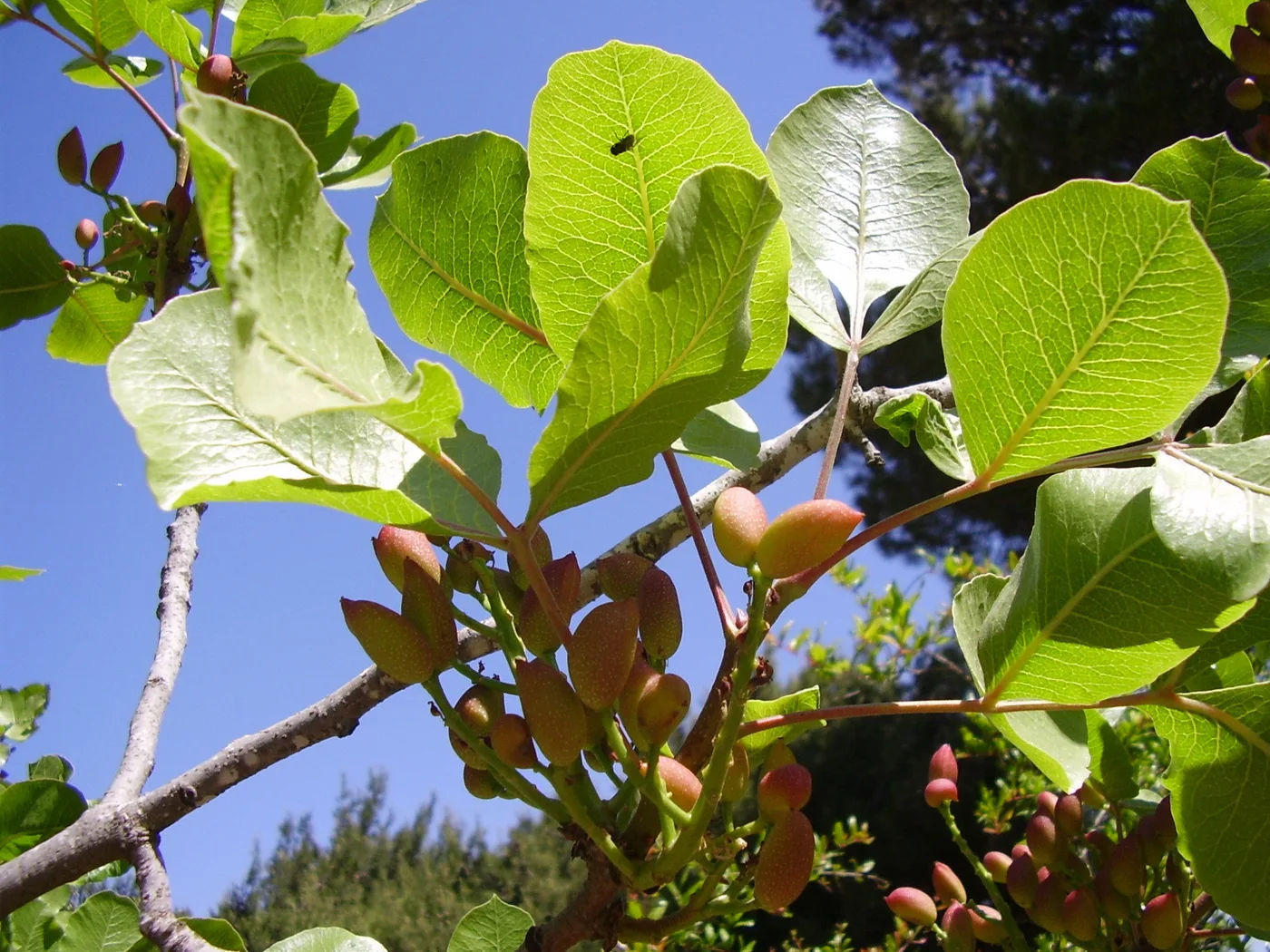
According to Zohary, the Atlantic terebinth, also called the teil tree, is found in the Negev, Lower Galilee, and the Dan Valley. Hepper says it was once abundant in Gilead, the trunk and bark being a possible source for aromatic resin (mastic) exported to Egypt. It is a dry-land tree that grows in the border areas between evergreen woodlands and the dwarf-shrub steppes (note “valley of Elah” in 1SA 17:2; 1SA 17:19; 1SA 21:10). The nuts of the Atlantic terebinth are used for dyeing and tanning animal skins, but they can be eaten if roasted. They are often sold in Arab markets, are bigger than the nuts of the Palestinian terebinth, and are quite different from the true pistachio nuts, which come from outside the Holy Land (see below).
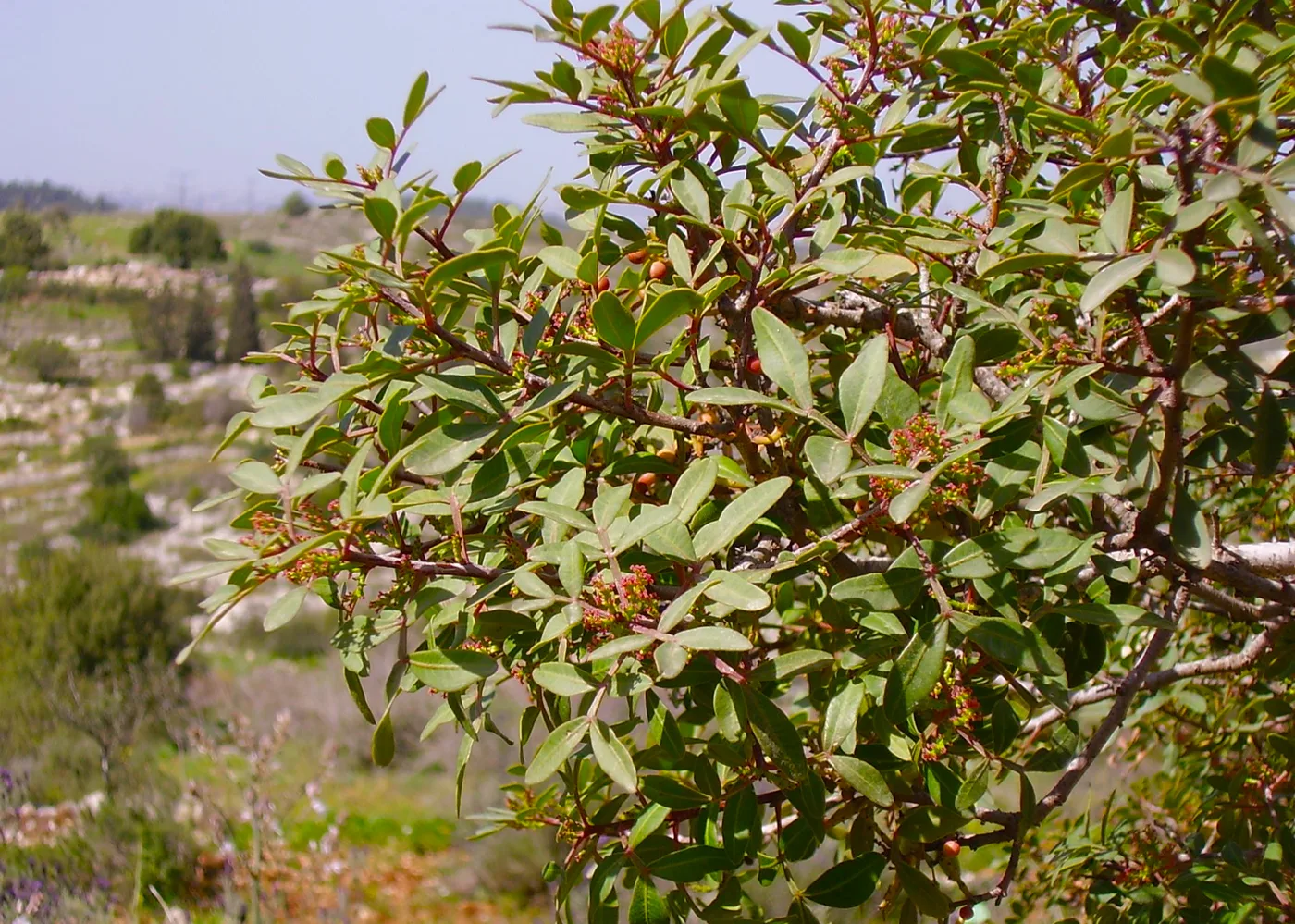
The lentisk terebinth is a shrub or bush that grew in the hills of Gilead, and may be the source of the “balm/resin” (tsori in Hebrew) carried by the Ishmaelites in GEN 37:25, and by the sons of Jacob to Egypt along with pistachio nuts in GEN 43:11. The fact that GEN 37:25; JER 8:22; JER 46:11 all mention Gilead in connection with the resin tsori, suggests that its source was a plant unique to Palestine. That is why it could be used to trade for goods from Egypt. The references in Jeremiah presumably refer to the salve made from the terebinth resin.
Description
Terebinths look like oaks but have pinnate leaves. The Atlantic terebinth may reach a height of 10 meters (33 feet). The Palestinian terebinth species is shorter, reaching to 5 meters (17 feet). The lentisk terebinth, or mastic (gum) tree, is a small shrub or tree 1–3 meters (3–10 feet) in height that produces a sweet-smelling resin when the stem or branches are cut. The resin dries into hard lumps, which are then ground and dissolved in olive oil for medicinal use, perfume, incense, varnish, and glue.
Special significance
Translation
KJV has “elms” for what should be “terebinths” in HOS 4:13. In GEN 35:4 the terebinth (’elah) near Shechem seems to conflict with the oak (’elon) in GEN 12:6. Some versions harmonize the two accounts using “oak” in both places. Others do so with “terebinth.” Still others render both as “great tree” or “holy tree.” It is quite possible that ’elah at some point became a generic term for all big trees.
Terebinths do not grow outside of the Middle East, but related species in the Pistacia genus are found from southern Europe across Asia to the Philippines. Where a related species cannot be found, a generic phrase or a transliteration from a major language is recommended, for example, terebinti, or, from Hebrew, elahi.
PSA 56:1: Although the Hebrew word ’elem in the introduction to PSA 56:0 normally means “silence,” most commentators have chosen rather to take it as an alternate spelling of the word for “terebinth” (’elah, ’alah).