Reference:"
Discussion
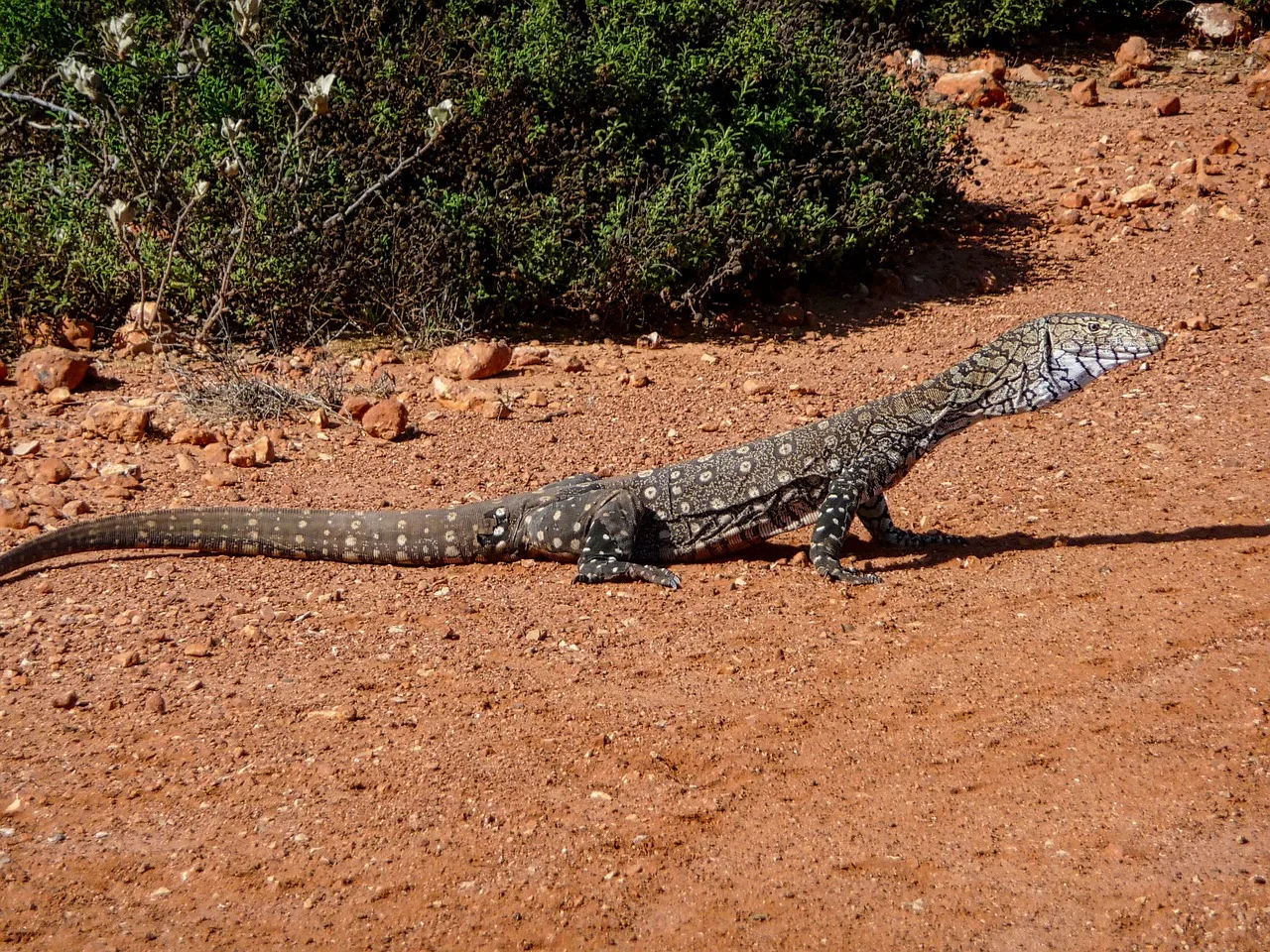
The English versions (KJV “chameleon"; RSV “land crocodile"; NEB “sand-gecko"; JB “koach"; NIV “monitor lizard"; REB “sand-gecko"; NAB “chameleon") reflect the fact that no certain identification can be made of what lizard this is. The RSV term “land crocodile” is the same lizard as the “monitor lizard” of NIV. This suggestion has the most support among modern scholars. The Hebrew name is related to a root meaning “strength,” which could well apply to either the Desert Monitor Varanus griseus or the Nile Monitor Varanus niloticus. The latter creature is not found in Israel, but it would have been well-known from Egypt. Both of these giant lizards are related to the iguanas.
If this word means “chameleon", then the reference is probably to the strength of its grip. It has claws that can close around twigs, with three toes on one side opposed to two on the other, giving it a very tenacious grip. However, this interpretation is not as likely as “monitor lizard".
Description
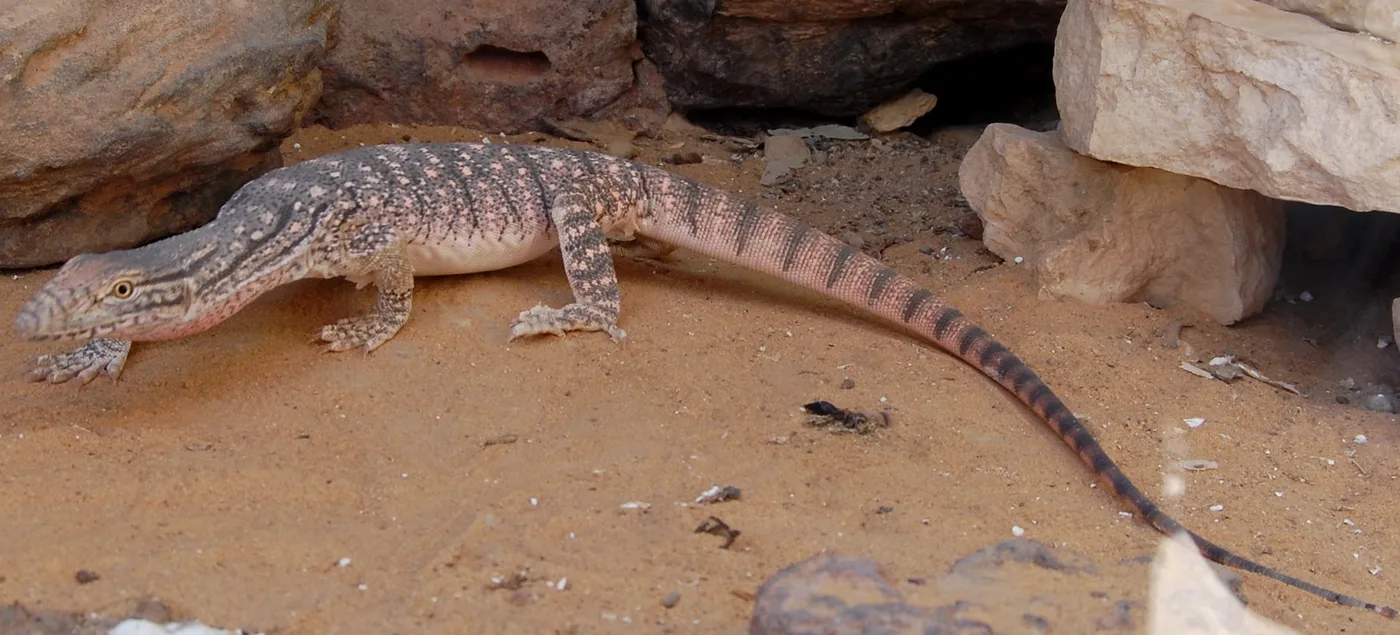
The Nile or water monitor is very similar in appearance, but it lives near rivers and in thicker vegetation. It includes turtle and crocodile eggs in its diet.
Special significance or symbolism
They are listed as unclean.
Translation
Either monitor lizards or iguanas are found in many countries of the world in the warmer parts of all continents and in Australia (where they are called goannas). In these areas a local word will not be hard to find. Elsewhere a phrase such as “giant lizard” can be used.