Discussion
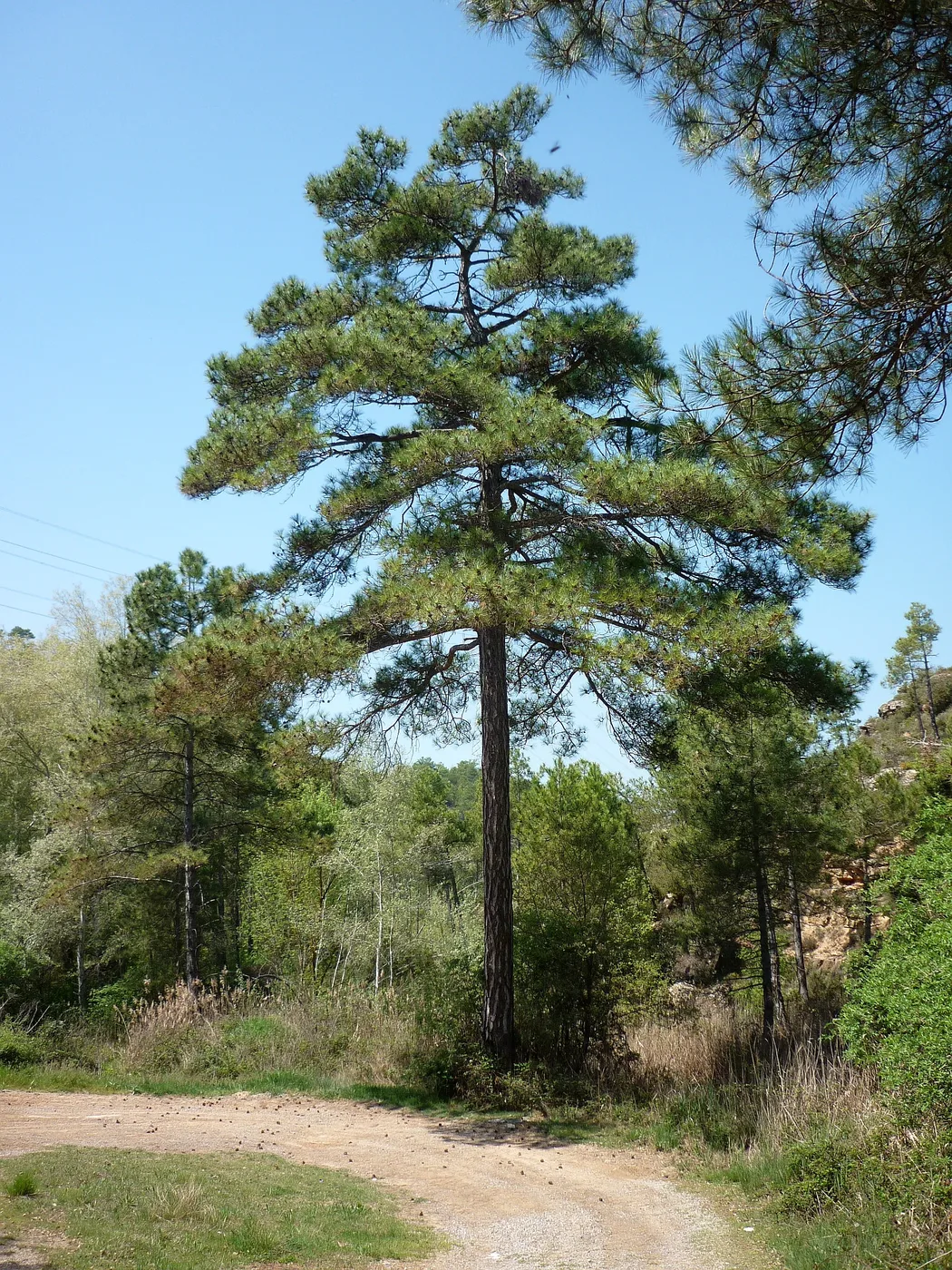
The stately Aleppo Pine Pinus halepensis, also known as the Jerusalem pine, is native to Israel and Lebanon. It was never abundant in Israel since it grows best in soft, chalky soil, which occurs in relatively few places. In modern times many of these pines have been planted in reserves throughout Israel. The modern Hebrew word for this pine is ’oren, which is found in ISA 41:19. Some versions (for example, NIV) use “pine” there, but Zohary considers that passage to refer to the bay laurel (see Laurel (bay tree)).
In 1KI 6:23; 1KI 6:31; 1KI 6:32; 1KI 6:33 the Hebrew phrase ‘ets shemen (literally “oil tree”) is used for the wood used to make the cherubim, the doors, and the doorposts of the Temple. The majority of English versions take this as “wild olive,” in spite of the fact that the olive, both domestic and wild, is notoriously gnarled and knotted and generally unsuited for carpentry work or for carving large-scale images.
NEH 8:15, which lists four species of trees to be used for making booths, includes both zayith (“olive”) and ‘ets shemen (“wild olive”). GNB and NJPSV both use “pine” for ‘ets shemen here (GNB reverses the order of the two trees). The phrase “and other leafy trees” suggests some broad-leafed tree rather than a conifer—but pine branches could also have been included for their pleasant smell.
ISA 41:19 contains a list of trees that will be put in the wilderness in the new age. It includes ‘ets shemen along with the cedar, the acacia, and the myrtle.
Given this evidence, Zohary is convinced that ‘ets shemen is the Aleppo pine; this is supported by the fact that pine trees in northern Kurdistan are still called ‘ets shemen by the Jews there since the time of the exile. Blenkinsopp (page 292) and other commentators, including the early Jewish commentators Saadiah, Shulchan Aruch and Kimchi, also support the translation of “oil tree” as “pine.” Hepper, however, believes that the cherubim of 1KI 6:23 (and the doors and doorposts of verses 1KI 6:31; 1KI 6:32; 1KI 6:33) were made of olive wood. He says that such large objects as the cherubim could have been “composed of numerous small pieces of wood somehow joined together and then carved to the required shape” (page 158). GNB, NIV, NCV, LB, NAB, NJPSV, and GECL all take this position also, translating ‘ets shemen there as “olive.”
The writers of FFB take a third position, namely, that ‘ets shemen in 1 Kgs 6 refers to the Oleaster Elaeagnus angustifolia, which is sometimes called the wild olive (or Russian olive) although it is no relation to the olive tree. Hepper says that ‘ets shemen cannot be the oleaster, since oleaster is not native to Israel. Furthermore, it is too small to provide lumber for furniture or buildings of any size.
Description
The Aleppo pine is an evergreen conifer that grows to a height of 20 meters (66 feet) and can live as long as 150 years. It is related to the cedars, cypresses, and junipers.
Special significance
As noted above, ‘ets shemen is one of the four special trees to be used in the Festival of Shelters. If we are correct in taking it as a type of pine, the branches would have been used not only for shade but to impart the fragrant smell of the pine branches to the booth.
Translation
Some options for the translation of ‘ets shemen are:
1. Follow Zohary by transliterating the word for “pine” from a major language (for example, French pin, Spanish pino, Arabic sanawbar, Portuguese pinheiro), or by using the word for the pine trees that are being introduced into many countries by the government. (In parts of southern Nigeria any conifer is called a “Christmas tree,” which is not recommended!)
2. Translate literally by saying “oil tree” as KJV does in ISA 41:19.
3. Follow popular English usage and take the local word for “olive” (first found in GEN 8:11) and add the word “wild/bush” to distinguish it from the domestic one (following REB). This would conform to FFB ’s suggestion.
4. Transliterate the word for “olive” from a major language (for example, olivi or wolifu) and add the word “wild/bush.”