Reference:”
Discussion
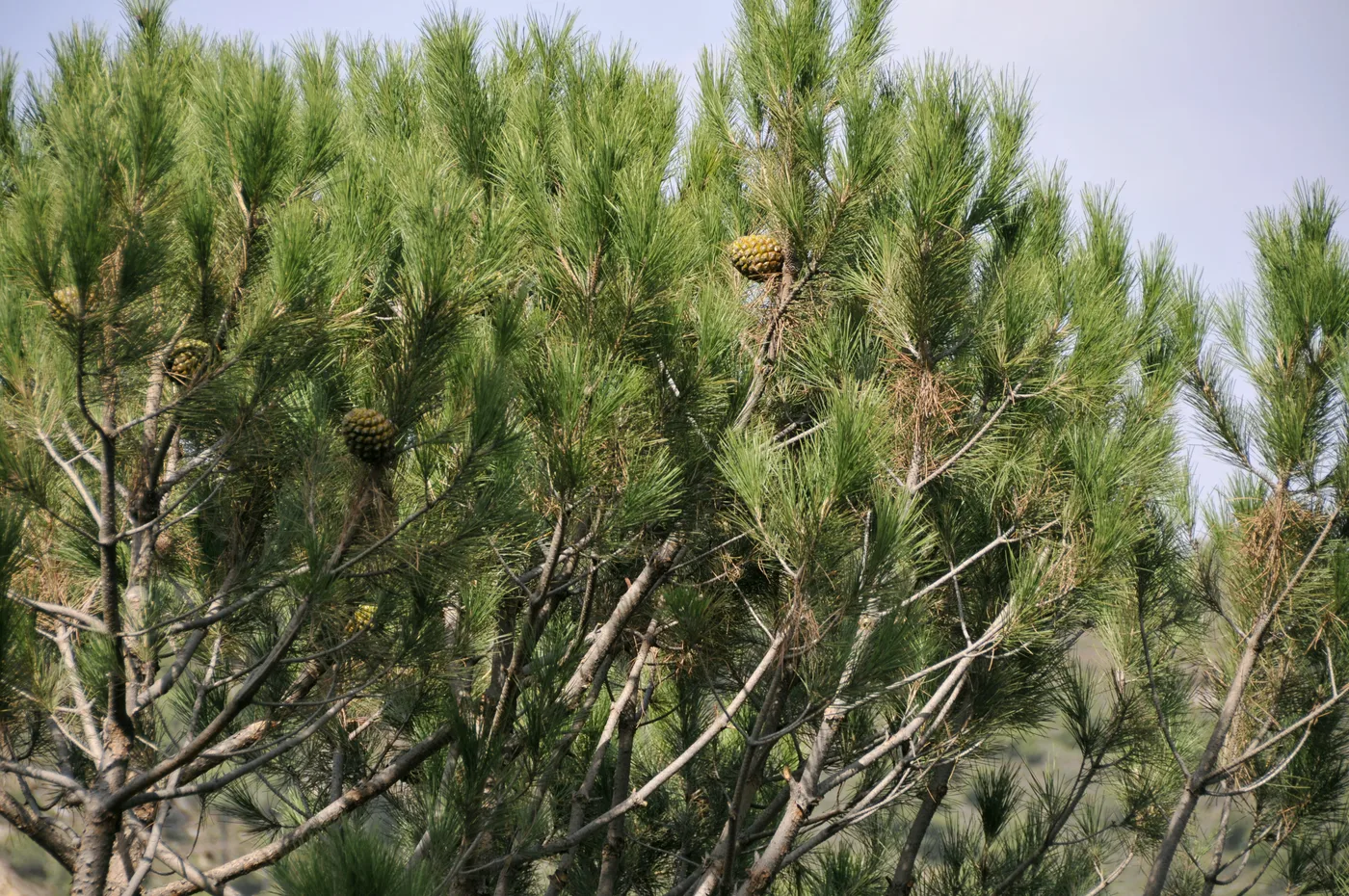
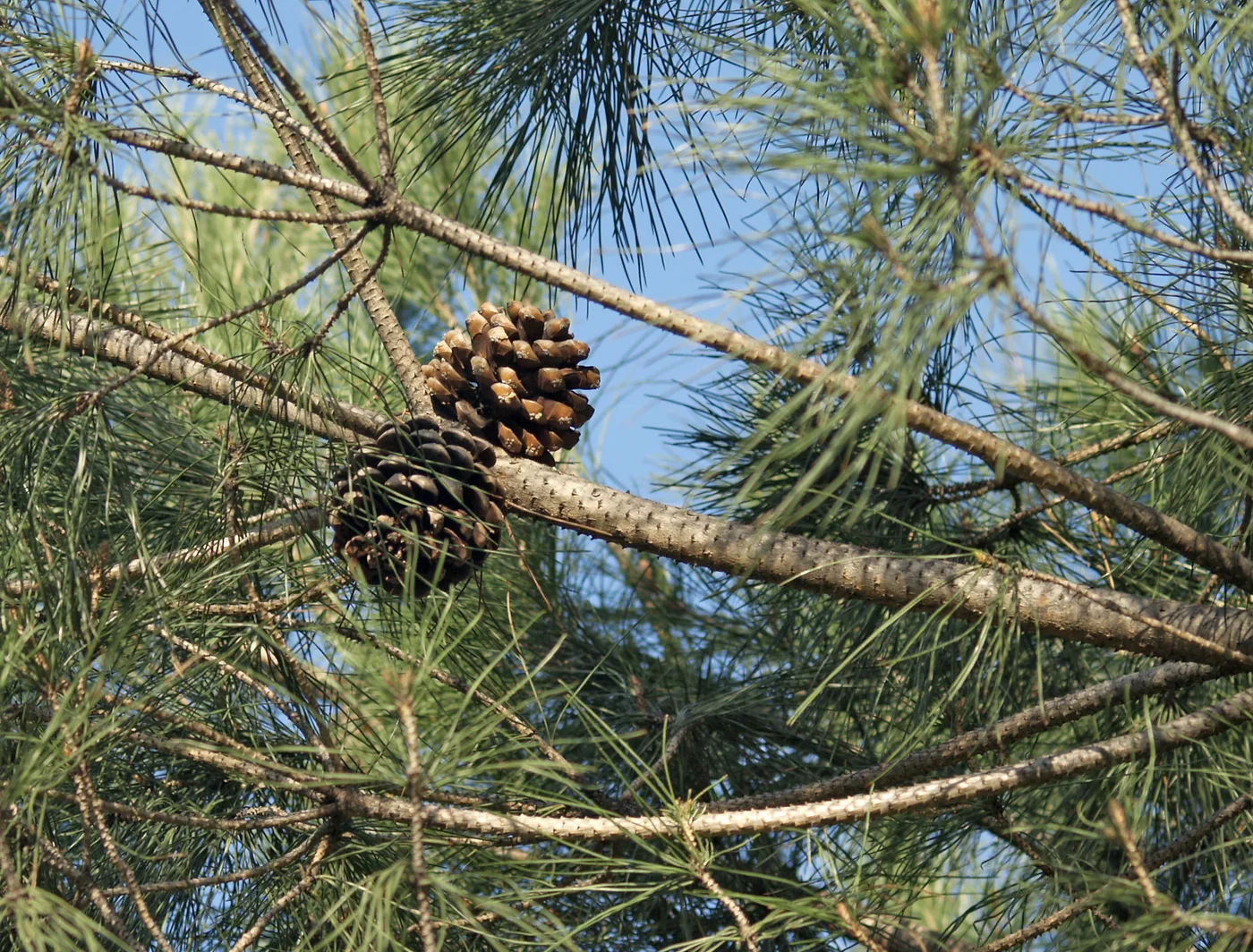
According to Tomson (1860, quoted by Zohary), the Stone Pine Pinus pinea, also known as the Pignolia or Piñon pine, was common in the coastal plain of Palestine in the 1800s. There were forests of them on the Aegean coast and in Lebanon. Israel now has only a few groves of them on Mount Carmel and on the coastal plain of Galilee, but they are plentiful in Lebanon, where people plant them for the tasty, oily seeds. Zohary suggests that the Hebrew word tirzah in ISA 44:14 could refer to the stone pine (“holm” [RSV ], “cypress” [NIV ], “plane” [NJPSV ], “fir” [GW ], “oak” [GNB ]). The r-z root betrays a possible relationship to the Hebrew word ’erez (“cedar”), and the first Arabic translation of the Bible (in the tenth century A.D.) used the Arabic equivalent of the stone pine.
Because of its seeds, the stone pine has been suggested as a translation for berosh in HOS 14:9 (8), where God likens himself to an evergreen berosh tree. But this is debatable, since the grammar seems to argue that the fruit mentioned there is not the fruit of the speaker (God) but of the addressees: “your fruit” or “their fruit.”
Description
Translation
What we see in the various English versions of ISA 44:14 for the translation of tirzah (for example, “holm,” “plane,” “fir,” “oak,” and “cypress”) are only guesses. A reasonable solution then, is to follow the suggestion of Zohary, which at least has some basis in paleobiology and linguistics, and use a transliteration from a major language (for example, pino, payin, and pinyola). In a receptor culture-oriented translation translators could substitute an appropriate tree whose wood is commonly used for carving images, as long as the name is not being used in the translation for some other tree.
“Pine nuts” from China are now being sold in the United States as a salad ingredient. We assume these to be from a sub-species of the stone pine.