Discussion
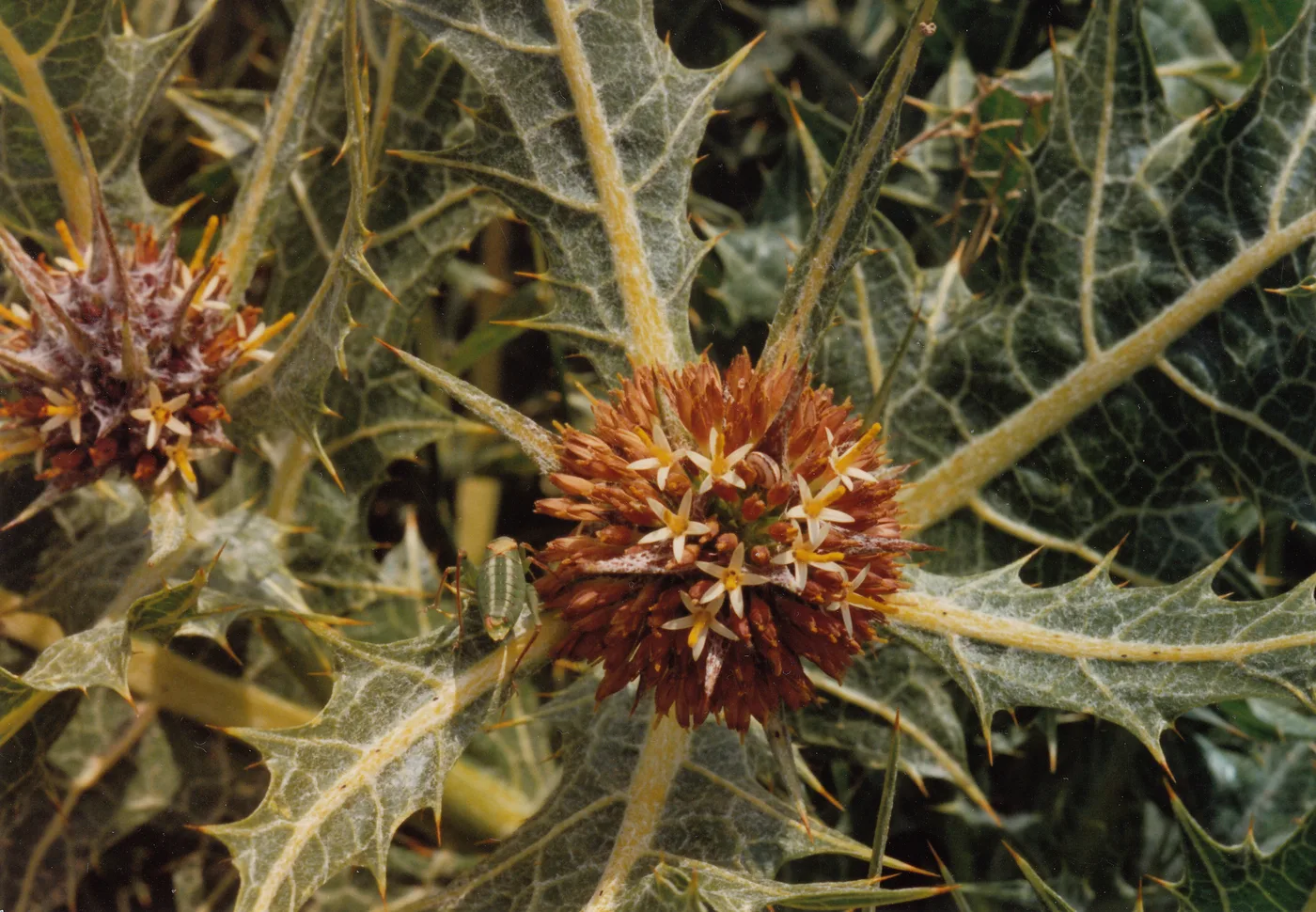
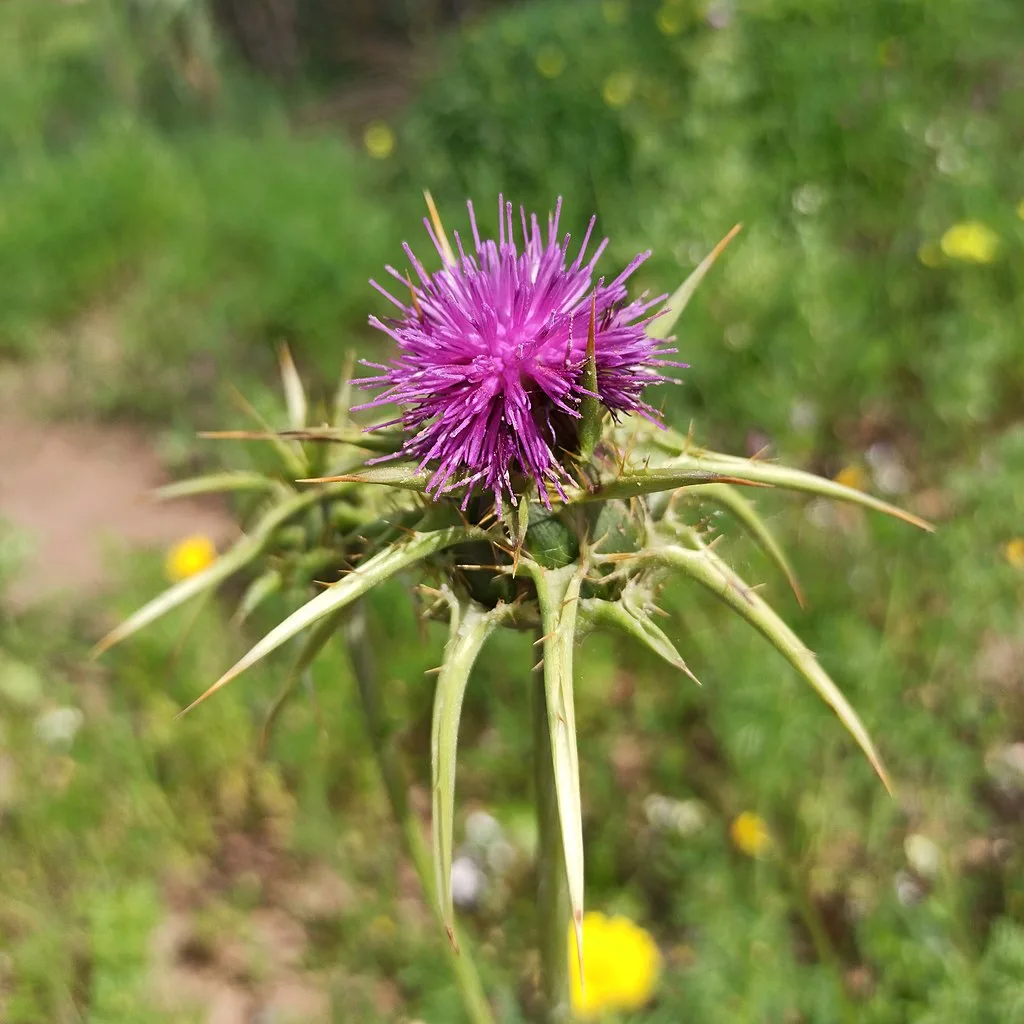
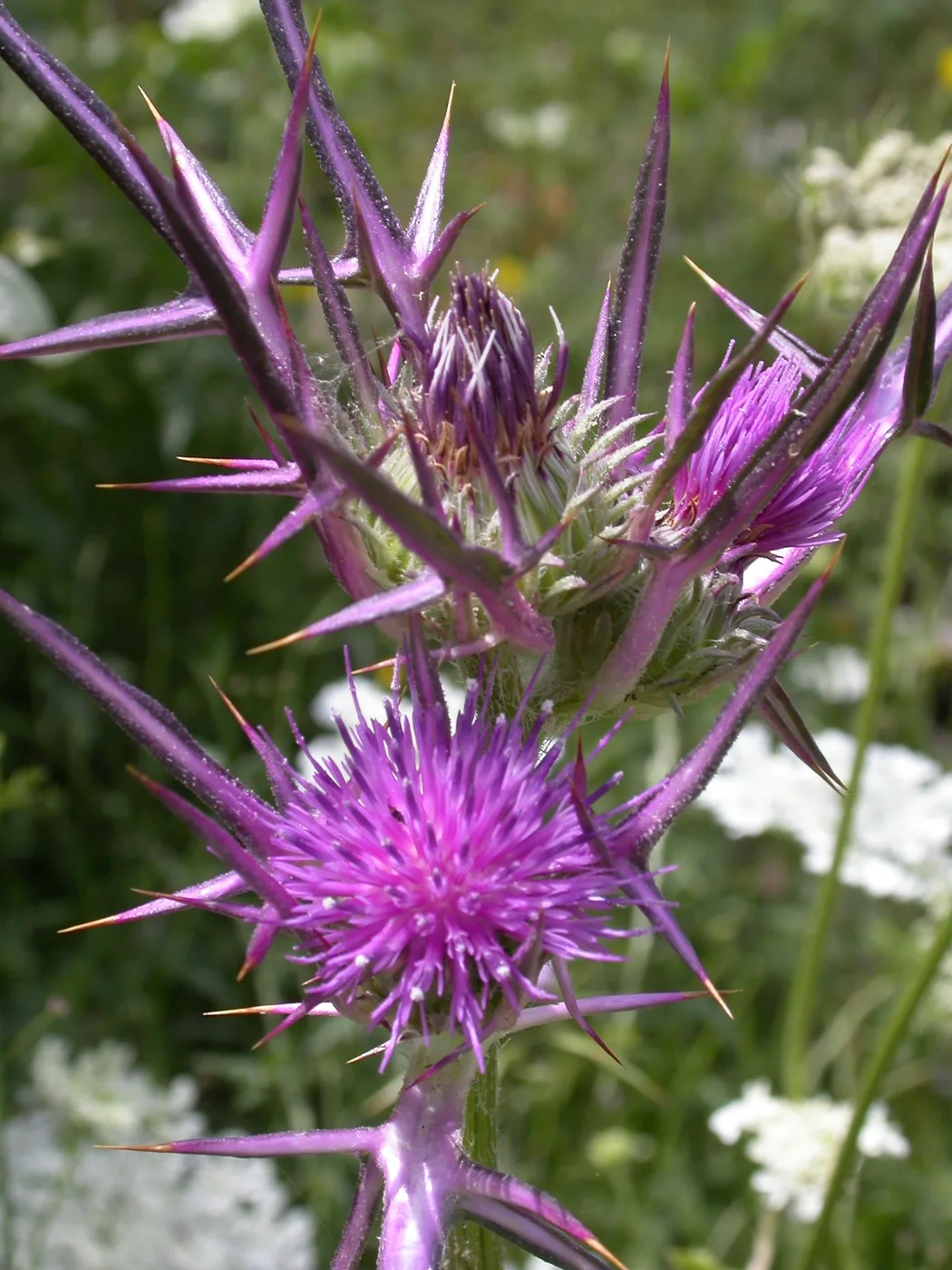
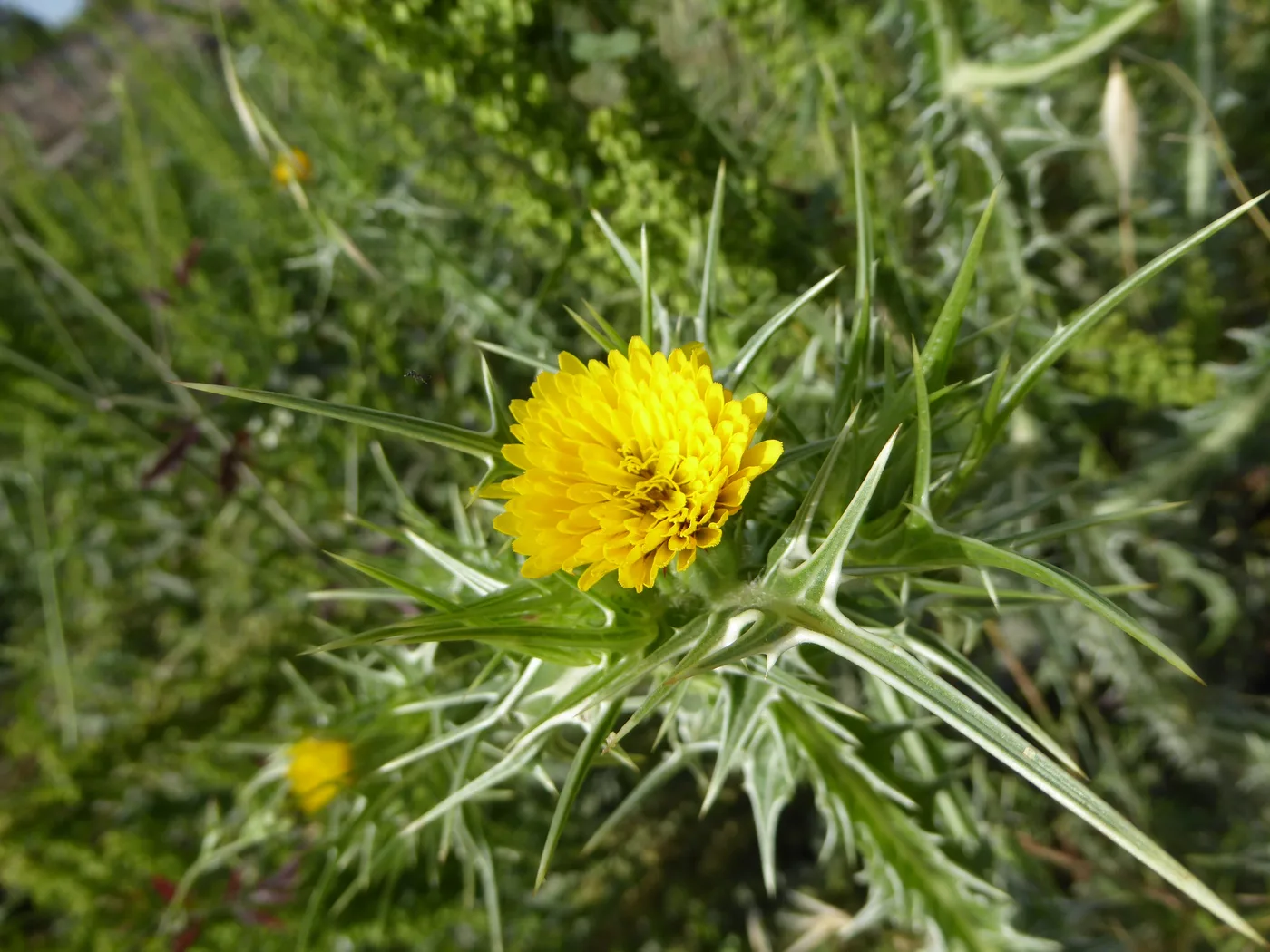
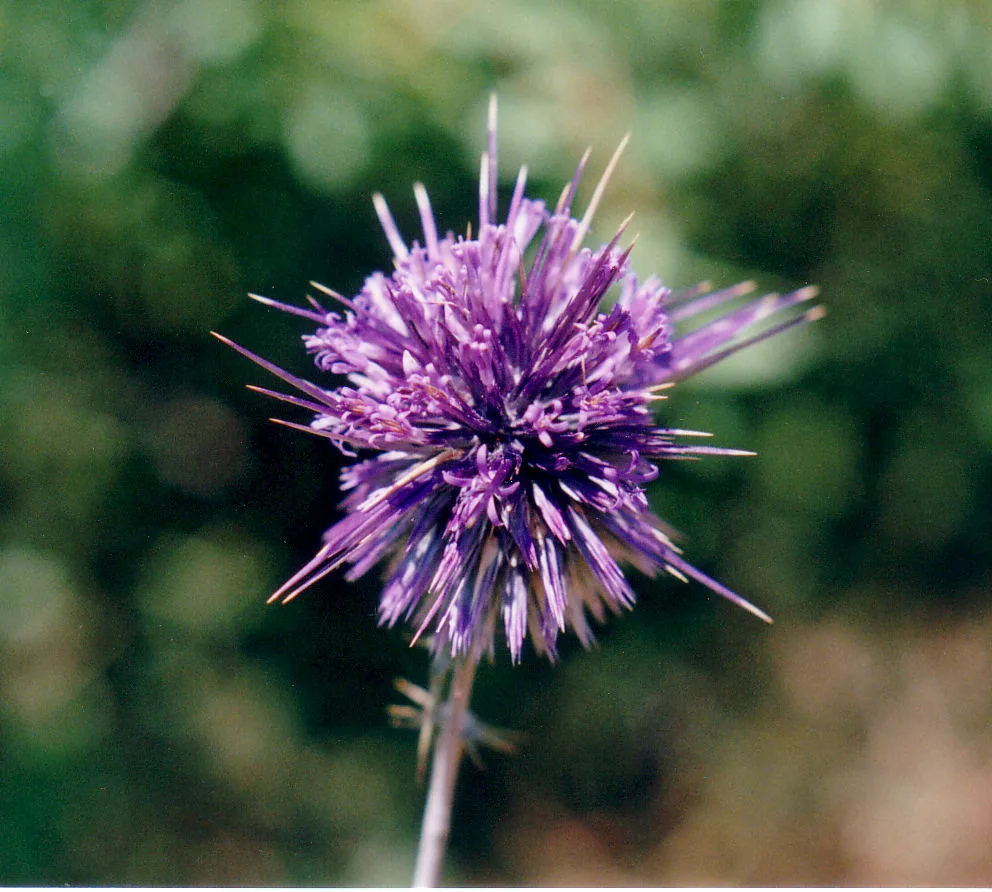
The context of certain verses suggests that some biblical plants may have been thistles. They go especially under three names in Hebrew: barqan, dardar, and choach. However, other Hebrew words such as galgal, sirah and qots may have referred to thistles as well. The following may have been some of the thistles referred to in Scripture:
The Tumble ThistleGundelia tournefortii is a widespread thistle in the Middle East, and the young tender plants are eaten as a vegetable in early spring. However, as the plant matures, the leaves become dry and sharp. Further, the whole plant becomes round, and at a certain point the stem breaks and the plant becomes a “tumbleweed,” rolling and bouncing in the wind, at the same time scattering its seeds. The plant is called akub or ka’aub in Arabic. The place name “Akov” may come from this plant.
The Hebrew word galgal in PSA 83:14; ISA 17:13 could refer to the tumble thistle or the Prickly Saltwort Salsola kali (also called Russian thistle or tumbleweed; see Hammada (Salsola, Salicornia)). Like the tumble thistle, the prickly saltwort is round and breaks loose when it dries up, rolling and tumbling before a strong wind.
Translation
Translators in French-speaking areas may know thistles as artichout sauvage (“wild artichoke”); in Portuguese they are called cardo leiteiro; in Spanish, cardo de Maria or cardo lechero. It is possible that thistles will be known to translators in some areas. If not, any obnoxious plant, particularly if it has thorns or prickles, will suffice.
Translators need to know that a phrase like “thorns and thistles” is a rhetorical device called a “doublet” intended to emphasize the thorniness of the scene described, for example the unpleasant outcome of Adam’s tragic choice in the garden of Eden (GEN 3:18) or the punishment of Samaria’s idol worshipers (HOS 10:8). Since these are rhetorical passages, translators should try to convey the intensity of the whole phrase. The identity of the Hebrew plants is not in focus. If well-known specific words for thorn plants are lacking, one can get the negative idea by a phrase such as “prickly and obnoxious plants” or “thorns of every kind.” Also, in the absence of prickly plants, any sort of plant considered destructive by farmers will do. Note the variety in English versions at GEN 3:18: NJB “brambles and thistles”; GNB “weeds and thorns.”