Discussion
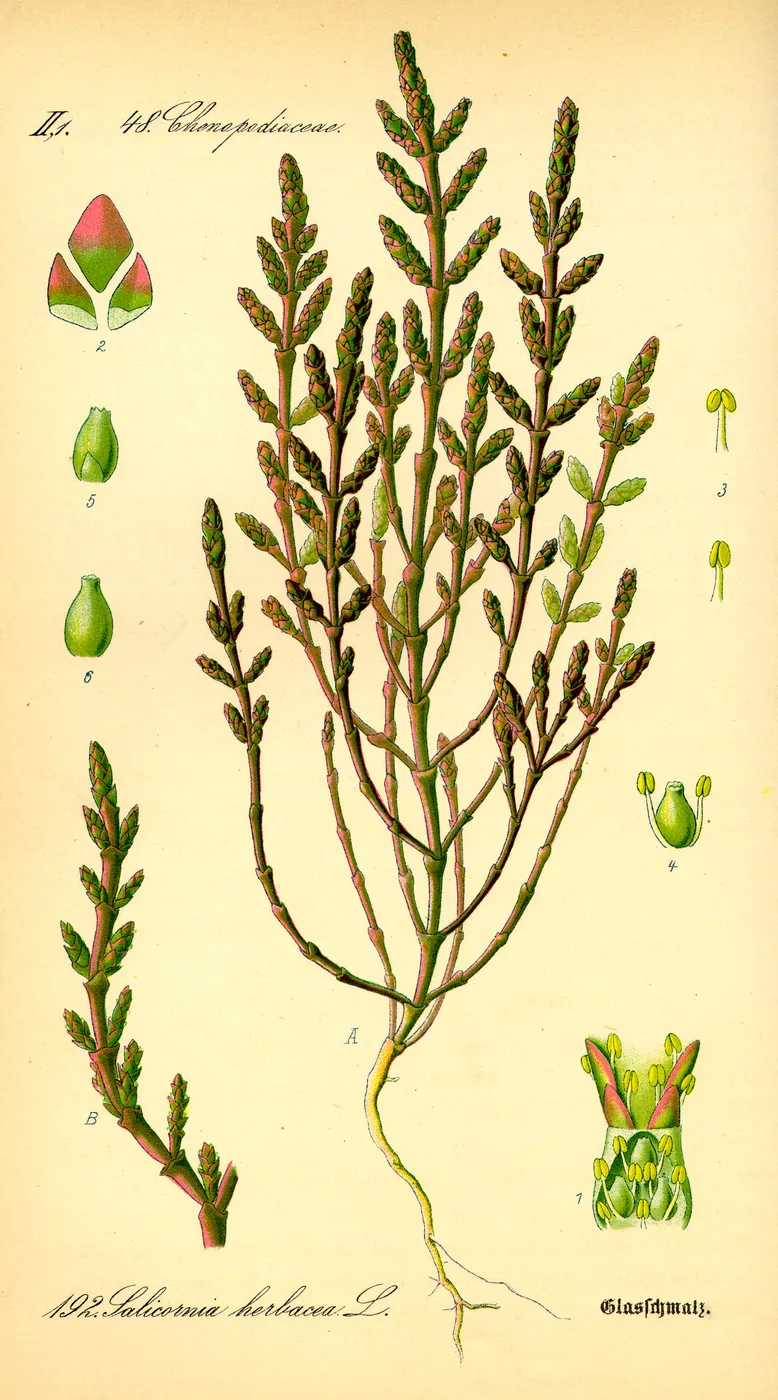
The Jews of Jeremiah’s time did not have soap as we know it, since soap was invented many centuries later. However, they did prepare something like it by mixing the ashes of certain plants with olive oil. One of the plants was Hammada Hammada salicornica, commonly found in the desert and called rimth in Arabic. Hepper says any kind of household ashes would have sufficed, but bushes of the goosefoot family (Salsola and Salicornia species, saltworts, and glassworts) would have been especially effective. This is supported by Moldenke, who adds that Arabs call saltwort kali or elkali, which is where we get our chemical term alkali.
Description
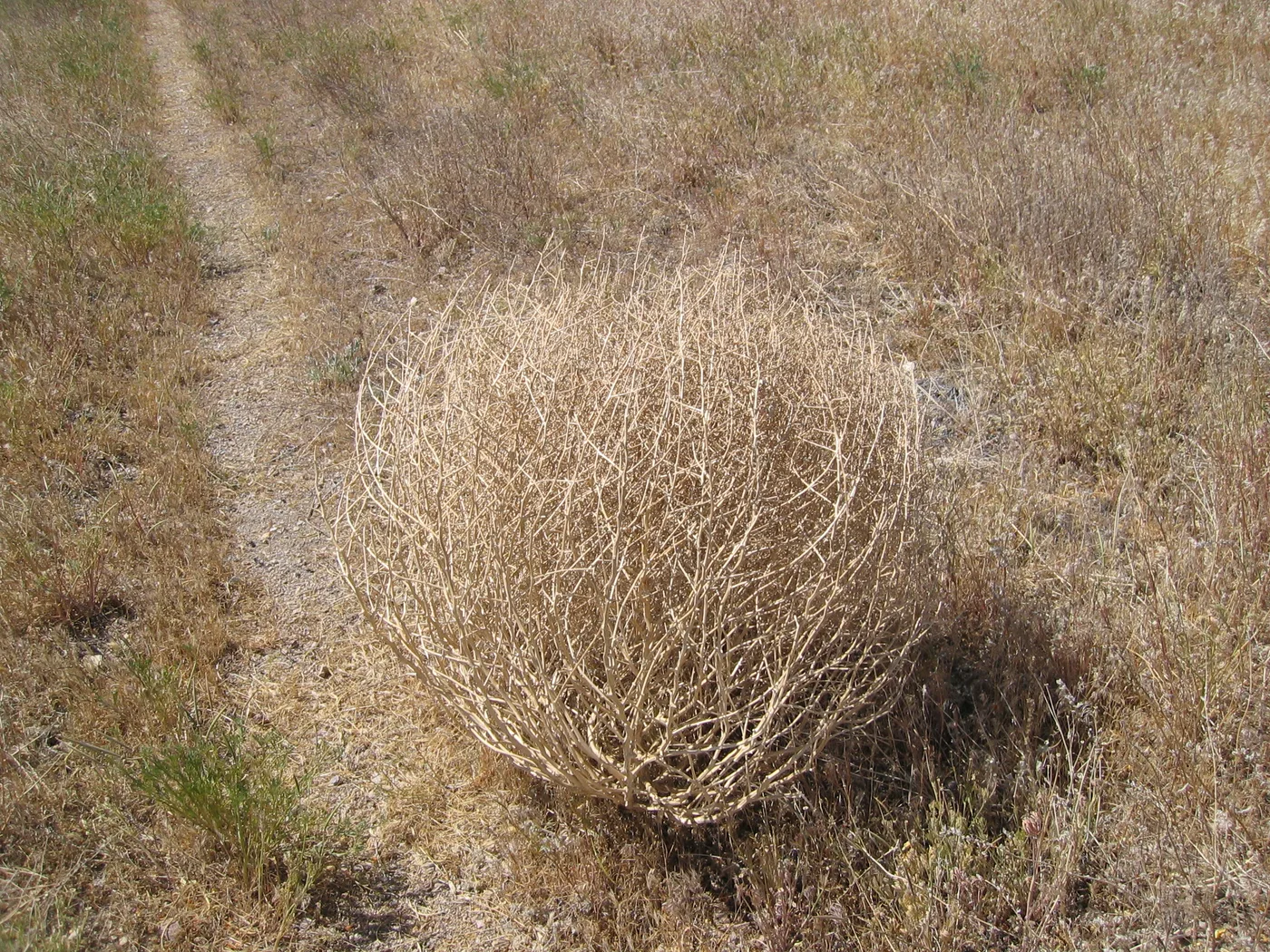
There are two types of Salicornia. The white hammada is a leafless shrub that often grows near acacia trees. It is less than a meter (3 feet) in height and has a jointed green stem. Its tiny flowers appear around December and form small fruits with one seed having a kind of wing that catches the wind and scatters the seed. The black hammada is similar, but darker, and favors a lighter type of soil. Its distribution includes North Africa.
Special significance
Translation
It may be useful for translators to investigate local soap making methods to find out what they use for ingredients. If the parallelism of the Hebrew is to be kept in JER 2:22, the translator needs two words that refer to making something clean. If there is no equivalent for “lye” (or “soda”), translators could consider poetical cultural equivalents for body-scrubbing things like the loofa gourd or the pumice stone in West Africa. If transliteration is needed, some possibilities for Salsola kali (prickly saltwort) are (apart from the Hebrew borith) Arabic hurd, shawk ahhmar; French soude conchee, sonde kali; Portuguese barilla espinhosa, soda, trago-espinhoso; and Spanish abrojos, barella, salsora.