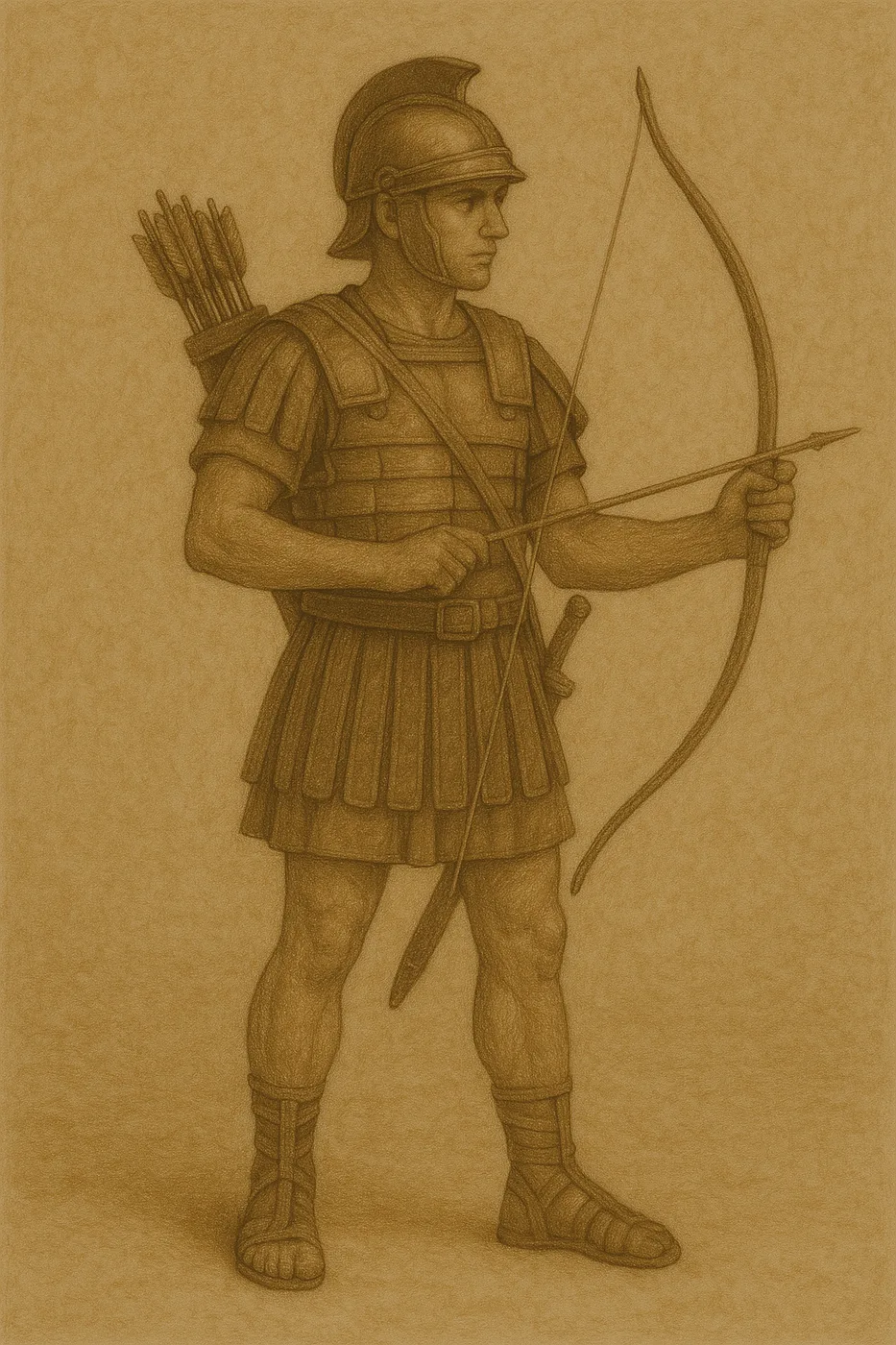
Description
The bow was an arch made of wood or other flexible material and bent by a string attached to its two ends. Ancient bows were of two types. The simpler and less effective was triangular in shape, with the wooden body of the bow formed from two straight pieces. Much stronger and more effective was the composite bow, which was constructed of alternating layers of material, mostly wood and animal horn glued together. Ancient bows varied in length between about 80 centimeters (30 inches) to over a meter (40 inches). The bowstring was normally made of spun linen or hemp.
Usage
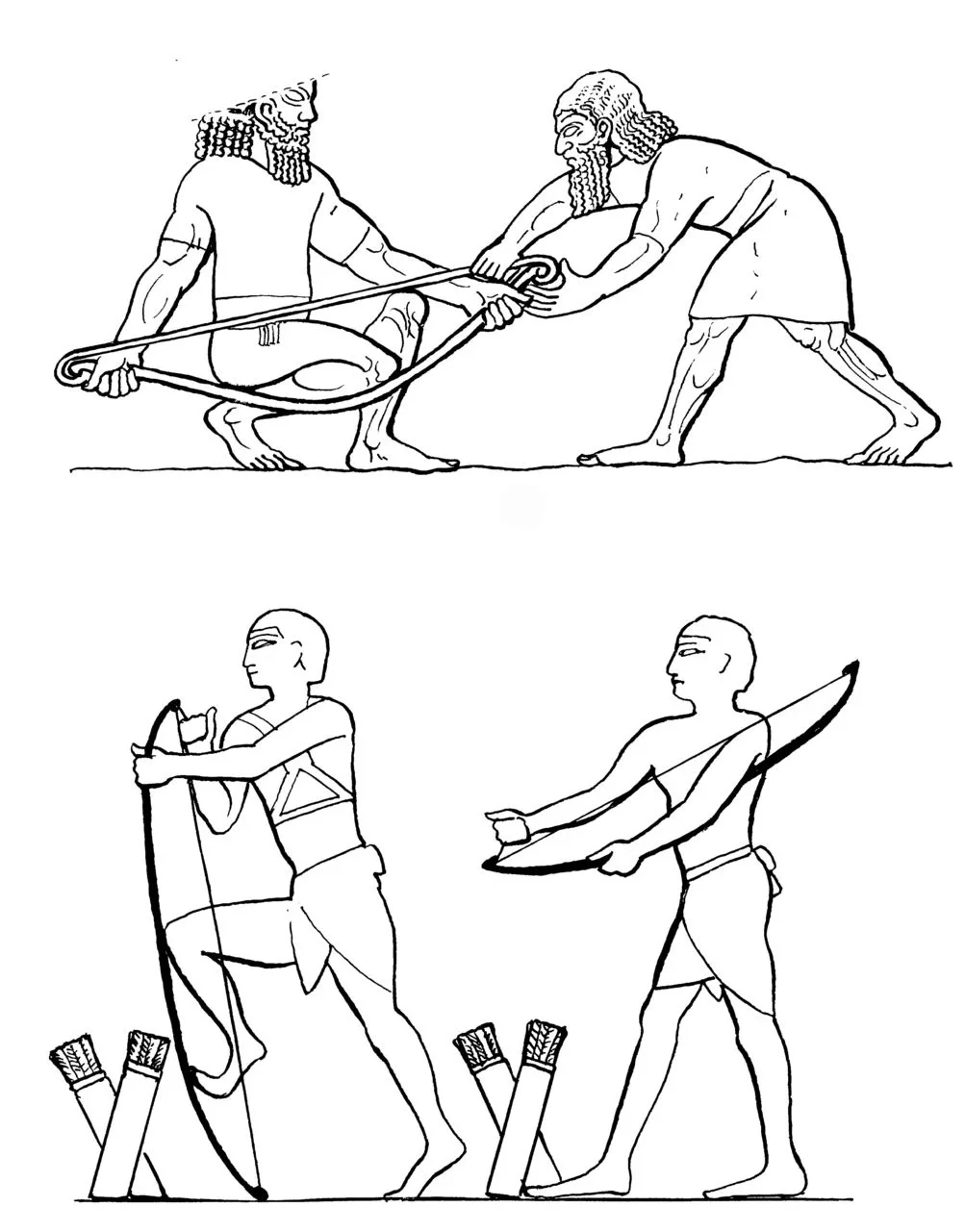
Translation
Where bows and arrows are unknown, it may be necessary to say “weapon” or “weapon that shoots darts [or, missiles],” without specifying what kind of weapon it is, while carefully avoiding the implication that it is a gun that uses gunpowder and shoots bullets. The weapon should be recognized as useful in battle and operated by one person.
The phrase “bend the bow,” which occurs frequently (2SA 22:35; PSA 7:13; PSA 11:2; PSA 18:35; PSA 37:14; ISA 5:28; ISA 21:15; JER 9:2; JER 46:9; JER 50:14; JER 50:29; JER 51:3; LAM 2:4; LAM 3:12; ZEC 9:13), often does not refer to the drawing of the bowstring in order to shoot but rather to the method of bending the unstrung bow enough to slip the bowstring in place on the end of the bow. Composite bows in particular were very stiff and difficult to string. The underlying idea is preparing the bow for combat. Possible renderings for “bend the bow” are “string the bow” and “prepare the bow for use.” In JER 51:3 a NCV has “Don’t let the Babylonian soldiers prepare their bows to shoot.”
In some passages the word “bow” symbolizes warfare. See the discussion on JOS 24:12 at Sword.
2SA 22:35; JOB 20:24; PSA 18:35: In JOB 20:24 a RSV says “a bronze arrow will strike him through.” “Bronze arrow” is literally “bow of bronze” in Hebrew. However, bows were not made of bronze, and a bronze bow would not shoot an arrow. The poet attributes to the bow the effect that is produced by the arrow. RSV has shifted to “bronze arrow,” but GNT has kept “bronze bow.” FRCL translates “bronze point,” that is, “bronze arrowhead.” This line may need to be adjusted to say “an arrow with a bronze point will hit him” or “an enemy will shoot an arrow with a bronze point into him.” If “bronze” is unknown, the translator may say “iron” or “metal.” De Vaux suggests that “bronze bow” indicates a kind of metal covering, which was used to strengthen some wooden bows. So “bronze bow” may be rendered “strongest bow” (GNT in 2SA 22:35 and PSA 18:35).
JER 9:2: RSV renders the first line of this verse as “They bend their tongue like a bow,” which will be obscure in many languages. CEV understands the bent bow to be the actual shooting of the arrows, so it restructures the first half of this verse, saying “Lies come from the mouths of my people, like arrows from a bow.” GNT understands the bent bow to indicate readiness for use but avoids the simile with “They are always ready to tell lies.”