Description and usage
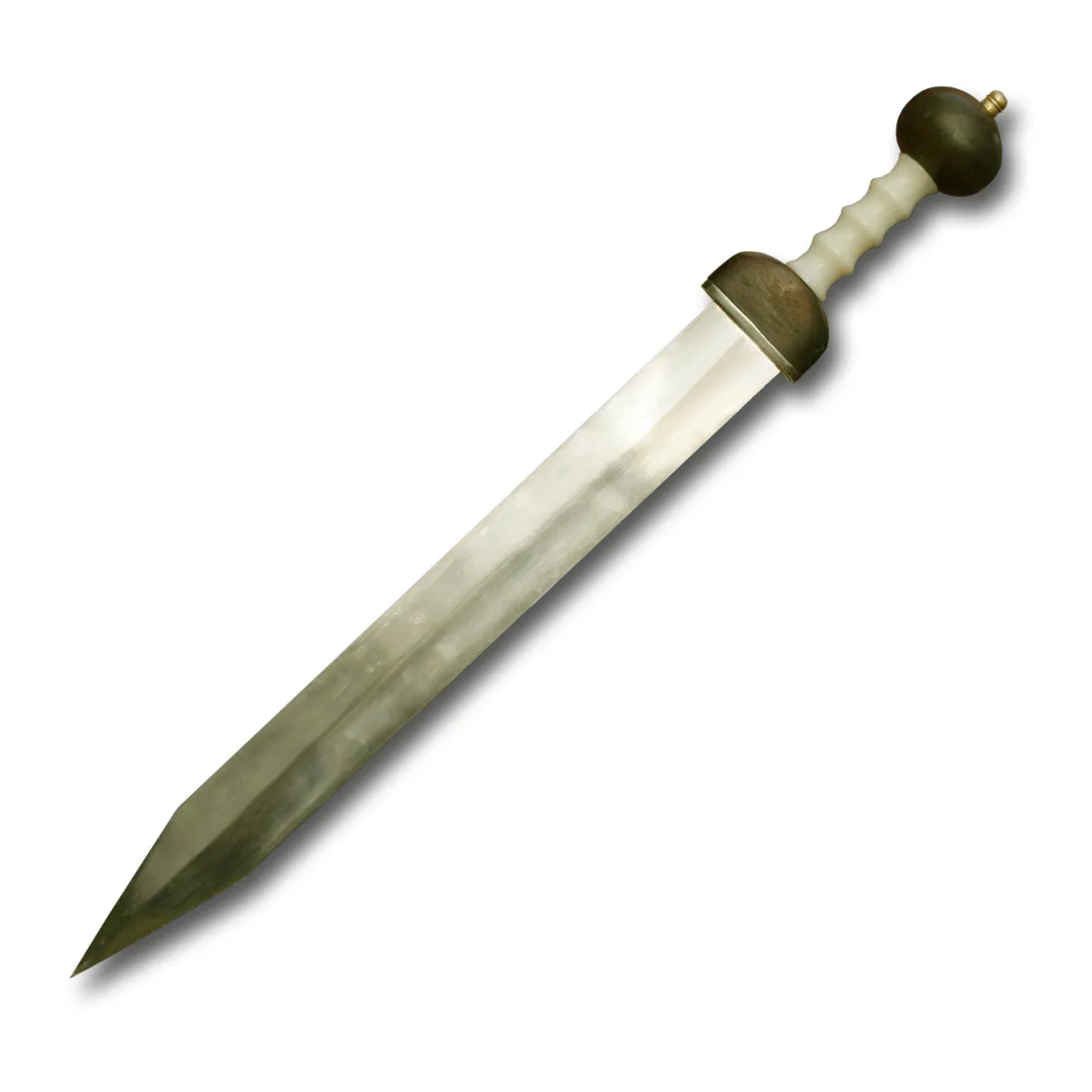
The length and shape of swords varied widely in different periods and different nations. The basic concept, however, remained the same: the sword was a long, heavy knife made of metal, at first of bronze, and later of harder metals like iron. In earlier biblical times the blade tended to be more for cutting; it was curved similar to a sickle (see Sickle), but it was sharpened only on the outside of the curve, unlike the sickle, which was sharpened on the inside of the curve. With this type of sword for cutting, no emphasis was placed on a point for piercing. In the later Old Testament period, swords were made more for piercing. These swords, which were as short as 30–40 centimeters (12–16 inches) at first, had relatively broad, pointed blades that were sharpened on both sides. By the time of the Israelite kings, the blades had become longer and relatively narrower.
Translation
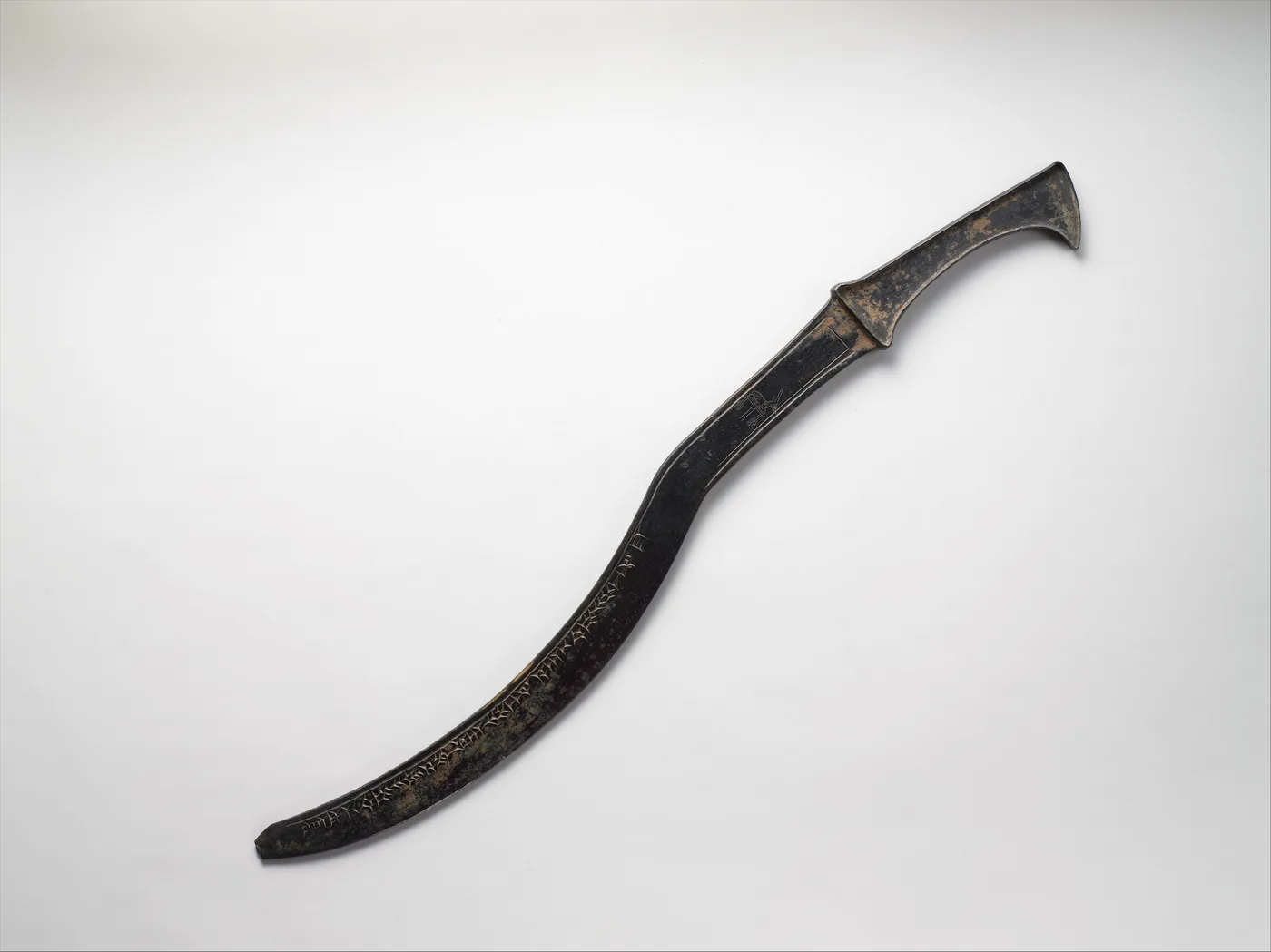
The Hebrew word cherev is a general term and does not specify whether the sword is long or short. Where a language makes a distinction, it will generally be best to translate it “short sword.” In the New Testament the Greek word machaira refers to a short sword and rhomfaia is a long sword. The phrase “with/by the edge of the sword” (occurring over 30 times with over half of them in Joshua and Judges) usually has in view the older, curved sword, which had only one edge. Normally it will not be necessary to render this expression literally, but it will be sufficient to say something like “with/by the sword.”
In many passages we find the phrase “die by the sword” or “slain by the sword” (for example, JOB 36:12; JER 5:12; JER 21:9; EZK 31:17; MAT 26:52). This is an idiomatic expression meaning to die a violent death. It normally (but not always; compare 1SA 2:33) means to die in war, and translators may often use an expression such as “killed in war” (GNT in JER 16:4) or “die in battle.” In such cases it usually indicates a non-heroic death; where a language has a special word or phrase for “die the death of a warrior,” the translator should not use that expression unless such a death is what is intended by the biblical text. In cases where death in warfare is not the meaning, one may say “die a violent death” or “killed by people.” One should not substitute a modern weapon for “sword”; for example, it would be anachronistic to say “shot to death.”
In some passages the word “sword” simply stands for warfare, for example, JER 5:12; ROM 8:35; REV 6:8. JOS 24:12 says literally “Then I sent the hornet before you and it drove out the two kings of the Amorites from before you, [but] not by your sword or your bow” (NASB). It may be preferable in some languages to translate the last part of this verse without naming the specific weapons: “Your weapons and strength had nothing to do with it.” It is also possible to translate this with both a positive and negative statement: “I defeated them for you. It was not your own strength and weapons that did it.”
The phrase “men who drew the sword” occurs in a number of passages (JDG 8:10; JDG 8:20 [6 times]; 2SA 24:9; 1CH 21:5). This is simply an idiomatic expression for “soldiers,” which is the GNT rendering in JDG 8:10.
The phrase “lift up the sword” occurs in ISA 2:4 and MIC 4:3 with the meaning “go into battle” or “go to war.” GNT gives the correct English equivalent by rendering the second to last line in each of these verses as “Nations will never again go to war.” In some languages a literal rendering of the idiom “to lift up the sword” will have quite a different meaning, such as “to surrender” or “to be victorious.” This is not the meaning of the text and should be avoided.
The Hebrew phrase cherev pifiyoth (PSA 149:6) or cherev piyoth (PRO 5:4) refers to a sword sharpened on both edges of the blade, that is, a “two-edged sword” (RSV; compare HEB 4:12; REV 1:16; REV 2:12; SIR 21:3). This is the straight sword of later Old Testament times and onward.
In GEN 49:5 the meaning of the Hebrew word mkerah is doubtful. Most translators connect Jacob’s words to the events described in GEN 34:25; GEN 34:26 and understand mkerah to be a kind of weapon, probably parallel to the “sword” (cherev in Hebrew) in those verses.
In PSA 55:22 the Hebrew word pthichoth refers to swords that are “drawn” (literally “open”), that is, ready for use. Thus, for the last line of this verse CEV has “and he was ready to attack with a sword.” Others prefer to use a simile; for example, GNT has “but they [his words] cut like sharp swords” and NCV says “… cut like knives.”
In LUK 2:35 the word “sword” is used figuratively for pain or anguish. Often translators can use a rather literal rendering. Sometimes it is preferable to shift to a simile; for example, the first half of this verse may be rendered “As for your soul, it will be as if a sword pierced it.” In some cases the equivalent expression does not need a term for “sword,” for example, “and you too shall be pierced to the heart” (NEB). It is also possible to use a nonfigurative expression, for example, “you will experience anguish.” There is no implication here of a military death, and the translator should avoid the use of a term that might carry that implication.