Description and usage
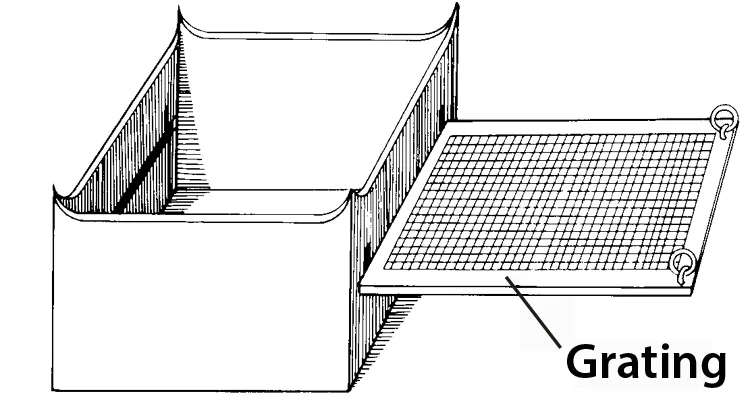
The grating of the Tabernacle altar was similar to a spider’s web with a fine meshwork, except that it was made of bronze. Its purpose is not explained, but it was probably intended to hold the burning coals and allow the ashes and grease to fall through to the ground, as well as to allow for a draft of air to pass through from underneath. Both were necessary for a hot fire. On the four upper corners of the grating were attached bronze rings. Poles were inserted through these rings for transporting the altar.
Translation
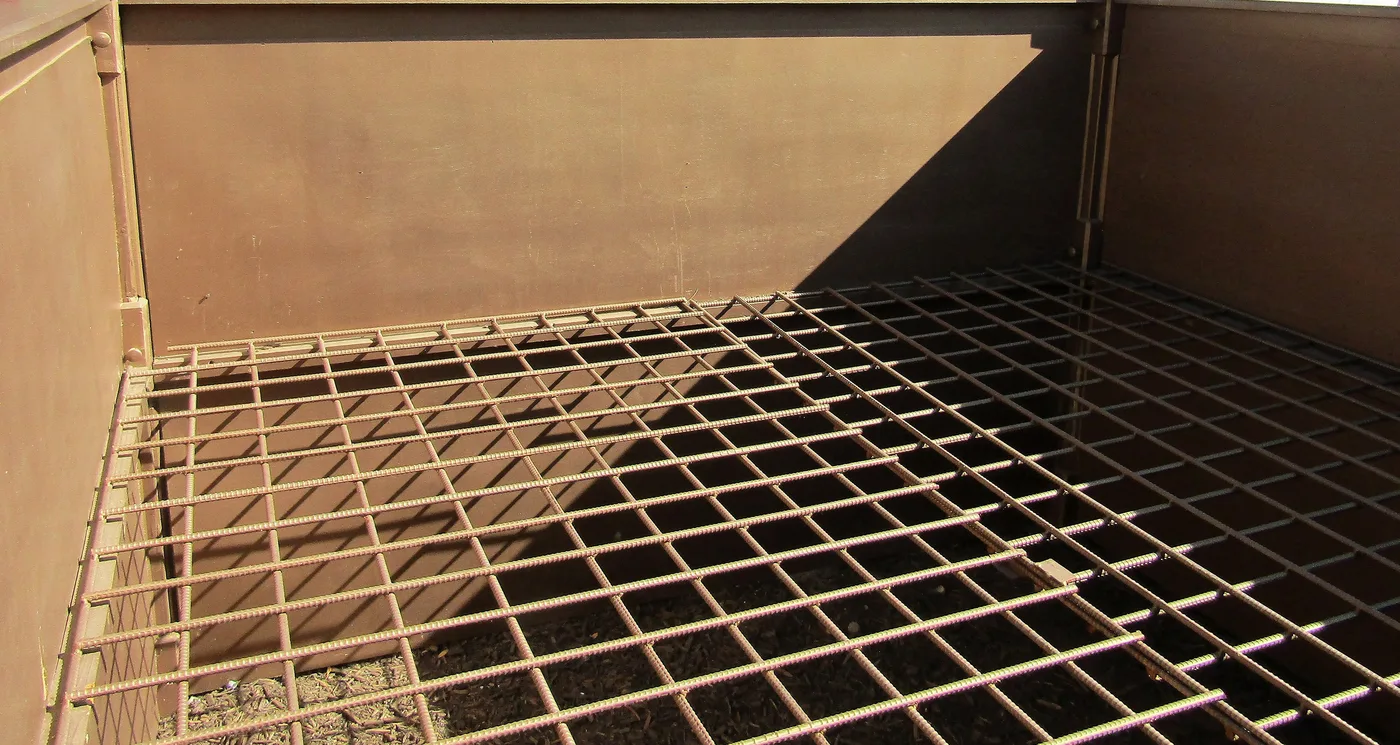
“So that the net shall extend halfway down the altar” (EXO 27:5 b in RSV) is literally “and the net will be until half of the altar.” This does not indicate whether it means halfway down or “halfway up the altar” (GNT). Most translations have “halfway up,” suggesting that the grating was placed in some way at the lower half of the altar. But RSV and NRSV suggest that this grating was near the top. It is probably better for translators to follow this interpretation.
As can be seen from an overview of various translations, it is possible to translate EXO 38:4; EXO 38:5 and the parallel passage in EXO 27:4; EXO 27:7 without actually leaving the reader with a clear picture of how the grating, rim, and altar were related. While it is true that the functions of the rim and the grating are disputed, a clear description of one feasible option is to be preferred to a rendering that is meaningless to the reader. The following model is given in A Handbook on Exodus (page 635):
4 Make a bronze grating, like a strainer, and attach a bronze ring at each of its four corners. 5 Then place the grating under the rim that goes around the altar, so that it extends halfway down inside the altar.
Another possible model is:
5 Build a rim around the altar near the top, and hang a bronze grating from it extending halfway down inside the altar. At each of the four corners of the grating attach a bronze ring.
Rings and poles: EXO 27:4 says that bronze rings were to be put on the “ends” or “edges” of the grating. Verse 7 describes the placing of the poles into “the rings, so that the poles shall be upon the two sides of the altar” (RSV). The Hebrew seems to indicate that there is only one set of rings, those attached to the grating, and that they were used to carry the entire altar. The placement of the rings will depend on the translator’s understanding of the grating as discussed above. If the “grating” is understood as a mesh going around the outside of the altar, then the rings are simply attached to the mesh. If, on the other hand, the “grating” is understood to be horizontal and sitting inside the altar, the rings projected through the corners of the altar so that the poles could be put through them.
The poles were placed into the rings for carrying the altar, and they were probably removed after it had been set into place. Where a language distinguishes between installing an object permanently or temporarily, the latter option is the correct one here. This may mean using a different verb in EXO 27:7 from the one used in EXO 25:14 (see the discussion under Covenant Box, Ark of the Covenant).